
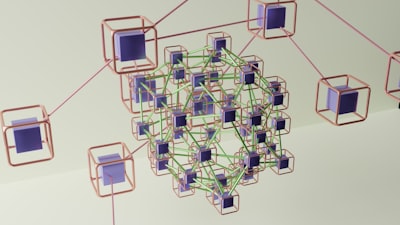
In today's world, where data is generated in a massive and heterogeneous way, understanding the underlying causal relationships has become a strategic necessity for companies. Traditionally, causal structure discovery algorithms have been designed for homogeneous populations, assuming that all individuals or groups follow the same pattern. However, in real-world scenarios—such as analyzing patients in hospitals, customers in regional branches, or distributed industrial processes—data is often grouped naturally, with specific variations within each cluster. Ignoring this heterogeneity can lead to erroneous conclusions or the omission of relevant relationships. This is where learning causal structures in clustered data makes sense, a field that combines the power of graphical models with the flexibility of mixed effects.
Let's imagine a business scenario where a company operates in multiple countries. Each country has its own market dynamics, regulations, and consumer behavior. A global causal model that does not account for these local differences could suggest a uniform marketing strategy that fails in most regions. By contrast, an approach that considers both the fixed effect—the shared structure—and the random effects—the peculiarities of each country—uncovers dependencies that would otherwise go unnoticed. This hybrid approach is analogous to classical mixed models in statistics, but applied to causal inference using directed acyclic graphs (DAGs).
Technically, the challenge is to ensure that the joining of fixed-effect and random-effect graphs remains acyclic, a fundamental condition for causal interpretability. Recent solutions propose differentiable coupling mechanisms that allow these models to be trained using first-order optimization, with efficient batch updates to handle multiple clusters simultaneously. From a statistical point of view, it has been shown that, under certain conditions of identification, the method recovers the true structure in an asymptotic way. This is not only relevant for academia, but has direct implications for business decision-making: for example, identifying which variables influence customer retention in each geographic segment allows tailor-made applications to be designed for each market.
In practice, implementing this type of solution requires a solid technological infrastructure. Companies that want to adopt causal learning in clustered environments should consider integrating data from multiple sources, algorithm scalability, and information governance. This is where custom software development plays a key role. A custom platform can automate data collection, run causal models, and visualize results in interactive dashboards. For example, through business intelligence services such as Power BI, it is possible to monitor in real time how causal relationships evolve in different clusters, facilitating the early detection of anomalies or new opportunities.
In addition, the iterative and computationally intensive nature of these methods benefits greatly from the cloud. AWS and Azure cloud services offer elastic resources that allow you to train models at scale without investing in your own infrastructure. A company could deploy a causal learning pipeline that, running on AWS, processes terabytes of pooled data and returns actionable recommendations in a matter of hours. In addition, cybersecurity becomes critical when data comes from different jurisdictions or contains sensitive information; a pentesting and access auditing approach ensures that the flow of data complies with regulations such as GDPR.
Artificial intelligence applied to this area is not limited to traditional causal models. Today, AI agents can interact with causal discovery results to autonomously suggest corrective actions. For example, an agent might detect that in a particular cluster price increases cause a drop in sales, and automatically adjust the pricing strategy in that region. This ability to adapt in real time is what differentiates companies that simply collect data from those that turn it into a competitive advantage.
For all of this to work, enterprise AI must be aligned with business goals. It is not enough to implement a sophisticated algorithm; the results must be interpreted and translated into decisions. A specialized consultancy can help define which clusters are relevant, how to select the variables, and which validation metrics to use. At this point, having a technology partner that offers both the infrastructure and application layers is critical. For this reason, many organizations turn to developers who create custom applications by integrating causal models with transactional and reporting systems.
A specific use case is in the financial sector. A bank with branches in different countries wants to understand what factors cause delinquency in each region. Applying causal learning to pooled data, he finds that in one country the local unemployment rate is a strong predictor, while in another the level of historical indebtedness is. With this information, the bank can customize credit policies without increasing overall risk. To operationalize this knowledge, custom software is required that updates models periodically and feeds a power bi dashboard where analysts visualize changing causal relationships. Scalability is achieved through AWS and Azure cloud services, and security is reinforced with cybersecurity protocols.
Another example is found in the manufacturing industry. A factory with multiple production lines in different plants can apply this approach to identify the root causes of defects in each line. While in one plant the ambient temperature is critical, in another the humidity is. The clustered causal model reveals these differences and allows specific controls to be implemented. Integration with AI agents can even automate parameter adjustment in real-time, reducing waste. All this is supported by a custom-built artificial intelligence platform, managed through business intelligence services and protected with cybersecurity measures.
From a technical perspective, learning causal structures in clustered data requires facing several challenges. First, the identifiability of the model: the parameters of the fixed and random effects need to be distinguishable. Second, scalability: with hundreds or thousands of clusters, algorithms must be able to run in parallel. Third, interpretability: the resulting graphs must be visualizable and understandable for business teams. Current solutions combine differentiable optimization with acyclicity constraints, achieving theoretical and practical convergence. Implementing these solutions in an enterprise environment requires a comprehensive approach from model design to production.
At Q2BSTUDIO, we understand that every organization has unique needs. That's why we offer AI services for businesses that include the creation of custom causal models, tailored to each client's pooled data structure. Our team combines expertise in statistics, machine learning, and software engineering to develop bespoke applications that turn complex data into operational advantages. In addition, we integrate these systems with AWS and Azure cloud services to ensure scalability, and with business intelligence services such as Power BI to make insights accessible to all levels of the organization. Data security, both in transit and at rest, is covered with our cybersecurity and pentesting solutions, ensuring regulatory compliance.
The trend toward using pooled data for causal inference will only grow, driven by digitization and the need for personalization. Companies that adopt these methods early will be able to uncover hidden patterns and make more accurate decisions. Whether it's segmenting customers, optimizing processes, or improving diagnostics, learning causal structures in heterogeneous environments is emerging as an indispensable tool. At Q2BSTUDIO, we are prepared to accompany organizations on this path, providing both the strategic vision and the necessary technical implementation. For more information on how we can help you develop custom causality-oriented software, feel free to explore our custom application services.

.jpg)
.jpg)