
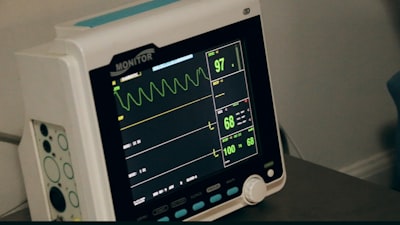
Fetal monitoring has undergone a profound transformation in recent years, driven by the convergence between artificial intelligence and precision medicine. Traditionally, the fetal electrocardiogram (fECG) and Doppler ultrasound have offered complementary but isolated perspectives: the former captures the electrical activity of the fetal heart, while the latter reflects mechanical hemodynamics influenced by factors such as placental resistance and vascular elasticity. Until now, integrating both sources of information required manual interpretation and limited statistical tools. However, a new multimodal generative approach is redefining the way we can translate electrical signals into functional images of fetal blood flow, opening the door to more comprehensive and personalized diagnostics. This article explores the technical underpinnings of this technology, its clinical potential, and the role that bespoke software solutions and artificial intelligence for enterprises can play in its actual implementation.
The central challenge is that fECG and Doppler belong to distinct physical domains: one is electrical, the other mechanical. Although there is a causal relationship between myocardial depolarization and blood ejection, the Doppler signal is affected by vessel geometry, vascular impedance, and placental conditions, components that are not directly derived from the ECG. Therefore, a generative model that attempts to reconstruct the Doppler from the fECG must learn to separate the recoverable part—the part that depends on electrical activity—from the residual part, which corresponds to pure mechanical factors. This distinction is crucial for diagnosis, since an abnormal Doppler wave could be due to an electrical arrhythmia or a hemodynamic alteration, and the treatment would be radically different.
The proposed framework uses a cross-care architecture between modalities combined with dilated convolutions and self-care mechanisms. Dilated convolutions allow patterns to be captured at different time scales without excessively increasing the number of parameters, while cross-attention learns to align maternal and fetal ECG representations with the Doppler envelope. In addition, self-care models long-range dependencies, essential for maintaining the coherence of the entire cardiac cycle. The training was carried out on 885 synchronized fetal/maternal ECG and Doppler segments obtained from 39 pregnancies, achieving a mean spectral error of 49.9 dB² and a heart rate error of 4.71 beats per minute, figures well below clinical thresholds. Cross-attention reduced spectral error by 39% compared to a simple channel concatenation, which quantifies the influence of maternal-fetal coupling.
From a business and technology perspective, this breakthrough perfectly illustrates how artificial intelligence can extract value from complex multimodal data. However, bringing a research model to a robust clinical product requires more than algorithms: it needs scalable infrastructure, data privacy, and personalization. This is where enterprise AI capabilities like those offered by Q2BSTUDIO come into play. A software development company can build custom applications that integrate these models into hospital environments, managing real-time signal ingestion, low-latency inference, and result visualization. In addition, deployment on AWS and Azure cloud services enables distributed processing of large volumes of fetal data without compromising security, a critical aspect given that medical information is subject to strict regulations such as HIPAA or GDPR.
Cybersecurity also plays a fundamental role: health data is one of the most sensitive and coveted assets by attackers. A system that handles fetal ECG and Doppler must incorporate end-to-end encryption, granular access controls, and continuous auditing. Q2BSTUDIO has a background in cybersecurity and can design architectures that protect both data confidentiality and integrity during AI model training and inference.
Another relevant aspect is business intelligence: hospitals and research centers need dashboards that show trends in reconstructed Doppler signals, correlations with perinatal outcomes and early warnings. Integration with power bi allows these indicators to be visualized in real time, facilitating clinical decision-making. Likewise, the use of AI agents can automate tasks such as heartbeat segmentation, detection of anomalies in the Doppler envelope or the generation of structured reports, freeing up time for medical staff to focus on patient interaction.
The analysis of residual components – that part of the Doppler that is not recoverable from the ECG – provides an objective metric of vascular mechanical status. For example, an increase in residual energy could indicate abnormal arterial stiffness or placental obstruction, while a reduction could reflect good compliance. These markers, when combined with electrical information, allow for finer phenotyping of conditions such as intrauterine growth restriction or preeclampsia. The ability to decouple electrical and mechanical contributions is therefore a powerful tool for personalized fetal medicine.
For this technology to reach its maximum impact, it is necessary to overcome technical barriers such as interpatient variability, artifactual noise, and the need for lightweight models that can run on portable devices. Here, neural network compression and quantization techniques, along with optimization for edge hardware, are areas of active work. Q2BSTUDIO, with its focus on artificial intelligence and custom software development, can help transfer models from the lab environment (Python, PyTorch) to clinical production environments (REST APIs, Docker containers, Kubernetes orchestration) with performance and scalability guarantees.
In conclusion, the multimodal generative framework for translating ECG to fetal Doppler represents a significant advance in the understanding of maternal-fetal cardiovascular physiology. Not only does it allow hemodynamic signals to be synthesized from electrical records, but it explicitly quantifies what electricity can and cannot explain. This decomposition capability opens up new avenues for non-invasive diagnosis and continuous monitoring. Collaboration between clinical researchers and technology companies such as Q2BSTUDIO is key to bringing these innovations to the point of care, integrating business intelligence services, secure cloud platforms, and artificial intelligence solutions that transform complex data into actionable clinical decisions. The future of fetal medicine no longer depends only on more precise sensors, but on the ability to weave their signals into a unified story, and artificial intelligence is the common thread.
.jpg)
.jpg)
.jpg)
.jpg)