
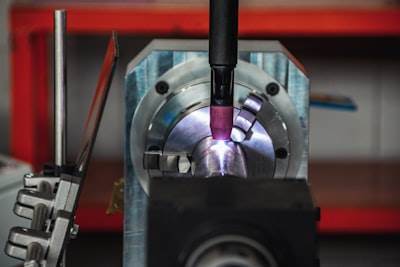
In the world of advanced manufacturing, machine learning faces a recurring challenge: experimental datasets are often small, expensive to obtain, and highly material-specific. This scenario, typical of physical processes dominated by complex phenomena, requires a methodological approach that goes beyond algorithms. Take abrasive waterjet milling on Inconel 718, a superalloy used in turbines and aerospace components, for example. With just 155 observations, this case perfectly illustrates how data curation, evaluation design, and the way we integrate physics can be as decisive as the machine learning model chosen.
Recent research in this area reveals three key lessons. First, it is crucial to differentiate between cleansing based on physical principles and statistical healing. While the former eliminates points that violate known laws (such as impossible energies), the latter treats variable selection and value imputation as competing modeling hypotheses, not as silent preprocessing. This distinction changes the way we interpret data quality and directly affects the final performance.
Second lesson: the instability in model classification when using small validation sets. An experiment with a 15-point hold-out partition may show a winner who, when applying 10-fold cross-validation, falls from first place to seventh. In this context, Gaussian processes (GP) demonstrate superior robustness, consistently occupying the first places. This finding underscores the importance of evaluating models with appropriate resampling methods, especially when data are scarce.
The third lesson addresses the integration spectrum of physics. Residual learning on a compact physical baseline is competitive for Gaussian processes, reducing variance and offering interpretable decomposition. However, this same strategy degrades the performance of tree-based models, such as random forest or gradient boosting. In addition, Bayesian hyperparameter optimization improves parameter-sensitive models (such as SVR or gradient boosting), but it can hurt hybrid multi-stage pipelines when the sample is so small. The uncertainty intervals of GPs, by the way, are approximately calibrated (86% empirical coverage vs. 90% nominal), which adds confidence to their predictions.
What does all this mean for a company looking to implement artificial intelligence in its manufacturing processes? That it is not enough to have a good algorithm; A comprehensive strategy is needed that considers data quality, reliable evaluation, and intelligent injection of expert knowledge. In custom applications, such as those we develop at Q2BSTUDIO, we address these problems by design. We combine data science expertise with deep industry domain knowledge to create solutions that truly work with limited data.
For example, our AI agents can adapt to environments where data is scarce, leveraging physical simulations and transfer learning. In addition, we implement AWS and Azure cloud services to scale training pipelines without incurring excessive costs, and we apply cybersecurity to protect both process data and trained models. Business intelligence with power bi allows you to visualize uncertainty and predictions, facilitating decision-making in the plant.
Another relevant aspect is the integration of AI for companies in the value chain. Many organizations underestimate the data curation phase, spending 80% of their time preparing data that will later be inadequate. At Q2BSTUDIO we offer business intelligence services ranging from data architecture to model deployment, always with a pragmatic approach that prioritizes reliability over complexity.
For the specific case of waterjet milling, a typical solution might include a Gaussian process as the core of the model, with a physical baseline that captures the shear energy and material removal rate. On top of that, a residual component trained with the little experimental data available is added. Not only does this approach improve accuracy, but it allows you to interpret how much of the prediction comes from physics and which from data, which is invaluable to process engineers.
And what about model evaluation? We always recommend using repeated cross-validation and, when possible, comparing multiple healing strategies as alternative hypotheses. This avoids surprises such as the aforementioned instability. In addition, Bayesian hyperparameter optimization must be applied carefully, especially in hybrid pipelines where components can interact in a non-linear fashion.
From a business perspective, investing in software as you contemplate these lessons is more cost-effective in the long run than using generic solutions. Each manufacturing process has its own physics, its own materials, and its own data limitations. A "one-size-fits-all" approach rarely works. At Q2BSTUDIO we design and implement these systems, integrating tailor-made applications that are tailored to the specific needs of each client, whether in the aerospace, automotive or renewable energy sectors.
Finally, let's not forget the importance of documentation and reproducibility. In data-poor environments, every preprocessing decision, every model choice, and every hyperparameter tuning must be justified. Only in this way can knowledge be scaled from a laboratory experiment to serial production. The combination of artificial intelligence with physical principles, properly managed, is the key to the next generation of intelligent manufacturing processes.

.jpg)