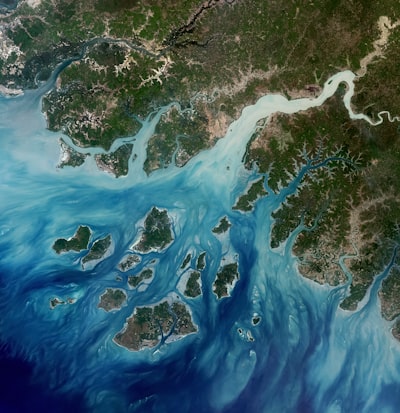
Predicting harmful algal blooms (HABs) has become a critical challenge for coastal management and aquaculture. These phenomena, driven by changes in ocean temperature, upwelling, and nutrient availability, can cripple seafood production and affect public health. Traditionally, models based on historical data and on-site observations were insufficient to anticipate events in advance. However, the convergence of artificial intelligence (AI) and satellite observation is transforming this scenario. By combining large volumes of satellite data—such as sea surface temperature, chlorophyll concentration, and currents—with machine learning algorithms, it is possible to detect complex patterns that precede blooms. This approach not only improves the accuracy of early warnings, but also allows authorities and companies in the sector to make informed decisions days or weeks in advance.
Behind these predictive systems there is a work of data engineering and software development that is rarely visible. Processing terabytes of satellite imagery, integrating time series, and applying machine learning models requires a robust technology infrastructure. Many organizations turn to artificial intelligence for companies such as those offered by Q2BSTUDIO, where custom applications are designed capable of ingesting heterogeneous data and running predictive models in real time. The key is to combine the power of the cloud with specialized algorithms, adapted to each marine ecosystem.
One of the most relevant advances in this field is the use of ensemble models based on decision trees, such as Random Forest or Extra Trees, which have demonstrated a superior discrimination capacity (with areas under the ROC curve greater than 0.75) when biological variables derived from satellites are incorporated. These models not only identify favorable environmental conditions for blooms—such as thermal fronts or upwelling anomalies—but also incorporate indicators of the phytoplankton community, such as functional plankton types. The result is a system that learns from interannual and spatial variability, and that can generalize to unobserved areas thanks to strict spatio-temporal validation techniques, such as the retention of complete years and geographic clusters.
From a business perspective, implementing a HAB prediction system involves much more than training a model. It requires custom software that automates satellite data download, runs cleanup pipelines, manages model orchestration, and generates dashboards that are accessible to end users. This is where AWS and Azure cloud services come into play, providing scalability and resiliency to process massive volumes without interruption. Q2BSTUDIO, as a company specialising in technological solutions, offers cloud services that allow these systems to be deployed in hybrid environments or fully in the cloud, guaranteeing high availability and data security.
Another fundamental aspect is cybersecurity. Platforms that handle critical environmental data and feed alert systems for aquaculture must protect the integrity of information from cyberattacks. An incident that alters predictions could have serious economic and health consequences. That's why cybersecurity and pentesting solutions are an integral part of development. From architecture design to final implementation, access controls, encryption, and continuous auditing are applied. Q2BSTUDIO integrates these services into your projects, ensuring that AI for business is not only powerful, but also reliable.
The visualization of the results is another critical point. Seafood production area managers need to quickly interpret the bloom probabilities and the variables that drive them. Here, business intelligence services such as Power BI become allies. By connecting predictive models with interactive dashboards, it is possible to filter by areas, dates, and risk thresholds, facilitating decision-making. Q2BSTUDIO develops solutions that integrate Power BI with cloud databases and prediction APIs, offering a complete view of the state of the sea in real time.
In addition, the current trend points towards the creation of autonomous AI agents that continuously monitor ocean conditions and trigger alerts without human intervention. These agents can learn from new observations and adjust models dynamically, improving their accuracy with each season. The combination of AI agents with federated learning systems would also allow knowledge to be shared between regions without compromising the privacy of the commercial data of each aquaculture company. Q2BSTUDIO is at the forefront in the development of these AI agents, integrating reasoning and planning capabilities adapted to marine environments.
In practice, a successful predictive system has already been tested on Atlantic coasts, where more than 1,000 satellite predictors were used over a decade. The model was able to distinguish between flowering and non-flowering conditions with operational accuracy. However, the challenge remains transferability to other regions and integration with local data. To do this, companies need tailored applications that allow thresholds and variables to be adjusted according to the specific ecosystem. This is where Q2BSTUDIO's expertise in custom software development makes the difference, offering scalable solutions from the prototype phase to production.
The future of prediction of harmful algal blooms lies in the fusion of next-generation satellites (with higher spectral and temporal resolution) with deep learning techniques and hybrid physical-statistical models. Companies that adopt these technologies will not only improve the sustainability of their operations, but they will also be able to optimize seafood harvesting, reduce losses, and comply with increasingly stringent environmental regulations. Investing in AI for business is no longer an option, but a competitive necessity.
Q2BSTUDIO, with its experience in AWS and Azure cloud services, business intelligence and cybersecurity, is positioned as the ideal technological ally to build these solutions. From designing the data architecture to deploying models into production, every step is executed with a focus on quality and innovation. If your organization is looking to implement an AI-based early warning system, having a partner who understands both the oceanographic and software engineering side is critical. It's not just about having a model; it is about integrating it into a digital ecosystem that works in real time, with the security and scalability necessary to face the challenges of climate change.