In the dizzying advancement of artificial intelligence applied to video generation, one of the most subtle but decisive challenges is the ability to predict physical dynamics at different time scales without having to retrain the model for each sample rate. Traditional virtual world models are often designed with a fixed time pitch embedded in the network weights, which prevents the system from being able to adapt to varying temporal resolutions. This problem, known as lack of temporal generalization, directly affects applications ranging from hierarchical planning in robotics to video game simulation or sim-to-real transfer in industrial environments.
Recently, Hamiltonian generative networks (HGNs) have emerged as a promising solution by basing their predictions on a continuous energy function over time, independent of the rate of observation frames. However, in practice it has been observed that these models fail when they try to extrapolate to time steps beyond the training range, especially in non-conservative environments – those with external forces or energy dissipation. The causes are two distinct mechanisms: the uncontrolled growth of the latent magnitude due to unconstrained action-force mapping, and the accumulation of global truncation errors caused by a low-resolution numerical integrator.
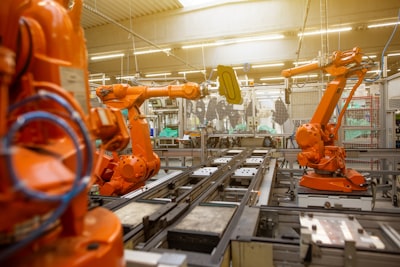
To understand the relevance of this challenge, imagine a business application that requires predicting the behavior of a robotic arm under different conditions of friction and acceleration. A video model that can't generalize temporally would give inconsistent predictions if the camera or sensor changes its capture frequency. This is where Q2BSTUDIO's experience in the development of custom applications becomes indispensable: building software solutions that integrate robust and scalable dynamic models, capable of operating in different environments without losing precision.
The first mode of failure—the growth of the latent magnitude—occurs because the mapping between the actions (applied forces) and the latent variables of the model is not bounded. In an ideal Hamiltonian system, the position and momentum variables evolve within a bounded range if the total energy is conserved. But in the presence of variable external forces, the HGN model learns to encode those forces in latent space without a regularization mechanism that prevents the magnitude from triggering. This causes that, when predicting with a longer time step, latent trajectories become unstable and generate unreal videos.
One solution identified is to introduce a regularization term in the loss function that penalizes the excessive growth of latent quantities, similar to what is done in spectral normalization techniques. This fix, while simple in theory, requires careful implementation within the training pipeline. Q2BSTUDIO, with its dedicated enterprise AI team, can tailor these regularization techniques to each customer's specific use cases, ensuring that generative video models maintain stability even outside of the training distribution.
The second failure mode is related to the numerical integrator used to solve the equations of motion in the model. HGNs often employ symplectic integrators—such as the leapfrog method—that preserve geometric properties of the Hamiltonian system. However, these integrators have a global truncation error that grows with the size of the time step. When the model is trained with small steps and evaluated with large steps, the accumulated error distorts the prediction to the point of making it useless. Recent research recommends using adaptive or higher-order integrators—such as the fourth-order Runge-Kutta—and adjusting the integration step dynamically based on the rate of change in the system.
Implementing this solution not only involves changing the integration algorithm, but also redesigning the model architecture so that it can expose the time step as an explicit input variable. This is achieved by means of a time-conditioning layer that modulates the latent forces depending on the desired step. In practice, this requires bespoke software that combines machine learning engineering with high-performance numerical optimization. Q2BSTUDIO offers just that: AI services ranging from consulting to full deployment, including AWS and Azure cloud services to scale training and inference without losing efficiency.
Beyond technical solutions, temporal generalization has strategic implications for the industry. For example, in the field of cybersecurity, intelligent video surveillance systems need to analyze sequences at different speeds – sometimes in real time, sometimes in slow motion to detect intrusions. A model that only operates at a fixed frequency would be useless. Here, Q2BSTUDIO's ability to integrate AI agents that dynamically adapt to environmental conditions is a key differentiator. In addition, the bespoke applications we develop allow companies to deploy these models in their own environments, whether on-premise or in the cloud, with the cybersecurity needed to protect sensitive data.
Another field where this technology makes a difference is in business intelligence. Imagine a video analytics platform that must predict customer flow in one mall with cameras operating at 15 fps, while another branch uses 30 fps. With a model that generalizes temporarily, you can unify data and generate consistent dashboards in power bi without the need to retrain for each configuration. This type of integrated solutions is precisely what we offer from business intelligence services in Q2BSTUDIO, combining predictive analysis with advanced visualization.
From a more theoretical point of view, advances in Hamiltonian models for video are paving the way for more accurate twin digital simulators. A digital twin of an industrial process, for example, must operate at different time scales: from microseconds for vibrations to hours for accumulated wear. Temporal generalization in the underlying models dramatically reduces the amount of data required to calibrate the twin, as there is no need to train separate models for each resolution. This saves computational costs and speeds up deployment.
However, the practical implementation of these ideas requires a mature technological ecosystem. On the one hand, cloud infrastructure is needed to handle massive volumes of video and distributed training. On the other hand, orchestration tools are needed to connect the model with real-time data sources. At Q2BSTUDIO we offer AWS and Azure cloud services designed for this type of workload, with process automation and continuous monitoring. In addition, our cybersecurity solutions ensure that data and models are not vulnerable to adversarial attacks, a latent risk in predictive video systems.
Finally, it should be noted that research in this field is still active. One of the most promising lines is the use of AI agents that dynamically adjust the time step based on the uncertainty of the model, similar to adaptive sampling methods. This would allow the system to automatically decide when it needs a finer prediction (e.g. during a collision) and when it can use thicker steps (smooth motion). Q2BSTUDIO is already exploring these techniques in collaboration with research teams to offer our customers cutting-edge solutions that not only solve current problems, but anticipate future challenges.
In summary, temporal generalization in Hamiltonian video models is a technical problem with identifiable solutions: regularization of latent magnitudes and adaptive integrators. But putting it into business practice requires a comprehensive approach that combines tailored applications, robust artificial intelligence, cloud infrastructure, and cybersecurity measures. At Q2BSTUDIO we are prepared to accompany organizations on this path, offering everything from conceptual design to the implementation and maintenance of intelligent video systems that work at any time scale.