
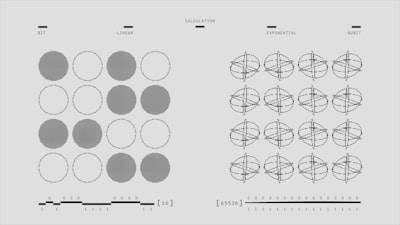
In the age of Big Data, image classification has become a fundamental pillar for numerous industries, from manufacturing to healthcare. Traditional models based on convolutional neural networks have demonstrated remarkable efficiency, but they face limitations in terms of computational resources and scalability. In this context, the fusion of quantum principles with classical artificial intelligence opens up new frontiers. One of the most promising strategies combines the encoding of images in quantum states with an expert mixing approach, allowing not only greater efficiency, but also a remarkable reduction in errors in prediction. This quantum-classical hybrid approach has been demonstrated, in benchmarks such as MNIST and Fashion-MNIST, to improve accuracy and reduce the failure rate by up to a factor of two compared to conventional methods.
The central idea behind this strategy is simple but powerful: instead of processing an image with a single model, multiple 'experts' are deployed – each with slightly different parameters – who analyze the same image in parallel. These experts can be implemented by quantum circuits that perform local convolutions and extract features encoded in quantum stabilizers. The resulting information is then combined by a classical neural network, which learns to weight each expert's contributions to obtain a more robust classification. The diversity of experts introduces a kind of consensus that mitigates individual biases, making the system more resistant to noise, lighting variations or even adversarial attacks, a critical aspect in the field of cybersecurity.
How is this achieved in practice? First, each image is encoded in the amplitudes of a quantum state using an amplitude coding process. Then, a series of local unit operations—analogous to classical convolutional filters—transform that state, extracting relevant patterns. Finally, quantum stabilizer codes allow features to be extracted with high fidelity. This entire quantum stage can currently be executed in simulators on GPUs, and in the medium term in real quantum processors. Computational overhead is moderate, which makes this proposal a practical alternative to classical schemes.
For companies, this technology is not a mere academic curiosity. The ability to classify images with high accuracy and low computational cost has direct applications in automated quality control, facial recognition in security systems, diagnostic imaging in medicine, or document analysis in business intelligence processes. For example, a factory can integrate a vision system based on this approach to detect defects in real time, reducing waste and improving efficiency. Implementing such systems requires tailored software that is tailored to the specific needs of each organization, and that can scale with the volume of data.
At Q2BSTUDIO, we understand that technological innovation must go hand in hand with business viability. Our team of AI experts and custom application development can help you design and implement image classification solutions that leverage both classical methods and emerging quantum approaches. We also offer AWS and Azure cloud services to deploy these models in a scalable and secure way, as well as business intelligence services with Power BI to visualize and analyze the results obtained.
The integration of AI agents capable of learning and adapting to new patterns is another pillar of our offer. Whether it's by building bespoke applications or implementing process automation systems, we aim to provide businesses with the tools they need to stay ahead of the curve. Image classification with quantum strategy and expert mixing is just one example of how AI for business can evolve to solve complex problems more efficiently, reducing power consumption and improving accuracy.
In conclusion, the combination of quantum principles with expert mixing techniques represents a significant advance in the field of computer vision. Although quantum computing is still in the maturing phase, hybrid approaches already offer tangible improvements. Companies that bet on these technologies will be better positioned to face the challenges of the future, and from Q2BSTUDIO we are ready to accompany them on that path, offering business intelligence, cybersecurity, and software development services as they enhance their analytical capabilities.
.jpg)

.jpg)
.jpg)