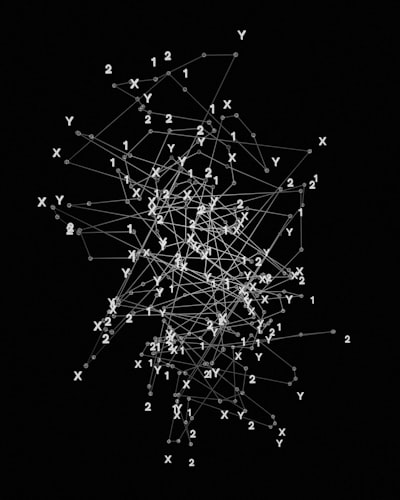
Computation in the unit circle, represented by complex phasors of constant modulus, opens an unexplored avenue for deterministic and efficient algorithms in classical hardware. PhasorFlow is an open-source Python library that materializes this paradigm: it works with signals encoded as z = e^{i\phi} phasors on the N-torus, preserving the global norm while the components evolve in \mathbb{C}^N. Instead of resorting to quantum mechanics, this approach leverages continuous geometric gradients in a phase space, allowing deep learning models to be designed with low parametric footprint and high interpretability.
The proposal is structured in three pillars. The first is a model of phasor circuits with N wires and M gates, supported by a library of 22 operations ranging from standard unit transformations to neuromorphic and coding functions. The second is the Variational Fasor Circuit (VPC), analogous to variational quantum circuits, which optimizes continuous-phase parameters for classification and regression tasks. The third is the Fasorial Transformer, which replaces QK^TV attention with a mixture of tokens based on the discrete Fourier transform (DFT), without trainable parameters, following the line of architectures such as FNet.
PhasorFlow has been validated in spatial classification, time series prediction, financial volatility, neuromorphic tasks and, through the VPC, in the classification of motor imagination electroencephalograms, achieving accuracy comparable to deep networks with a fraction of the parameters. The honesty of the research is remarkable: the VPC is described as a linear classifier in phase, efficient in parameters but with a parity ceiling that is not exceeded by increasing the depth; the Fasorial Transformer benefits from depth to a saturation point, being competitive but not superior to modern models. This transparency positions unit-circle computing as a lightweight, deterministic, executable alternative on classic hardware, ideal for resource- or latency-constrained environments.
From a business perspective, the PhasorFlow news comes at a time when companies are looking to reduce reliance on expensive GPU infrastructures and simplify the AI model development cycle. The library allows you to explore architectures that consume less memory and power, which fits with the growing demand for applications as they require deployment in edge environments or embedded devices. In this context, Q2BSTUDIO, as a software and technology development company, offers AI services for companies that could integrate phasor-based components for specific tasks of classification, anomaly detection or signal processing, while maintaining predictable performance and without the need for quantum hardware.
The intersection between this paradigm and the business world is also manifested in the optimization of custom software. A phased transformer, for example, can be inserted as a token mixing layer in financial time-series analysis or recommendation systems, reducing inference latency and computational cost. These models can be orchestrated by AWS and Azure cloud services, where packaged versions of PhasorFlow are deployed for batching or streaming. Cybersecurity also benefits: as they are deterministic operations and without inherent randomness, the behavior patterns of phasor models are more predictable, making auditing and intrusion detection easier. Q2BSTUDIO can build monitoring systems that combine phasors with business intelligence services such as Power BI, visualizing in real time the evolution of the sorting phases.
Another relevant aspect is the integration with AI agents. An intelligent agent that processes signals from sensors (accelerometers, microphones, EEGs) can employ a phasor classifier at its core, consuming a fraction of the resources that a conventional neural network would need. The geometric nature of phasors also allows for training with few examples, which is critical in industrial applications where labeling data is expensive. The library is distributed under the MIT license on GitHub, and its modular design makes it easy to create custom applications that require signal processing in the angular domain.
Beyond the results in academic benchmarks, the true value of PhasorFlow lies in the simplicity of its underlying theory. There is no need for quantum hardware or approximate quantum simulations; everything runs on conventional CPUs and GPUs with linear algebra operations. This democratizes access to techniques inspired by quantum mechanics without the complexity or cost that these entail. For a development company like Q2BSTUDIO, incorporating this library into business intelligence services can mean a competitive advantage: offering Power BI dashboards that, powered by phasor models, generate early warnings in financial markets or IoT systems, all from an elastic cloud infrastructure.
In conclusion, PhasorFlow is not intended to replace modern transformers or deep nets, but rather offers a lightweight and formally elegant complement to problems where parity and phase are relevant. The open-source community can already experiment with it, and companies can leverage Q2BSTUDIO's expertise to build solutions that integrate this unitary compute in a robust and scalable way. The key is to understand that, sometimes, limiting oneself to one circle (the unitary one) opens up a universe of possibilities.