
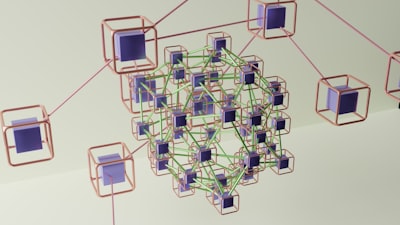
Autonomous navigation is one of the most dynamic and challenging fields of modern robotics. From delivery vehicles to scouting drones, a system's ability to move efficiently and safely in unfamiliar environments depends largely on how it represents the world. Traditionally, metric maps — based on exact coordinates and precise measurements — have dominated the landscape. However, more and more researchers and companies are turning to a more robust and lighter alternative: topological mapping. This approach abstracts space into nodes and connections, representing significant places and the paths between them, without the need for detailed geometry. Its main advantage is compactness and resistance to sensory noise, but it suffers from a historical problem: the lack of evaluation standards. This is where initiatives like TOPO-Bench — an open-source evaluation framework — mark a turning point.
To understand why this framework is so relevant, we must first recognize the limitations of current methods. In practice, topological mapping faces a subtle but devastating enemy: perceptual aliasing. It occurs when two completely different places generate similar sensory observations (e.g., two white hallways with identical doors). A poor topological map could confuse them, leading the robot to make wrong decisions. Despite its impact, aliasing has historically been difficult to quantify. Each research team used their own test environments, subjective metrics, and disparate datasets, making a fair comparison impossible. In this context, the community urgently needed a unified protocol that would allow measuring not only the accuracy of the location, but also the ambiguity inherent in the input data.
TOPO-Bench arises as a response to this need. Its central proposal is simple but powerful: formalize topological consistency as the fundamental property of these maps and demonstrate that location accuracy—a well-known metric—can serve as an efficient and interpretable indicator of such consistency. In addition, it introduces a quantitative index of ambiguity for each dataset, allowing environments to be classified according to their level of challenge. This way, a developer can know if their system is being tested in a trivial environment or an extremely ambiguous one. To validate the protocol, the authors curated a set of heterogeneous benchmarks with controlled aliasing levels, implemented systems based on deep learning, and compared them with classical methods. The results reveal that even modern approaches fail miserably under high aliasing, opening up opportunities for new architectures.
From a business and technical perspective, the implications are enormous. Companies developing internal logistics robots, warehouse assistants or autonomous vehicles need to ensure that their systems work in real conditions, where the aisles resemble each other and the lights change. A framework like TOPO-Bench allows you to objectively assess which navigation software provider is really reliable. In addition, being completely open-source, it democratizes access to rigorous testing, accelerating innovation. It's not just a test bed; it is a call for the standardization of research, something that sectors such as computer vision have already achieved with ImageNet or COCO. Topological mapping needs its own

.jpg)
.jpg)