
In today's digital world, content management has become a fundamental pillar for any organization looking to communicate effectively with its audiences. However, one of the most persistent challenges is human error: from a mis-entered piece of data to an incorrect version of a document published in the wrong channel. Not only do these mistakes affect reputation, but they can have legal and financial consequences. This is where the question arises: can a headless CMS for custom applications help reduce these human errors? The answer, as we will see, is yes, as long as it is implemented with the right measures and in the context of a well-designed technological ecosystem.
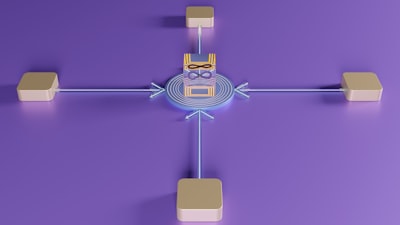
To understand this, we must first differentiate a headless CMS from a traditional one. While classic CMSs integrate the presentation layer with the content backend, a headless CMS separates the two layers and delivers the content through APIs, allowing any interface – web, mobile, IoT devices, etc. – to consume it. This architecture already brings a first level of error reduction: by decoupling the presentation, content teams can focus on the quality of information without worrying about styles or layout, which decreases visual and formatting inconsistencies. But the real anti-error potential comes when this system is integrated into custom applications, i.e. designed specifically for each organization's workflows and validation needs.
Custom applications allow you to define precise business rules that prevent common mistakes. For example, a headless CMS set up for a news portal may require that every article go through a source review before being published, or that financial data include automatic validation of sums and balances. These rules are implemented using forms with required fields, real-time logical validations, and tiered approval flows. In this way, the system acts as a gatekeeper that does not let incomplete or contradictory information pass through. Q2BSTUDIO, as a custom software development company, specialized in creating technological solutions tailored to each client, integrates these functionalities into its headless CMS implementations, ensuring that teams work with tools that reinforce accuracy without hindering their productivity.
However, the reduction of human error is not limited to the initial data capture. A well-designed headless CMS incorporates versioning and traceability mechanisms. Every change to a piece of content is recorded: who made it, when, and which version it replaced. This is crucial for audits and to prevent the spread of errors when someone modifies a text without the knowledge of the team. In addition, alert and autoscaling systems notify managers when anomalies are detected—for example, a price that doubles the expected value or a publication date in the past—allowing corrections before the error reaches the public. These controls are especially valuable in regulated sectors such as banking, health or public administration, where incorrect data can have serious implications.
Artificial intelligence adds an extra layer of prevention. AI algorithms can analyze historical patterns of content and point out potential inconsistencies: a name that is spelled in two different ways, a number that deviates from the usual range, or even a tone that doesn't fit the style guide. These AI-assisted suggestions help editors detect errors that would go unnoticed by the human eye. In this sense, the AI solutions for companies that Q2BSTUDIO integrated into its platforms allow headless CMS systems not only to store and deliver content, but also to intelligently analyze it. For example, an AI agent can automatically review translations and alert on terminology discrepancies, or an AI agent system can take care of comment moderation, reducing manual loading and bias.
The underlying infrastructure also plays a key role in the reliability of the system. A headless CMS deployed on AWS and Azure cloud services ensures high availability, scalability, and automatic backups, minimizing errors resulting from server crashes or data loss. In addition, cybersecurity is critical: unauthorized access or content injection attacks can introduce malicious errors. Implementing security controls such as multi-factor authentication, encryption of data in transit and at rest, and regular audits is part of the best practices Q2BSTUDIO applies in your headless CMS projects. In fact, the company offers cybersecurity and pentesting services to ensure that applications are protected against vulnerabilities.
Another relevant aspect is the integration with business intelligence tools. A headless CMS can feed Power BI dashboards that monitor the quality of the content: number of errors detected, correction rate, compliance with editorial deadlines, etc. This visibility allows managers to identify bottlenecks and areas for improvement in processes. The combination of headless CMS with business intelligence services transforms content management into a data-driven process, where decisions are made with objective information and not with assumptions. Q2BSTUDIO, as a partner in the implementation of these ecosystems, offers consulting to connect the CMS with the BI platforms already used by the company, maximizing the return on investment.
Of course, the successful implementation of a headless CMS to reduce human error is not automatic. It requires careful design of workflows, a clear definition of roles and permissions, and proper training of teams. This is where custom software development makes all the difference: a generic solution imposes its own rules, while a custom application adapts to the organization's actual culture and processes. Q2BSTUDIO works side by side with its clients to understand their dynamics and build a system that, without adding friction, prevents errors from reaching the audience. For example, instead of forcing editors to fill out endless forms, certain checks can be automated in the background, freeing up time for higher-value tasks.
In practice, we've seen cases where ecommerce companies reduced product listing errors by 40% after implementing a cross-validated headless CMS against their master catalog. Or financial institutions that completely eliminated failures in the publication of regulatory communications thanks to approval flows and compliance alerts. These results are not the result of technology alone, but of a comprehensive strategy that combines headless CMS, artificial intelligence, cloud and cybersecurity, all orchestrated by an experienced development team. Q2BSTUDIO, with its focus on custom applications, is positioned as the ideal ally to address this challenge.
In conclusion, headless CMS for custom applications not only helps reduce human error, but does so in a systematic and scalable way. Its ability to impose validation rules, version content, integrate artificial intelligence and operate on robust cloud infrastructures makes it a far superior tool to traditional approaches. Of course, success depends on an implementation that respects the real flows of the business and collaboration with a technology partner that understands both the technology and the business context. Q2BSTUDIO brings together both capabilities, offering everything from custom software design to the integration of AWS and Azure cloud services, including artificial intelligence, cybersecurity and business intelligence solutions with Power BI. In an environment where human error is inevitable, the best strategy is to build systems that proactively minimize it. And the headless CMS, well used, is undoubtedly one of the most promising avenues.
.jpg)
.jpg)
.jpg)
.jpg)