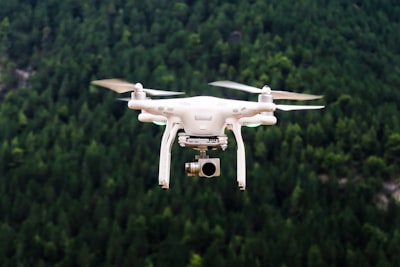
Autonomous navigation of unmanned aerial vehicles (UAVs) has evolved significantly in recent years, driven by the need to operate in unfamiliar environments without relying exclusively on GPS or pre-programmed flight plans. The combination of computer vision and natural language processing has given rise to a field known as visual language navigation (VLN), where verbal instructions are translated into real-time flight commands. However, traditional systems often exhibit misalignments between global semantic understanding and sequential action generation, leading to erratic trajectories and unacceptable latencies in long-range missions.
To address this challenge, innovative architectures such as FSD-VLN propose a fast-slow dual system model that effectively separates semantic reasoning from low-latency flight command generation. At its core, the system has two asynchronous branches: a slow branch that extracts stable semantic priors from pre-trained language and vision models, and a fast branch based on a Diffusion Transformer (DiT) that models action distributions over time to generate coherent flight outputs. This decomposition allows complex reasoning not to block the speed necessary for real-time control, drastically improving the smoothness of trajectories and the ability to react to unforeseen changes.
Experimental results in large-scale low-altitude simulations show that FSD-VLN achieves navigation success rates up to twice as high as state-of-the-art methods in unseen scenarios, while reducing inference latency per action and total execution time by more than 50%. This improvement not only validates the importance of separating semantic reasoning from low-level control, but also opens the door to real applications in logistics, surveillance, search and rescue, and precision agriculture, where UAVs must interpret complex environments following natural language instructions.
From a business perspective, implementing systems like FSD-VLN requires deep integration of artificial intelligence, computer vision, and flight control. Companies looking to adopt these technologies need to have technology partners capable of developing customized solutions. This is where companies like Q2BSTUDIO excel, offering AI services for businesses that cover everything from creating language models to optimizing real-time inference processes. In addition, its expertise in custom applications allows complex architectures to be adapted to the specific needs of each organization, ensuring scalability and performance.
Developing custom software for air navigation systems involves not only the implementation of deep learning algorithms, but also integration with robust cloud infrastructures. AWS and Azure cloud services provide the computational power needed to train large models and deploy inference at the edge. Likewise, cybersecurity becomes a fundamental pillar: any vulnerability in the communication between the UAV and the base station could compromise the mission. For this reason, Q2BSTUDIO includes cybersecurity and pentesting services in its portfolio, ensuring that every component of the system is resistant to attacks.
Beyond flight control, the data generated by these systems offers enormous analytical potential. Integration with business intelligence tools such as Power BI allows operators to visualize routes, response times, and behavior patterns of UAVs, facilitating strategic decision-making. AI agents can even monitor performance in real-time and suggest adjustments autonomously, creating a cycle of continuous improvement. All this is part of an ecosystem where artificial intelligence for companies is no longer an option, but a competitive necessity.
In conclusion, the FSD-VLN architecture represents a significant advance in language-based autonomous air navigation, demonstrating that the separation of reasoning and control processes is key to overcoming latency and accuracy limitations. For companies that want to incorporate these capabilities, having a technology partner that offers everything from cloud services to custom applications is essential. Q2BSTUDIO, with its experience in software development, artificial intelligence and cybersecurity, is prepared to accompany organizations on this path towards intelligent autonomy.