Headless CMS has become a strategic enabler for companies looking to deliver personalized digital experiences without sacrificing technical flexibility. In the context of custom applications, where each functionality must be aligned with specific business processes, headless architecture allows content management to be decoupled from the presentation layer, facilitating omnichannel delivery. Beyond technical agility, however, the key question is: how do you translate this architecture into a tangible return on investment (ROI)? The answer lies in understanding that ROI is not an automatic by-product, but the result of a carefully designed strategy that integrates technology, financial metrics, and a clear business vision.
To achieve a solid ROI with headless CMS in custom applications, the first step is to redefine the indicators of success. It is not enough to measure the speed of publication or the savings in maintenance; you have to connect those indicators with the income statement (P&L). For example, the ability to launch new content features in weeks instead of months accelerates time-to-market, resulting in faster cash flow and market share capture ahead of the competition. This virtuous cycle is possible when the headless CMS is integrated into a custom software ecosystem, where every component – from the database to the interface – is optimized for the business.
A critical aspect of maximizing ROI is AI-enabled personalization. By combining a headless CMS with AI for business, it is possible to segment audiences in real-time and deliver dynamic content that increases customer retention and upsell effectiveness. Machine learning techniques can analyze consumption patterns and recommend items, products, or services contextually, raising the conversion rate. In addition, AI agents (virtual assistants or bots) can be integrated directly with the content API to deliver personalized responses without human intervention, reducing operational costs.
The infrastructure that supports these solutions also plays a determining role in ROI. The adoption of AWS and Azure cloud services not only guarantees scalability and high availability, but also allows the deployment of the headless CMS in regions close to end users, minimizing latency. In addition, on-demand invoicing avoids investments in underutilized hardware. At this point, cybersecurity becomes a financial enabler: protecting content APIs against data leaks or attacks prevents millions in losses from regulatory fines and reputational damage. A well-integrated headless CMS should include strong authentication, encryption, and continuous auditing.
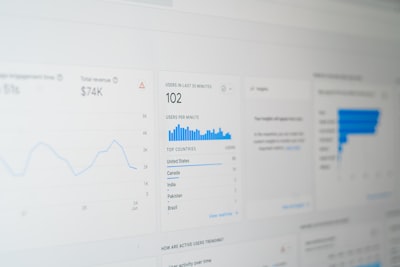
Another pillar of ROI is the ability to make data-driven decisions. Business intelligence services, such as dashboards in Power BI, can connect directly to headless CMS endpoints to visualize content performance metrics: which articles are most read, on which devices people consume the most, which times generate the most engagement. This information allows you to optimize your editorial strategy and resource allocation. By linking this data with CRM and ERP systems, companies can close the loop between content and sales, demonstrating the direct impact on revenue.
However, the successful implementation of a headless CMS in custom applications requires a technology partner that understands both the technical architecture and business metrics. This is where Q2BSTUDIO brings his expertise in custom software development and building ROI models aligned with the client's objectives. Our methodology begins with an analysis of current processes, identification of value drivers (customer retention, cycle times, asset utilization) and definition of financial KPIs. From there, we designed a headless solution that integrates, when necessary, artificial intelligence, automation and cloud components, always with a focus on return traceability.
For example, for an e-commerce platform that seeks to unify catalog content, blog and personalized recommendations, Q2BSTUDIO a headless CMS is deployed on AWS cloud services, connected to an AI agent engine for predictive suggestions. The result is a 30% reduction in content publishing time and a 15% increase in average order value. These impacts translate into concrete financial metrics that we report to executive management in Power BI dashboards. In this way, ROI is not a promise, but a validated data.
In conclusion, achieving a strong ROI with headless CMS on custom applications is not the result of installing software, but of adopting a comprehensive strategy that combines technology, data, and processes. The key is to design an ecosystem where content flows freely between channels, but at the same time is governed by business intelligence models that allow each interaction to be measured and optimized. For companies looking to move forward on this path, having an ally like Q2BSTUDIO, a specialist in custom applications, ensures that every investment in headless CMS generates measurable financial value. Headless technology is the vehicle; But the roadmap, metrics, and execution are what really turn content into a profit center.