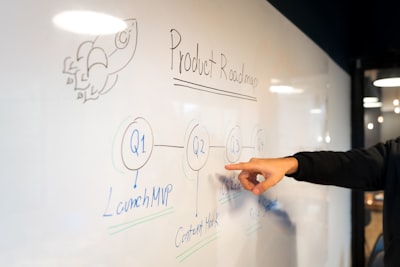
In today's digital transformation landscape, companies are constantly looking for ways to accelerate innovation without compromising quality or safety. One of the tools that is gaining prominence is the headless CMS, especially when integrated into custom applications. This approach decouples content management from the presentation layer, allowing any interface—web, mobile, IoT devices—to consume the same information through APIs. But beyond its technical flexibility, how does a headless CMS actually fit into an organization's innovation roadmap?
Innovation does not happen in a vacuum; You need a technical foundation that allows you to experiment quickly and scale results. A headless CMS provides just that: a content platform that acts as a hub for developing new capabilities without having to rewrite frontend logic. By separating content editing from your presentation, product teams can iterate over interfaces, test user hypotheses, and release functionality in days, not months. This is key in environments where competition demands continuous releases.
For companies that are committed to custom software, the headless CMS becomes a strategic ally. It allows you to build unique digital experiences that adapt to specific business processes, while maintaining content consistency across all channels. Companies that previously relied on monolithic platforms are now finding that they can orchestrate content, logic, and presentation independently, gaining agility and reducing technical debt.
A fundamental aspect is integration with the cloud. AWS and Azure cloud services provide the elasticity needed for a headless CMS to scale on demand. By deploying the content layer in cloud infrastructures, high availability, low latencies and a cost adjusted to real use are guaranteed. In addition, these platforms provide complementary services such as managed databases, messaging queues and serverless functions, which further enhance the capabilities of the CMS.
Artificial intelligence is another vector of innovation that is enhanced with a headless CMS. By exposing all content through APIs, AI models can be fed that personalize the experience in real time, recommend content or generate versions adapted to each user. AI agents can even interact with the content repository to create summaries, translations, or autoresponders. In this way, AI for business is not isolated, but naturally integrated into the editorial and product workflow.
Talking about innovation also implies talking about security. Cybersecurity in a headless environment requires protecting both API endpoints and the underlying infrastructure. By separating frontend and backend, the attack surface is reduced, but it is necessary to implement strong authentication, role-based access control, and encryption of data in transit and at rest. Companies that are moving forward with their innovation roadmap cannot neglect this aspect; A security breach can halt any progress.
In the field of analytics, the headless CMS makes it easy to connect with business intelligence service tools. By centralizing content, it is possible to measure its performance on each channel and make data-driven decisions. For example, Power BI can be integrated to generate dashboards that correlate content usage with business metrics, helping teams identify which topics, formats, or channels generate the most value. This makes the CMS a business intelligence asset, not just a repository of files.
The innovation roadmap benefits from controlled environments where you can test ideas without risk. A headless CMS allows you to create sandboxes replicating the real content structure, where innovation teams can experiment with new integrations—such as chatbots, augmented realities, or voice assistants—without impacting the production environment. This accelerates the learning cycle and reduces the cost of failure. In addition, content governance can be delegated without losing centralized control, balancing agility and regulatory compliance.
Innovation metrics are also changing. With a headless CMS, it is possible to measure the speed of release of new features, the adoption rate of emerging channels, or the impact of AI-based customizations. These metrics, in turn, feed back into the roadmap, allowing investments to be prioritized based on actual return. Companies that integrate this approach typically report a significant reduction in the time-to-market of new digital experiences.
In this context, Q2BSTUDIO positions itself as a technology partner that understands how to orchestrate all these elements. The company helps organizations design and implement headless architectures that align with their innovation strategy, combining headless CMS with enterprise AI, cloud services, and a security-by-design approach. Its multidisciplinary teams work closely with clients to move strategic ideas from concept to execution without losing momentum.
A practical example: a retail company that wanted to unify its promotional content in physical stores, web and mobile app. By adopting a headless CMS with Q2BSTUDIO, it was able to centralize creation and distribution, reducing errors and duplications. In addition, they integrated AI agents to personalize offers in real time based on browsing history, and deployed infrastructure on AWS cloud services to ensure scalability in high-traffic campaigns. The result was a 30% increase in conversion and a responsiveness to the market that was previously impossible.
Innovation is not a destination, but a continuous process. A headless CMS for custom applications provides the technical foundation to make that process sustainable, fast, and safe. By abstracting the content of the presentation, it frees up teams to focus on what really matters: creating experiences that make a difference. And when combined with the right cloud, AI, security, and analytics capabilities, it becomes the true driver of the innovation roadmap.