Artificial intelligence is transforming the way we understand and manage food. With the emergence of large-scale language and vision models (VLMs), the door is opened to a nutritional assistant capable of analyzing a photograph of a dish and offering personalized recommendations in real time. However, the gap between what a model sees and what that food actually contains remains one of the most complex challenges. This article analyzes the technical and business context of these systems, the role of custom applications in their implementation, and how integration with AWS and Azure cloud services, cybersecurity, and business intelligence are key to their responsible deployment.
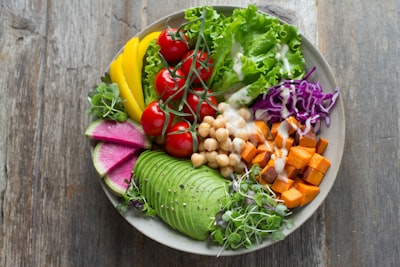
Traditional benchmarks fall short of the complexity of nutritional reasoning. While recognizing whether an image corresponds to a pizza or a salad is relatively simple, estimating the mass of the ingredients, calculating macronutrients and, above all, determining whether that dish is safe for a person with type 2 diabetes requires a much more sophisticated chain of inference. This is where concepts such as AI agents and multi-stage reasoning systems come into play. To build a reliable solution, companies need tailored software that can integrate vision models, nutritional knowledge bases, and clinical validation logic.
The challenge known as the 'semantic-physical gap' illustrates this limitation perfectly: a model can correctly name a dish ('vegetable soup with chicken') but fail miserably to estimate that it contains 400 grams of rice hidden under the broth. This discrepancy is not trivial; An error in portion estimation can lead to dangerous recommendations, especially for profiles with severe dietary restrictions. For this reason, AI for companies working on digital health must incorporate verification mechanisms and security layers that prevent hallucinations in critical contexts.
In this scenario, cybersecurity is not an add-on, but a fundamental pillar. Health data—from food images to diagnostics—is extremely sensitive. Any leakage or tampering could have serious legal and ethical consequences. Therefore, artificial intelligence solutions applied to nutrition must be supported by robust and secure cloud infrastructures, such as AWS and Azure cloud services, which offer regulatory compliance (HIPAA, GDPR) and end-to-end encryption. Q2BSTUDIO, as a software and technology development company, accompanies organizations on this journey, designing systems that integrate these capabilities natively.
But the reliability of a nutritional assistant based on VLMs does not depend only on the underlying model; It also requires a layer of business intelligence that allows the results to be interpreted, error patterns to be detected and the system to be fed back. This is where tools such as Power BI or business intelligence services come in, transforming usage data and accuracy metrics into actionable dashboards. For example, a hospital that deploys a dietary recommendation system could monitor in real time which types of dishes generate the most uncertainty in the model and prioritize the improvement of those cases.
From a business perspective, the opportunity is huge. The digital health market is growing at double digits, and the personalization of nutrition through artificial intelligence is emerging as one of the most promising fields. Nonetheless, success depends on the ability of companies to build robust solutions that overcome current limitations. This is where custom app development makes all the difference. A generic system may fail in local contexts—such as recognizing ingredients typical of Mediterranean or Asian cuisine—while a platform designed specifically for a target audience may incorporate regional databases and validate recommendations with nutrition experts.
In addition, the integration of AI agents—autonomous systems that orchestrate multiple models and data sources—allows complex workflows to be built. For example, an agent could receive a photo, make a first classification of the dish, then search a recipe database for the typical composition, adjust the quantities using regression models and, finally, cross-reference that information with the user's clinical profile before issuing a recommendation. This modular architecture facilitates auditing and continuous improvement. At Q2BSTUDIO, we develop this type of modular and scalable architectures, relying on the best practices of software and cloud engineering.
We cannot forget the role of process automation. Collecting and labeling images of food to train these models is a daunting task. Automating the extraction of nutritional metadata from open sources and its subsequent validation reduces costs and accelerates development cycles. Similarly, model monitoring processes in production—drift detection, retraining—can be automated using cloud pipelines, freeing up data science teams to focus on innovation.
The future of personalized nutrition lies in overcoming the information asymmetry between what we see and what we eat. VLMs are a powerful tool, but not enough on their own. They need a complete ecosystem: from software orchestrating flows, to cybersecurity protecting data, to business intelligence that extracts value from outcomes. At Q2BSTUDIO, we understand this complexity and offer integrated solutions that enable companies to deploy reliable and ethical AI agents in healthcare. The technology is already here; now it is time to build it responsibly.