
In today's world, where computational models govern everything from weather forecasting to the valuation of financial assets, understanding which variables really matter has become a strategic necessity. Global sensitivity analysis (GSA) allows the variance of a model's output to be broken down into contributions attributable to each input, facilitating investment decisions, process optimization, and uncertainty reduction. However, traditional methods often require a large number of model evaluations, which is unfeasible when each simulation consumes hours of computational or expensive experimental resources. This is where orthogonal expansions, also known as spectral methods, offer a promising avenue, especially when combined with gradient information. Recent mathematical advances have shown that the only orthogonal bases whose derivatives are also orthogonal are those associated with Sturm-Liouville problems and weighted Poincaré inequalities, giving rise to the so-called Poincaré expansions. This finding not only has profound theoretical implications, but opens the door to an improved sensitivity analysis with gradients that dramatically reduces the amount of data needed.
For companies working with complex models—from hydrological simulations to digital twins in manufacturing—computational efficiency translates directly into cost savings and iterational capability. The gradient-enhanced GSA methodology leverages the model's derivatives to construct polynomial expansions with fewer samples. When those expansions are based on the Poincaré base, it is ensured that the derivatives of the base functions also form an orthogonal set, which simplifies the calculations of the Sobol indices and allows for more robust estimates. This approach is particularly valuable in data-scarce scenarios, where every assessment is expensive, such as in climate impact studies or drug design. The ability to obtain reliable conclusions with few simulations is a competitive differentiator for any organization that relies on modeling.
The practical implementation of these techniques requires a software ecosystem that integrates symbolic or automatic gradient calculation, orchestration of simulations in parallel and visualization of results. This is where Q2BSTUDIO's experience as a company specializing in custom applications makes sense. Developing an environment that connects mathematical theory with the daily operations of an engineer or analyst is not trivial: it needs an architecture that supports everything from the definition of the model to the deployment of interactive dashboards. Thanks to its deep knowledge of AI for enterprises, Q2BSTUDIO can integrate gradient-based optimization engines, neural networks that learn model derivatives, or even AI agents that automatically scan the parameter space to identify the most influential inputs. All this on cloud infrastructures that guarantee scalability, whether they are AWS and Azure cloud services, allowing hundreds of simulations to be run in parallel without saturating local resources.
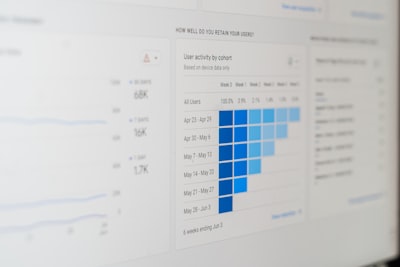
But sensitivity analysis does not end with the identification of important variables. Once the input-output relationships are understood, the next step is to translate that knowledge into decisions. Business intelligence platforms, such as Power BI, allow you to visualize these sensitivity indices and share them with stakeholder teams. Q2BSTUDIO offers business intelligence services that directly connect GSA results with executive dashboards, facilitating communication between the technical team and management. In addition, as it is custom software, the solution can be adapted to industry-specific metrics and alerts, such as the identification of risks in supply chains or the detection of failures in mechanical components.
An emblematic use case is flood modelling, where hydrological variables (precipitation, soil permeability, flow) interact in a non-linear way. Classical GSA methods require thousands of simulations to accurately estimate Sobol indices, but with Poincaré expansions and the use of gradients, the same accuracy can be achieved with an order of magnitude fewer evaluations. This not only speeds up risk studies, but also allows insurers and public administrations to update their models in real time in the face of changing weather events. Cybersecurity also plays a relevant role: when handling critical infrastructure data, the platform must guarantee the integrity and confidentiality of the models. Q2BSTUDIO includes cybersecurity and pentesting layers in its solutions to ensure that neither algorithms nor data are vulnerable.
The trend towards process automation and artificial intelligence is driving the adoption of AI agents that learn from the data generated by simulators. These agents can incorporate sensitivity analysis as part of their learning loop, avoiding exploring regions of the parameter space that are irrelevant and focusing computational resources where they matter most. In this context, Poincaré expansions offer a solid theoretical basis for Bayesian optimization and reinforcement learning algorithms to efficiently handle model derivatives. Q2BSTUDIO, with its experience in artificial intelligence and AI agent development, can implement these custom systems, integrating scientific calculation libraries with modern frameworks such as TensorFlow or PyTorch, and deploying everything on AWS or Azure cloud platforms to ensure elasticity.
From a business perspective, investing in gradient-enhanced sensitivity analysis is not just a technical issue, but a strategic decision. It enables organizations to validate their models with less data, reduce time to launch new products, and improve the resilience of their operations. Collaborating with a technology partner like Q2BSTUDIO, who understands both the underlying mathematics and business needs, accelerates the adoption of these methodologies. Its services range from initial consulting to the development of custom applications, including the integration of cloud services and the creation of dashboards in Power BI. All this with an approach oriented to measurable results, such as the reduction of computational costs or the improvement in the accuracy of predictions.
In conclusion, the combination of Poincaré base-based spectral methods with gradient information represents a significant advance in global sensitivity analysis. Its practical application, however, requires a robust, flexible and secure software ecosystem, which Q2BSTUDIO is in a position to offer. Companies that adopt these technologies will be able to make more informed decisions, with fewer resources and greater confidence, in an increasingly competitive environment governed by uncertainty. Whether it's engineering, finance, logistics, or healthcare, gradient-enhanced sensitivity analysis is a tool that no modeling team should ignore.


