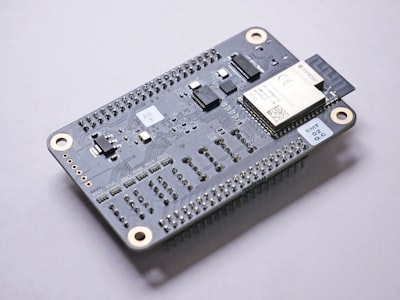
In the age of the Internet of Things, smart homes have gone from being a technological curiosity to a real necessity for many. Knowing when a room is empty or which room a person occupies can transform energy efficiency, security and personalisation of the environment. A small ESP32 microcontroller, combined with Bluetooth Low Energy technology, makes it possible to build a presence sensor that detects nearby devices (such as mobile phones or smart bracelets) and determines the exact location within the home. But this capability goes far beyond the domestic sphere: in business environments, Bluetooth presence detection has become a key element in optimizing workspaces, monitoring people flows, and powering artificial intelligence systems that make decisions in real time.
The ESP32 is a low-cost, high-performance microcontroller that integrates Wi-Fi and Bluetooth connectivity. By programming it with specific firmware, it can scan for Bluetooth signals from nearby devices, calculate signal strength (RSSI), and, using triangulation or machine learning algorithms, estimate the room where the user is located. This approach, known as beacon-based presence, doesn't require the user to install any apps: the phone itself emits Bluetooth signals that the ESP32 passively picks up. Accuracy can reach room level if multiple sensors are strategically deployed and calibrated correctly.
From a technical perspective, the main challenge is to filter out signal noise and avoid false positives. That's why many professional deployments use AI techniques to analyze movement patterns and predict location more accurately. Companies such as Q2BSTUDIO have developed custom applications that integrate these sensors with cloud platforms, allowing historical data to be stored, machine learning models to be applied and dashboards to be generated in Power BI that visualise the occupancy of each area. This way, a facility manager can know, for example, which rooms are used most during the week and adjust the air conditioning or lighting accordingly.
Scalability is another critical factor. A system with tens or hundreds of ESP32s distributed in a building generates a huge volume of data. To manage them without saturating the local network, cloud services such as AWS or Azure are used. The information is sent via MQTT or HTTP to a cloud database, where it is processed and stored securely. Q2BSTUDIO offers AWS and Azure cloud services that guarantee high availability, elastic scalability and end-to-end encryption, complying with the cybersecurity standards required by companies and public bodies.
Cybersecurity is not a minor detail. A poorly protected presence sensor can expose sensitive information about employee or resident habits. For this reason, authentication mechanisms, encryption of communications and periodic audits are implemented in professional solutions. In addition, aggregated data can feed into business intelligence services that help make strategic decisions. For example, by cross-referencing occupancy data with productivity metrics, a company can redesign its workspaces to foster collaboration. Q2BSTUDIO integrates business intelligence services with Power BI to create dashboards that connect directly to IoT sensors, allowing managers to visualize trends without the need for in-depth technical knowledge.
Artificial intelligence for businesses is transforming the way buildings are managed. With machine learning algorithms trained on historical presence data, it is possible to predict future occupancy and automatically adjust HVAC (heating, ventilation, and air conditioning) systems to save energy. You can even develop AI agents that act autonomously: for example, an agent that identifies that a meeting room has been empty for more than 15 minutes and turns off the lights and projector. These capabilities, combined with bespoke software developed by Q2BSTUDIO, enable businesses to realize a tangible return on investment in a matter of months.
For those looking for a turnkey solution, the ESP32 remains the most flexible and economical foundation. However, the real value lies in the software layer that orchestrates the sensor network, processes the data, and presents it in a useful way. From automating processes to creating microservices in the cloud, Q2BSTUDIO approaches each project with a holistic approach: architecture design, firmware development, integration with existing systems, and ongoing maintenance. Their expertise in AI agents and the implementation of cybersecurity solutions ensures that presence data is managed ethically and in compliance with current regulations.
In a world where space and occupancy awareness has become strategic, turning an ESP32 into a Bluetooth presence sensor isn't just a hobby exercise: it's the gateway to smart, efficient, and people-centric buildings. Whether it's to find out which room you occupy at home, or to optimize the use of a 10,000-square-meter office, the possibilities are almost endless. The key is to combine accessible hardware with tailored software that provides intelligence and security. And on that path, having a technology partner like Q2BSTUDIO makes the difference between an experimental project and a robust business solution.