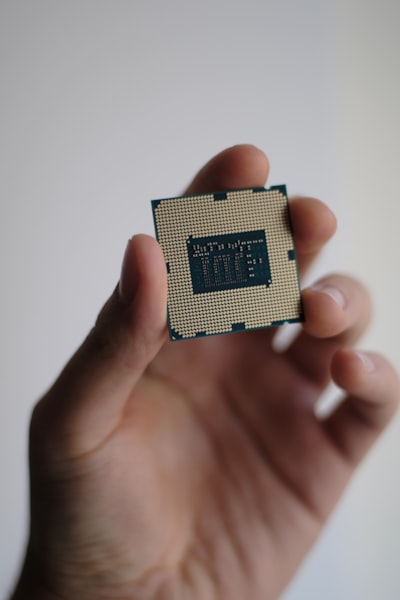
Aerospace is undergoing a quiet but profound transformation, and space-traveling processors are no longer hardened versions of terrestrial chips from a decade ago. Intel has just unveiled its new bet for orbit computing: the Starfire space chip, a system-on-chip (SoC) based on the Panther Lake architecture along with a CPU manufactured on node 18A. This announcement not only marks a milestone in the miniaturization and efficiency of semiconductors for extreme environments, but also opens the door to a new generation of smart satellites, autonomous space stations, and potentially interplanetary missions with intelligence on board.
To understand the magnitude of the advance, it is worth reviewing the context. Historically, chips used in space were designed with technologies that lagged far behind civilian industry, because radiation, extreme temperatures, and lack of maintenance required extremely robust circuitry. However, the cost of launch has fallen dramatically thanks to companies such as SpaceX, and the demand for processing on the satellite itself – to process images, run artificial intelligence algorithms or manage real-time communications – has grown exponentially. Intel, with its experience in advanced nodes such as the Intel 4 and now the 18A, has decided that it is time to bring the most cutting-edge lithography to space.
The Panther Lake SoC, which brings the Starfire to life, integrates high-performance, energy-efficient cores specifically designed to work in radiation conditions. This is not a simple adaptation: Intel has redesigned memory cells, communication buses, and clock circuitry to withstand energetic particle events without resorting to massive redundancies that consume area and power. The result is a chip that offers a performance per watt far superior to any previous space solution, allowing a backpack-sized satellite to perform operations that previously required computers the size of a refrigerator.
In parallel, the CPU based on node 18A represents a qualitative leap. The 18A is Intel's most advanced manufacturing process, with RibbonFET and PowerVia transistors, which allow components to be stacked and reduce electrical losses. While the process is intended for servers and consumer devices, Intel has qualified it for space environments using radiation hardening by design techniques and special ceramic packages. This means that future satellites will be able to run modern operating systems, real-time databases, and, of course, artificial intelligence workloads without relying on slow links to Earth.
The implications for the industry are enormous. Telecommunications, defense, earth observation and scientific exploration companies have been dreaming for years of satellites capable of processing hyperspectral images on board and making autonomous decisions about what data to transmit. With the Starfire, that dream becomes a reality. In addition, the ability to update software remotely – something that was previously almost impossible due to the rigidity of the hardware – becomes a real possibility thanks to Panther Lake's open architecture. Operators will be able to deploy new functionalities, security patches or even AI agent models that run directly on the satellite, adapting their behavior to the changing conditions of the orbital environment.
In this context, the role of software and systems integration becomes critical. It's not enough to just have a powerful chip: you need an ecosystem of bespoke applications that exploit its capabilities to the fullest and ensure reliability for years in space. This is where companies like Q2BSTudio can make a difference. With a strong track record in developing custom software for critical environments, Q2BSTudio offers solutions ranging from programming specific controllers for the Starfire to implementing artificial intelligence platforms for in-orbit data analysis. Its team of engineers understands the challenges of distributed computing and fault tolerance, which are critical when a satellite cannot be restarted at the touch of a button.
Artificial intelligence is undoubtedly one of the areas that will benefit the most from the new chip. Deep learning models typically require a large amount of memory and computing power, something that was previously out of reach for small satellites. With the Starfire, it is possible to run convolutional neural networks to classify images in real time, detect anomalies in solar panels or even predict the trajectory of space debris. Q2BSTudio has developed AI solutions for enterprises that can now adapt to the space environment, training models on the ground and deploying them on Intel hardware using quantization and compression techniques. These AI agents operate autonomously, reducing reliance on control centers and streamlining decision-making.
Another relevant aspect is cybersecurity. A satellite with advanced processing capability is an attractive target for cyberattacks. Communication between the satellite and the Earth, as well as the onboard software itself, must be protected with robust measures. Q2BSTudio integrates cybersecurity services into all phases of development, from the design of secure protocols to the performance of specific penetration tests (pentesting) for embedded systems. In addition, by using AWS and Azure cloud services for data management and mission orchestration, firewalls and intrusion detection systems can be established that continuously monitor the status of the satellite. The combination of Intel's secure hardware and software audited by security experts provides a multi-layered defense indispensable in the new commercial space.
Managing the information generated by these satellites also requires business intelligence tools. Satellite fleets produce terabytes of data every day, and extracting value from it requires Business Intelligence platforms such as Power BI, capable of visualizing patterns, performance and alerts in real time. Q2BSTudio helps its customers implement dashboards that connect directly to satellite telemetry systems and cloud databases. These business intelligence services transform raw data into operational decisions, such as adjusting the orbit, prioritizing observation zones, or scheduling communication windows.
We cannot forget the automation of processes. In a constellation of hundreds of satellites, routine maintenance, software upgrades and reconfiguration tasks must be performed automatically to make the fleet economically viable. AI agents designed by Q2BSTudio can monitor the health of each unit, detect anomalies, and launch recovery procedures without human intervention. This automation, combined with the power of the Starfire, promises to drastically reduce operating costs and increase the lifespan of space assets.
The launch of the Starfire also has implications for the terrestrial industry. The advances in radiation hardening and energy efficiency that Intel has made for space will eventually trickle down to consumer chips, improving the endurance of processors in industrial environments, high-altitude data centers, or even autonomous vehicles. Similarly, lessons learned in integrating custom applications for satellites will be used to develop more robust and efficient software solutions for cloud, edge computing, and industrial IoT.
In short, Intel's Starfire space chip is not just another product in the semiconductor catalog. It represents a paradigm shift in orbital computing, bringing data center capabilities closer to the far reaches of the solar system. For this promise to materialize, an ecosystem of software and services is needed to accompany the hardware. Companies like Q2BSTudio, with their expertise in custom software development, artificial intelligence, cybersecurity, cloud computing and business intelligence, are perfectly positioned to help satellite operators, space agencies and manufacturers make the most of this new era. Space is no longer just the place we look at with telescopes; Now it has become a stage where technological innovation accelerates, and where every byte that is processed in orbit counts.