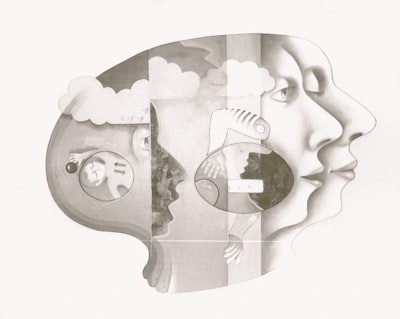
Software development has transcended mere technical execution; Today, the differentiating factor lies in a deep understanding of the human mind. Behind every app we use every day, from productivity tools to social media, is a psychological architecture carefully designed to influence our decisions, emotions, and habits. It is not enough for a program to work; It should feel natural, anticipate our needs, and reduce mental friction. This approach, which combines principles of cognitive psychology with software engineering, is what separates a mediocre product from an exceptional one.
One of the most powerful concepts is Hick's Law, which states that the time to make a decision increases logarithmically with the number of options available. The most effective interfaces, such as those of search engines or payment platforms, minimize the visible alternatives. By hiding internal complexity, they make the user feel control and fluidity. This principle is also applied in the design of bespoke applications, where each screen is optimised to present only the relevant information at the right time, reducing cognitive load and speeding up decision-making.
Another fundamental pillar is Jakob's Law, which reminds us that users spend most of their time in other applications. Therefore, they expect the new interfaces to follow familiar patterns. Innovating in basic navigation – such as changing the position of the main menu – is not creativity, it is noise. The big social platforms respect these mental models, and any custom software project should do the same. Breaking expectations without a solid reason only generates confusion and abandonment.
The Principle of Progressive Revelation is especially useful in complex processes. Our working memory has a limited capacity; If we show all the information at once, the user is blocked. That's why registration forms, purchasing processes or onboarding flows are divided into small steps. In the development of artificial intelligence for companies, this principle becomes critical: virtual assistants or AI agents must dose the information and options so as not to saturate the user, gradually guiding them towards the solution.
The Peak-End Effect reveals that people remember an experience not by its average duration, but by the most intense moment and the end. Software that ends with an achievement animation, congratulatory message, or smooth transition leaves a positive footprint, even if the process had minor delays. Companies like Duolingo or Asana apply it masterfully, but this strategy can also be implemented in corporate environments. For example, a business intelligence services dashboard that, upon completion of an analysis, displays a striking visual summary and an actionable suggestion, generates a sense of satisfying closure that motivates the user to repeat the interaction.
Aesthetics as a Usability Factor demonstrates that a visually appealing design increases the perception of ease of use. Users are more tolerant of small errors if the interface seems professional and neat. This doesn't mean sacrificing functionality, but investing in a consistent design that builds trust. In cybersecurity projects, for example, a clean home screen with clear icons can reduce user anxiety when managing permissions or alerts, making them feel safe.
However, psychology also has a dark side. Patterns such as variable rewards (the slot machine effect) or artificial urgency ('there are only 2 rooms left') exploit cognitive biases to hook the user and maximize usage time or conversions. Many apps abuse these mechanisms, generating addiction and anxiety. As creators of technology, we have a responsibility to choose an ethical approach. At Q2BSTUDIO, we believe that good software should respect human attention and make life easier, not hijack it.
When tackling projects that integrate AWS and Azure cloud services, it is crucial to design not only the infrastructure, but also the end-user experience. The cloud allows for scalability and performance, but if the interface is not aligned with psychological principles, the best backend will be invisible to a frustrated user. Similarly, when deploying Power BI as a business intelligence tool, data visualization should be dosed and presented clearly to avoid information overload.
The trend towards AI for business and intelligent automation opens up new possibilities. AI agents can personalize the interaction according to the user's emotional state, adapting the tone and speed of response. But this ability should be used to ease the mental load, not to manipulate. At Q2BSTUDIO, we accompany organizations in the creation of solutions that integrate psychology and technology in a responsible way, from the design phase to deployment.
In short, great software does not arise only from efficient algorithms, but from a deep empathy for those who use it. By consciously applying principles such as reduced options, respect for mental models, progressive revelation, and aesthetic design, we build tools that feel natural and boost productivity without adding stress. The psychology behind the software is, at its core, a reminder that the most advanced technology is one that forgets itself to put the person at the center.