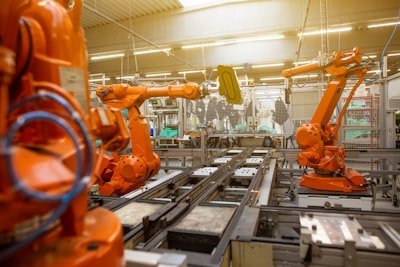
The evolution of industrial technology has undergone a quiet but profound transformation. Over the past decade, the Internet of Things (IoT) has promised to connect all physical assets and turn data into knowledge. However, reality showed that connectivity, alone, is not enough. Today we are on the threshold of a new era: autonomous intelligence applied to connected systems. This change not only redefines operational efficiency, but opens up a range of opportunities for companies looking to not only collect information, but act on it immediately and predictively.
To understand the scope of this transition, it is worth reflecting on what really happened in the first wave of IoT. Companies invested millions in sensors, cloud platforms, and display panels. Unprecedented visibility was achieved: knowing in real time the temperature of an engine, the vibration of a pump or the inventory level of a warehouse. But that visibility generated a deluge of data that many considered noise. The ability to interpret and act on that data became the real bottleneck. Organizations found themselves with dashboards full of metrics with no clear path to action. The promised value of the IoT was not fulfilled because intelligence was lacking.
Now, the second wave integrates artificial intelligence (AI) directly into connected systems, creating what is known as AIoT (Artificial Intelligence of Things). Instead of a human having to analyze graphs to detect an anomaly, the devices themselves learn patterns, make predictions, and execute decisions autonomously. A concrete example: a connected temperature sensor only sends an alert when a threshold is exceeded. A system with AI agents not only anticipates the breakdown 72 hours in advance, but identifies the specific component, schedules maintenance, orders the spare part and adjusts production to minimize the impact. All without human intervention.
From a business perspective, this shift has major market implications. The first wave spawned hardware and connectivity companies that, over time, became commoditized. Sensors became cheaper, the cloud became ubiquitous, and differentiation disappeared. Instead, autonomous intelligence is creating businesses based on AI models, data pipelines, and automated decision systems. These businesses are much more difficult to replicate because they are based on historical data and continuous learning, creating a competitive moat. In addition, they offer measurable value for customers, which translates into greater pricing power and long-lasting relationships.
For companies looking to capitalize on this trend, the key is to combine a mature IoT infrastructure with advanced AI capabilities. It is not enough to have data; the ability to transform them into autonomous actions is needed. This is where the role of companies specializing in technological development comes in. At Q2BSTUDIO, we understand that digital transformation is not an end in itself, but a means to achieve smarter, more efficient operations. That's why we offer bespoke applications that integrate sensors, cloud platforms and AI algorithms to create systems capable of learning and deciding for themselves.
One of the pillars of this new wave is the use of AI agents. These small, autonomous programs can monitor multiple variables, detect deviations, and execute responses without waiting for human instructions. For example, on a production line, an AI agent can adjust the speed of a conveyor belt based on the demand detected by weight sensors, reducing energy consumption and mechanical wear. Deploying these agents requires robust enterprise AI , which in turn is supported by robust cloud infrastructures. That's why we offer AWS and Azure cloud services that ensure scalability, low latency, and high availability for AI models to operate in real time.
Cybersecurity is another critical factor in this ecosystem. With thousands of devices connected and making autonomous decisions, the risk of attacks multiplies. A misconfigured AI agent or compromised sensor can have devastating consequences. That's why we offer specific cybersecurity for IoT and AI environments, including penetration testing and vulnerability analysis. In addition, the management of the information generated by these systems requires modern business intelligence tools. Our business intelligence services with Power BI allow you to visualize in real time the performance of AI agents, identify bottlenecks and optimize strategic decision-making.
The transition to autonomous intelligence also impacts the way software is developed. It's no longer about building static apps that display data; Dynamic systems that integrate machine learning, event processing, and automation are required. At Q2BSTUDIO we develop custom software that includes AI modules, data pipelines, and agent orchestration. Our modular approach allows companies to scale from a pilot to a global deployment without breaking the existing architecture.
A typical use case in the manufacturing industry is predictive maintenance. With sensors installed in motors, pumps, and compressors, and an AI model trained on years of historical data, the system can predict failures weeks in advance. But autonomous intelligence goes further: it not only predicts, but also schedules intervention, adjusts production and even orders spare parts automatically. This reduces unplanned downtime by up to 50% and extends the life of assets. To achieve this, it is essential to have a robust and secure cloud platform, and experts in integrating the hardware, software and intelligence layers.
The labor market is also being reconfigured. The growing demand for hybrid profiles that understand sensors, data, and algorithms is evident. Companies investing in autonomous intelligence today are building a competitive advantage that will be hard to match tomorrow. The key is to act now, when the technology is maturing and the costs of implementation are still affordable. Leaders who embrace this second wave will not only optimize their operations, but create new business models based on data and automated decisions.
In short, the move from connected devices to autonomous intelligence represents the most relevant market shift of the next decade. Companies that limit themselves to collecting data will be left behind. Those that integrate AI, autonomous agents and intelligent automation will position themselves as benchmarks in their sectors. At Q2BSTUDIO, we're committed to helping organizations make that leap by offering solutions that span from initial consulting to the development and implementation of complete AIoT systems. If your company is looking to transform data into autonomous decisions, the time to start is now.