The artificial intelligence revolution has opened up unprecedented possibilities in audiovisual production, but it has also introduced a silent fragility: the absence of a ritual that fixes the exact moment when a shot is accepted. In traditional cinema, when the director said "Print it!", he didn't just mark a frame; it established a social, visible and documented commitment that the entire production chain respected. In AI cinema, that gesture does not exist. We generate, we look and we pass. And that lack of formal decision is costing more than it seems.
The central problem is not the quality of generative models – which is improving at a dizzying pace – but the decision fatigue produced by reviewing dozens of almost identical variations of the same plane. The threshold of acceptance plummets without the creator noticing. The first shot is examined with a magnifying glass; Number fifteen gets a glance and a "okay, that works." That's not laziness: it's exhausted attention. And the consequences do not appear until weeks later, during the editing, when a misaligned detail in the light, the costumes or the gaze of a character forces an entire sequence to be regenerated. It is a technical debt that grows with compound interest.
To avoid this, some AI filmmakers are implementing control steps very similar to those that any custom software company uses in its quality processes. It is not a typical checklist, but a structured verification that includes: coherence with the documentary reference of the character and the environment, agreement of the axis of gaze with the previous and subsequent shots, inspection of the edges of the frame (where the model's hallucinations usually appear), complete reproduction of the clip – not just the first seconds – and a sufficient margin of footage before and after the key moment to allow adjustments in the edition. But the most important step is to ask yourself, "Would I accept this clip exactly as it is in the final cut, today, rather than as just filler to keep exploring?" That question, asked out loud, deactivates most decisions by attrition.
The analogy with software development is inevitable. When a company commissions a custom software system, each functionality goes through explicit validation: the code is reviewed, tested, documented. No one approves a module "because we have already seen ten similar versions". In contrast, in AI video generation, the creator is often alone in front of an interface that rewards speed. The discipline that for decades provided the "Print it" has evaporated, and its emptiness is occupied by a succession of unregistered micro-decisions.
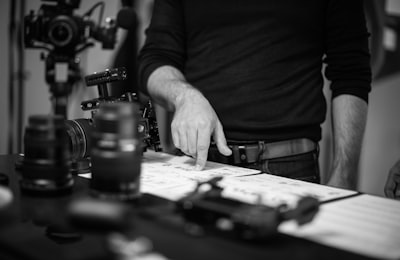
Recovering that ritual does not require surrounding yourself with equipment as in a traditional set. All you have to do is adopt a gesture: verbalize the acceptance, write down the clip number and the reason why it was chosen. That's an extra twenty seconds per shot, but they avoid hours of rework. It's exactly the same principle that enterprise AI teams apply when documenting every step of an automation flow: without registration, any deviation becomes a systemic problem.
At Q2BSTUDIO we know that quality does not appear by chance. That's why we integrate continuous validation processes into our artificial intelligence solutions, AWS and Azure cloud services , and cybersecurity that prevent errors from creeping in. A misconfigured AI agent can propagate inconsistencies just like a poorly accepted blueprint; The only difference is the cost. In the same way, we deploy dashboards in power bi and offer business intelligence services that allow organizations to audit each decision with traceability, not with hunches. That same logic should apply to AI-generated cinema: every frame that passes onto the assembly line must have been accepted intentionally, not by inertia.
Technology advances, but the principles of quality remain. AI cinema needs its own "Print It". Not as analogical nostalgia, but as a conscious process that protects the coherence of a work—and the presuppositions—from the hidden costs of indecision. In a world where generation is instantaneous, the only decision that really matters is the one you make on purpose.