A year after a section of railway track in Switzerland began generating electricity using solar panels installed between the rails, the pilot project has shown that the convergence between rail infrastructure and renewable energy is not only viable, but could transform the public transport sector. The initiative, developed by the company Sun-Ways, has exceeded initial expectations by producing more than 19 MWh during its first twelve months of operation, without the passage of more than 11,000 trains having affected either generation or railway safety. Beyond the technical results, however, what really marks a milestone is the ability to scale this solution globally, a challenge that goes far beyond photovoltaic engineering.
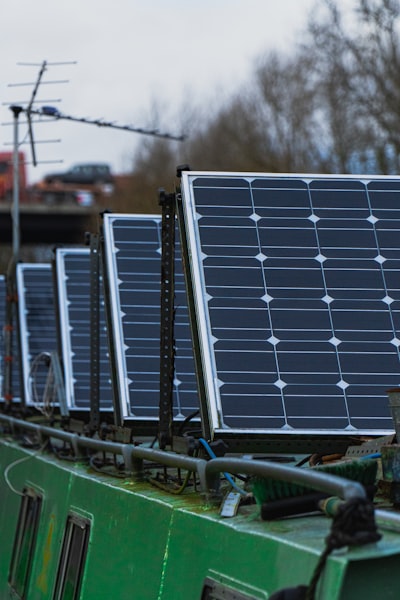
The concept is simple on the surface: take advantage of the dead space between the rails to install solar modules. But the execution has required solving complex problems of mechanical resistance, reflectivity, maintenance and, above all, regulations. The panels used incorporate an anti-reflective material to prevent glare to drivers and are designed to withstand micro-vibrations that could otherwise generate micro-cracks and increase the risk of fire. In addition, a special rail-mounted machine was developed capable of installing up to 300 panels per hour, a rate that far exceeds that of any rooftop or canopy installation. But, as the Sun-Ways CEO pointed out, the real hurdle wasn't technology, but regulation. Obtaining authorization to test the system on a line open to passengers took years, due to the strict safety requirements of the rail industry.
This case perfectly illustrates how infrastructure innovation depends not only on technical availability, but on the ability to navigate complex regulatory environments. For companies looking to implement disruptive technology solutions, having a partner that understands both the technical and regulatory realms is key. In this sense, at Q2BSTUDIO we offer tailor-made applications that allow railway, energy and other sector companies to monitor the performance of their assets in real time, manage predictive maintenance and comply with certification requirements. Our approach to bespoke software ensures that each solution is tailored to the customer's particularities, whether it's controlling solar panels on tracks or optimising train fleets.
The Swiss rider has validated that the losses due to the suboptimal angle of the panels are minimal compared to the generation potential. In Switzerland, Sun-Ways estimates a potential of 1 TWh, enough to cover 30% of the country's public transport needs. On a European scale, where renewable energies already account for 25.2% of final energy consumption and the target for 2030 is 42.5%, installing panels on railways is emerging as a high-impact complementary strategy. The company has already signed agreements with France and Italy, and is negotiating with South Korea, Spain and Portugal, with the ambitious goal of reaching 10,000 km of equipped tracks by 2040.
However, scaling this technology involves operational and maintenance challenges that should not be underestimated. Cleaning the panels, interfering with track maintenance tasks and integration with the electric traction network are aspects that require advanced monitoring systems. This is where artificial intelligence and data analytics play a critical role. For example, by means of AI agents trained to detect anomalies in solar production or predict cleaning needs, performance can be optimized without constant human intervention. At Q2BSTUDIO we develop AI solutions for companies that integrate predictive models with IoT sensor data, facilitating real-time decision-making. In addition, our expertise in AWS and Azure cloud services allows us to deploy these platforms with high availability and scalability, while our Business Intelligence services with Power BI turn data into actionable dashboards for infrastructure managers.
The comparison with the failed solar roads of a decade ago is inevitable. That project promised to generate power from the asphalt, but succumbed to mechanical wear, maintenance cost and low efficiency. On the other hand, railway panels have demonstrated superior resistance to traffic and require minimal maintenance. The key difference is that railways are controlled environments, with predictable loads and restricted access, which reduces uncertainty. Even so, massive expansion will depend on the ability to standardize installation processes and to manage the cybersecurity of control systems. A solar panel connected to the traction grid is a potential entry point for cyberattacks, so cybersecurity must be integrated by design. At Q2BSTUDIO we offer pentesting and security auditing services to ensure that critical infrastructures, such as railways, are protected against external threats.
From an economic point of view, the levelized cost of energy (LCOE) estimated by Sun-Ways ranges between €0.05 and €0.09/kWh, depending on solar radiation. As it is direct self-consumption for the traction network, without taxes or tolls from the public network, the final price is very competitive for railway companies. This financial advantage, coupled with the reduced carbon footprint, makes the proposition attractive to train operators across Europe. However, large-scale implementation will require collaboration between governments, infrastructure managers, and technology companies.
In this context, the digitalization of processes becomes an essential enabler. From simulating energy production to managing regulatory permits, bespoke software can streamline every step. For example, a platform that integrates weather data, rail traffic and panel status would allow operators to maximise efficiency. Our team in Q2BSTUDIO has developed similar solutions for other sectors, combining artificial intelligence with geospatial analysis, and we are ready to apply those capabilities to the railway field. The goal is that, by 2028, when Sun-Ways plans to launch commercially, there will be mature digital tools that facilitate the transition.
In short, the Swiss project demonstrates that energy innovation can be found in the most unexpected places. Solar panels under trains not only generate clean electricity without taking up additional land, but also open the door to a symbiosis between mobility and energy that could be replicated on thousands of kilometres of tracks around the world. Overcoming regulatory and technical barriers is only the first step; The next is to build a technological ecosystem that supports mass deployment, with monitoring, predictive maintenance and cybersecurity solutions. At Q2BSTUDIO, we are committed to accompanying companies on this path, contributing our expertise in custom applications and cloud services to turn disruptive ideas into operational realities.