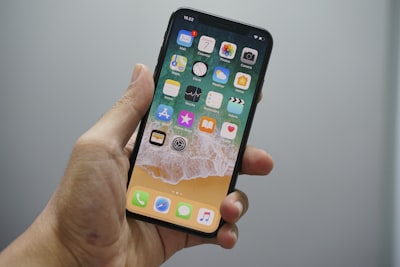
The news has spread like wildfire among tech enthusiasts: the public beta of iOS 27 is now available. Apple has opened the doors to users who want to try the new features before the official launch, scheduled for next autumn. However, as with any preview, the decision to install it should not be taken lightly. In this article, we take an in-depth look at what it takes to make the leap to a beta, the real risks to your device and data, and how this process connects to broader software development and cybersecurity strategies in the enterprise environment.
Before we go any further, it's worth remembering that public betas are a massive testing tool. Apple launches them so that a broad community of users can identify bugs, performance issues, or incompatibilities that internal teams didn't detect during the initial phases. It's a model that has proven to be effective, but it also exposes users to annoying bugs, unexpected app closures, and, in the worst case, loss of personal information. Therefore, although the temptation to have the latest in artificial intelligence and personalization is strong, prudence must prevail.
If you decide to venture out, the first step is to make sure your iPhone is compatible. The list of devices that support iOS 27 is extensive, from the iPhone 12 onwards, but only the most recent models (iPhone 15 Pro and above) will be able to run the advanced features of Apple Intelligence, the new assistant based on artificial intelligence. This reminds us that hardware is still a limiting factor when we talk about innovation. Something similar happens in the corporate world: it is not enough to acquire a cutting-edge technological solution if the underlying infrastructure is not prepared to support it. That's why at Q2BSTUDIO we work with companies to design bespoke applications that are perfectly suited to their technical capabilities and real needs. It is not a matter of installing the latest fashion, but of doing it wisely.
One of the most critical points when installing a beta is backup management. Apple recommends backing up locally to a computer, not just iCloud, because syncing the device while running the beta could overwrite the secure copy with unstable data. This principle is universal in any technology upgrade or migration process: redundancy and verification are key to not compromising critical information. In the business environment, backup and disaster recovery policies are a fundamental part of cybersecurity. An attack or misconfiguration can take an entire organization offline; That is why we offer pentesting and advisory services to identify vulnerabilities before they become incidents.
But let's go back to iOS 27. Is it worth the risk? For an average user, maybe not. Betas often have flaws that affect daily usability: unresponsive apps, excessive battery consumption, or loss of connectivity. And while the uninstallation process is possible, it involves erasing the device and restoring from a previous copy, which can result in the loss of recent data. It's a reminder that innovation always comes at a cost in stability. On the other hand, for developers and companies that need to test the compatibility of their own custom applications with the new system, beta is an indispensable tool. At Q2BSTUDIO, for example, we use controlled test environments to validate that our solutions work correctly on the latest versions of iOS, Android, and other platforms. This ensures that customers are not surprised when their users update the operating system.
Artificial intelligence is, without a doubt, the main protagonist of this update. Apple Intelligence promises a more conversational Siri, capable of understanding complex contexts and executing actions in multiple applications. This advancement aligns with the global trend of integrating AI for business to automate processes, analyze data, and improve the user experience. From chatbots to AI agents managing workflows, adopting these technologies is no longer an option, but a competitive necessity. At Q2BSTUDIO we help our client organizations implement business intelligence services with Power BI, and migrate their infrastructures to AWS and Azure cloud services to scale their processing capabilities. The same logic that drives Apple to put AI at the center of its ecosystem is what guides us when designing solutions that transform data into decisions.
Finally, we cannot forget the ethical and privacy component. Apple has always prided itself on processing artificial intelligence on the device, minimizing sending data to the cloud. At a time when cybersecurity is one of the greatest concerns of managers and users, this approach is exemplary. Companies that develop custom software must incorporate principles of privacy by default and security by design by design. At Q2BSTUDIO we integrate these practices into every project, whether it's a mobile app, a web portal, or an internal management system. Because in the end, digital trust is built with every well-thought-out line of code.
In conclusion, the iOS 27 public beta is an open door to the future, but going through it requires preparation and awareness of the risks. Before you hit 'Update', ask yourself if you really need to be on the technological frontier or if you prefer to wait for a stable version. And if you are a company looking to innovate without compromising security, remember that you are not alone: there are specialized teams, such as Q2BSTUDIO's, that can accompany you in the creation of custom applications, in the implementation of artificial intelligence strategies and in the protection of your digital assets. Technology advances fast, but good planning will always be the best tool to avoid falling along the way.