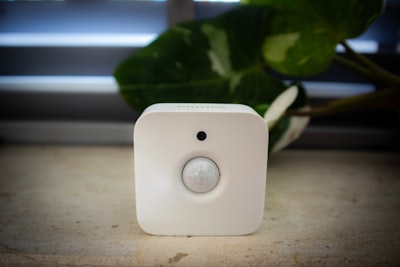
In the smart home ecosystem, few devices enjoy the reputation of Philips Hue lighting systems. However, even tech giants can stumble. Recently, the company announced that it will replace the Hue Bridge Pro models that were rendered unusable after a problematic firmware update at no cost. The incident, although one-off and limited to less than a hundred units, has generated an in-depth debate about the fragility of connected systems, the importance of software validation processes and the role of development companies in mitigating these risks.
The problem was triggered when users who had kept automatic updates disabled for a long period of time decided to manually install a new version of the firmware. This particular scenario led to an irreversible state: the Bridge Pro was stuck with a red LED, losing all connectivity to the app and accessories. Philips, after weeks of analysis, opted for a forceful solution: replace the affected devices regardless of the warranty status. While the answer is laudable, it leaves crucial questions open about how upgrade tests are handled and what preventative measures should be implemented in environments where service continuity is critical.
This case reminds us that the apparent convenience of an integrated ecosystem comes with technical responsibilities that go beyond simple plug and play. When a lighting, HVAC or security system depends on a software update, the line between functional improvement and operational catastrophe is very thin. This is where companies such as Q2BSTUDIO, specialized in technological development, provide a differential value. It's not just about building applications as they work, but about designing deployment and update processes that ensure system integrity even under extreme conditions.
From a technical perspective, the Hue Bridge Pro incident could have been avoided with better firmware lifecycle management. Companies that develop custom software must incorporate exhaustive tests in version jump scenarios, as well as rollback mechanisms that allow changes to be reversed without catastrophic consequences. At Q2BSTUDIO, we know that software validation doesn't end with launch; Maintenance and continuous monitoring are equally essential. That's why we offer AI solutions to predict potential failures, as well as cybersecurity services that protect devices against intrusions that could further aggravate a faulty update.
The cloud also plays a central role in the resilience of connected systems. Philips, like many manufacturers, relies on remote servers to distribute updates. A failure in the distribution chain or a misconfiguration can expose thousands of users. The AWS and Azure cloud services we deploy in Q2BSTUDIO enable a scalable and secure infrastructure, with canary release policies that minimize the impact of a failure. In addition, the integration of business intelligence services helps companies to monitor the health of their deployed devices in real time, detecting anomalies before they become crises.
Another relevant aspect is configuration management. In the case of Philips, users lost their entire configuration of lights, scenes and accessories by having to reboot from scratch. This underscores the need for robust backup systems and tools that allow for effortless export and import of configurations. At Q2BSTUDIO, we develop AI agents that automate the backup and restore of complex configurations, dramatically reducing downtime. In addition, we implemented dashboards in Power BI so that administrators can visualize the status of all devices and anticipate compatibility issues.
AI for business isn't just limited to automating backups; It can also predict which devices are most vulnerable to update failures based on usage patterns and version history. This allows companies to prioritize critical updates and avoid those that could lead to conflicts. This proactive approach is exactly what we offer at Q2BSTUDIO: a combination of consulting, development, and ongoing support that makes technology a reliable ally, not a source of uncertainty.
Returning to the case of Philips, there is a valuable lesson for manufacturers and users: never underestimate the complexity of a firmware update. Even a device as established as the Hue Bridge Pro can fail under the wrong conditions. The decision to replace the devices is a gesture of responsibility, but it also reveals that the verification process was not enough. In a world where cybersecurity and reliability are increasingly in demand, companies must adopt more rigorous standards. This is where Q2BSTUDIO makes a difference: we not only build AI solutions for enterprises, but also advise on the implementation of continuous integration and continuous delivery (CI/CD) pipelines that include automated testing in real-world scenarios.
In short, the Philips incident is not an isolated event, but a symptom of an industry that often prioritizes the speed of innovation over stability. To prevent a "small" mistake from leaving hundreds of users in the dark, it is necessary to rethink the way we design, update and maintain the software embedded in everyday devices. At Q2BSTUDIO, we believe that technology should be invisible until it fails, and that is why we invest in methodologies that anticipate failure, ensure continuity and facilitate recovery. Whether you're developing a connected product or managing an IoT device park, having a technology partner that understands these challenges can make the difference between a minor incident and a reputational crisis.