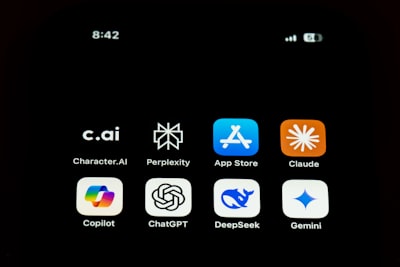
Apple has made a radical turn to its virtual assistant. With the arrival of the new version of Siri integrated into iOS 27, the Cupertino company makes it clear that we are no longer dealing with a simple speaker that answers questions. Siri AI becomes Apple's universal tool, the core that intelligently connects apps, devices, and services. This move not only redefines the user experience, but also marks a trend that companies must observe carefully: artificial intelligence is no longer an add-on but becomes the engine of digital interaction.
Siri's transformation to an assistant based on advanced language models and autonomous AI agents allows complex tasks to be executed without manual intervention. From scheduling meetings with multiple contacts to managing home automation commands, to the ability to understand context and personal preferences. This qualitative leap makes Siri a true intelligent agent, capable of anticipating needs and acting on behalf of the user. For companies, this represents a paradigm shift: technology is no longer limited to executing orders, but actively participates in workflows.
Behind the Siri revolution lies an ecosystem of cloud services and machine learning algorithms that process data in real time. Apple has opted for a hybrid approach that combines on-device processing with cloud services, ensuring privacy and speed. This model is similar to what many companies adopt when looking to scale AI solutions for their internal processes. In this context, Q2BSTUDIO's experience in developing AI for companies is particularly relevant, as it allows for the design of custom assistants and automations that integrate with existing infrastructure.
The Siri case also illustrates the importance of having tailored applications that are tailored to the specific needs of each organization. As Apple unifies the user experience, companies need proprietary solutions that connect their management systems, CRM, ERP, and analytics platforms. This is where custom software comes into play, which allows you to create intelligent interfaces capable of dialoguing with corporate data in a natural way. Q2BSTUDIO has worked with multiple clients to develop these types of tools, combining artificial intelligence and user-centered design.
We cannot ignore the cybersecurity factor. A universal assistant that handles everything from emails to banking transactions must operate under the strictest security protocols. Apple has put the spotlight on encryption and biometric authentication, but companies implementing similar solutions should consider regular audits. The cybersecurity services offered by Q2BSTUDIO help detect vulnerabilities in these systems, ensuring that confidential information is not exposed. User trust is the pillar on which the mass adoption of AI is based.
Another key aspect is the ability to analyze the huge amount of data generated by these assistants. Apple uses business intelligence techniques to continually improve Siri's performance, but companies can go further. Implementing business intelligence services with tools like Power BI allows you to transform user interactions into actionable dashboards. Q2BSTUDIO has Power BI experts who help visualize usage patterns, identify bottlenecks, and optimize processes. Artificial intelligence not only talks, but also listens and learns from data.
The infrastructure that supports an assistant like Siri requires a robust and scalable cloud architecture. Apple combines its own data centers with third-party services, but companies looking to replicate this model can benefit from AWS and Azure cloud services. Q2BSTUDIO offers advice and migration to these platforms, ensuring that AI applications have the necessary computing power without compromising latency. The cloud thus becomes the stage where AI agents act fluidly.
From a business perspective, the universality of Siri AI poses both a challenge and an opportunity. The challenge is to integrate AI into processes without losing control or security. The opportunity is to free employees from repetitive tasks to focus on strategic activities. Companies that are already investing in process automation with partners like Q2BSTUDIO are seeing significant improvements in productivity. For example, an internal assistant handling IT, HR, or customer service requests can reduce response times by up to 70%.
Siri's evolution also reminds us that the success of artificial intelligence does not depend only on technology, but on how it is integrated into everyday life. Apple has designed a fluid experience that disappears in the background, but is always present. Companies should aim for the same thing: invisible solutions that empower the business without adding complexity. Therein lies the value of custom software developed by Q2BSTUDIO, which adapts to real workflows rather than imposing abrupt changes.
Finally, it is worth reflecting on the role of AI agents in digital transformation. Siri AI marks a milestone because it proves that assistants can be the center of an entire ecosystem. In the corporate world, these agents are starting to manage inventories, coordinate remote teams, and even perform predictive analytics. Q2BSTUDIO helps companies design and implement these agents, connecting them with cloud services that guarantee availability and scalability. Artificial intelligence is no longer the future: it is the present, and it takes the form of universal tools like the new Siri.
In conclusion, Apple's bid to make Siri the iPhone's universal tool lays the groundwork for a new era of human-machine interaction. Companies that want to follow this path must have technological allies who understand both the technical part and the business strategy. Q2BSTUDIO, with its expertise in artificial intelligence, custom applications, cybersecurity, cloud services and business intelligence, offers the full set of capabilities to lead this transformation. The invitation is open: to harness the potential of AI to create experiences as natural and powerful as those Apple has achieved with Siri.