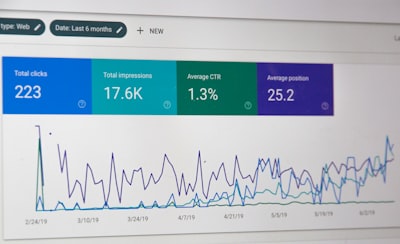
In today's digital ecosystem, search engine visibility remains one of the most valuable assets for any business. Knowing where your domain appears for a particular keyword not only measures SEO performance, but allows you to make informed strategic decisions. However, building a ranking tracker on Node.js that works without being blocked by Google can turn into a technical nightmare: rotating proxies, memory-guzzling headless browsers, and endless CAPTCHAs. This article proposes a clean, scalable, and professional architecture to monitor search engine positions without suffering from those headaches.
For starters, it's worth understanding that modern search engines don't facilitate mass scraping. They have sophisticated bot detection, behavioral analysis, and suspicious IP blocking systems. A traditional approach based on Puppeteer and rotating proxies is possible, but it requires constant maintenance: every change to Google's DOM can break your parser, and managing a pool of residential proxies becomes costly and fragile. The professional alternative is to delegate the fetching of search results to a specialized service that returns structured data in JSON. This way, your code focuses on business logic and not on circumventing technical barriers.
The first step is to prepare a Node.js project with the necessary dependencies. We initialize a directory, run npm init -y, and install axios to make HTTP requests. The structure of the project can be very simple: a tracker.js file containing all the query and parsing logic. The key is to choose a SERP API provider that delivers reliable and cost-effective results. There are options such as SerpAPI, Apify or API Serpent. The latter, for example, allows you to make up to 10,000 queries for less than a dollar, making it viable even for SEO agencies with a high volume of keywords. The integration is direct: a GET request with the search parameters (keyword, engine, geolocation, number of results) and the response includes an array ordered with the links and positions.
When we receive the JSON, we just have to go through the organic_results property and look for our domain. It's important to handle the absence of it (for example, if it doesn't show up in the first 100 results) and also catch network errors or quota limits. Once the position has been identified, we can store it in a database to generate historical data. This approach completely eliminates the need to maintain a headless browser cluster or manage proxies. The resulting code is lightweight, easy to deploy to cloud services such as AWS or Azure using Lambda functions or Docker containers, and integrates seamlessly with CI/CD pipelines to run periodic checks.
From a business perspective, building your own ranking tracker grants you independence from third-party SaaS tools, which are often expensive and limited in customization. In addition, you can add layers of artificial intelligence to analyze historical trends, identify patterns of decline or rise, and even predict the impact of changes in the algorithm. For example, if you have an e-commerce that sells seamless underwear, you could monitor not only the position of your website, but also that of direct competitors. All this information can be transformed into visual dashboards with tools such as Power BI, facilitating decision-making at the management level. At Q2BSTUDIO we develop custom applications that integrate scraping engines with business intelligence dashboards, allowing companies to centralize their SEO data without relying on generic solutions.
The design of this tracker should also consider the cybersecurity of the data pipeline. Configuration files (API key, domain) should never be hardcoded into the source code; we recommend using environment variables and secrets management services (such as AWS Secrets Manager or Azure Key Vault). In addition, the API we consume must be authenticated and use HTTPS. If your project scales to monitor hundreds or thousands of keywords, it's a good idea to implement a queuing system (such as RabbitMQ or SQS) to distribute requests and avoid exceeding the provider's rate limits. At Q2BSTUDIO we offer cybersecurity services to ensure that these types of architectures meet data protection and resilience standards.
Another relevant aspect is the dynamic updating of the results. Google usually personalizes results based on the user's location and language. That's why the geo parameter is crucial: you can check the SERP from different regions to see how your ranking varies. Combined with the ability to get up to 100 results per query, you get a complete view of your domain's actual visibility. If you also need to track your brand's presence in AI Overviews or featured snippets, some APIs already offer these fields in their JSON. This ties directly into the AI trend for enterprises, where mentions monitoring in generative AI becomes a competitive differentiator. At Q2BSTUDIO we implement AI agents that automate the extraction and analysis of this data, reducing the manual effort of the SEO team.
The next natural evolution of this crawler is to make it a standalone microservice, exposed using an internal REST API. Thus, any team in the organization (marketing, product, sales) can consult the ranking of a keyword in real time without the need to run scripts. Authentication using JWT tokens can be added, each query can be logged for auditing purposes, and automated periodic reports can be generated. This architecture fits perfectly with the principles of AWS and Azure cloud services, where we deploy these components in a scalable way and with high availability. For example, a scheduled trigger (cron job in AWS Lambda) executes daily queries, the results are stored in DynamoDB or MongoDB, and a frontend in React consumes that data to visualize the evolution of positions.
The importance of an extensible design should not be forgotten – the same model can be adapted to crawl not only Google, but also Bing, Yahoo or even vertical search results such as YouTube or Amazon. Simply change the engine parameter in the SERP API and adjust the expected data structure. This allows a company to have a unified dashboard with performance across all relevant engines. At Q2BSTUDIO we develop custom applications that integrate multiple data sources and enrich them with business intelligence service logic to generate custom alerts when a position falls below a threshold.
In conclusion, building a ranking tracker on Node.js without getting banned is perfectly viable if you take an approach based on specialized APIs rather than trying to emulate a browser. The initial investment is minimal, maintenance is drastically reduced, and scalability is unlimited. By delegating the reverse engineering of the SERP to a trusted provider, your code becomes robust and predictable. If you also integrate this component into a broader platform of custom software, with artificial intelligence, cloud and cybersecurity capabilities, your company will be able to make SEO decisions based on reliable and up-to-date data, outperforming the competition that still depends on artisanal and fragile methods.