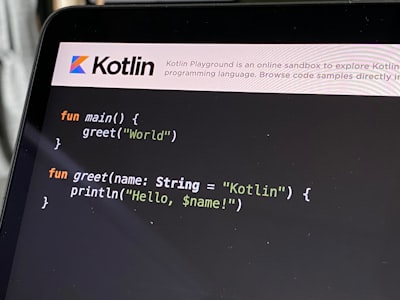
Kotlin Multiplatform has matured enough to be a real option in production environments, but its adoption still raises legitimate questions: does it really work at scale, or is it another promise that deflates as the team and code grow? The experience of companies that have already implemented it shows that it does work, although not exactly as the marketing brochures paint it. Behind a successful migration with KMP are architectural decisions, a clear perimeter of responsibilities, and above all, a willingness to share only what needs to be shared: business logic.
The first mistake many teams make is treating KMP as an all-or-nothing. In reality, KMP offers at least three distinct approaches: share only logic with native UI, share logic and UI using Compose Multiplatform, or isolate a single module of functionality such as authentication, validation, or pricing. For companies that already have established native applications, the safest path is the third one: start with a small, low-risk module that solves a real problem of inconsistency between platforms. That well-designed module demonstrates value without compromising the rest of the ecosystem. At Q2BSTUDIO, when we develop custom applications, we apply precisely this incremental strategy to minimize risks and build trust in the team.
The temptation to extend the use of expect/actual to any difference between Android and iOS is one of the most time-consuming patterns to correct. The key is to ask yourself if that functionality really needs to be platform-specific or if the habit of separating files is simply being replicated. System calls, local storage, generation of unique identifiers or timestamps are legitimate cases; instead, currency formatting, email validation, or rounding logic should reside in commonMain without the need for branches. Defining those limits during the architecture review, not during an emergency fix, saves entire sprints.
Unified testing is another pillar that transforms productivity. When shared logic is tested against a single suite written in commonTest, running it simultaneously against all targets, platform-specific regressions are detected before they reach QA. This habit, which is simple to implement, has a very high return: a single failure in a proration function can generate incorrect refunds on one platform and not on the other, eroding user trust. Companies that integrate custom software with KMP often adopt this practice from the first shared module.
The comparison with Flutter or React Native changes radically when the starting point is not a green project, but a native ecosystem already built. Flutter requires a full rewrite, React Native as well, and both introduce a proprietary rendering engine or bridges that complicate direct access to native APIs. KMP, on the other hand, allows for layered adoption: you can share only the domain layer, then the repositories, then local storage with SQLDelight, and leave the UI intact. If the experiment fails, the rollback is as simple as deleting a module. That makes KMP the most pragmatic choice for teams with previous native investments.
Beyond shared logic, integration with cloud infrastructure is critical to production success. Cross-platform applications need robust, scalable, and secure backends. That's why in many projects we combine KMP with AWS and Azure cloud services, deploying serverless APIs, distributed databases, and file storage that work consistently regardless of the client. This architecture also allows the incorporation of business intelligence services such as Power BI to monitor user behavior in real time, detect bottlenecks and adjust the product experience with objective data.
Artificial intelligence is finding a natural fit in this type of architecture. AI agents can run from the shared layer, offering personalized recommendations, content moderation, or conversational assistance without duplicating logic. Companies exploring AI for business typically start with machine learning microservices that are consumed from all platforms equally. KMP facilitates that integration by keeping the HTTP client and data serialization in a single codebase. Likewise, cybersecurity benefits from having a single point of audit for authentication logic, encryption, and token handling, reducing the attack surface and simplifying regulatory compliance.
At Q2BSTUDIO we have seen that the key to a real migration is not in the technology, but in the order of decisions. Testing the logic layer first, validating that it effectively eliminates inconsistency bugs, and only then considering sharing UI, has proven to be the path that generates the least friction. Sharing too early, without having well-defined state and navigation conventions, causes any errors to be attributed to the framework rather than the immaturity of the design. That's why we recommend starting with a specific functional module — form validation, pricing calculation, offline data synchronization — and gradually expanding as the team gains confidence.
For organizations looking to accelerate their digital transformation without sacrificing native quality, KMP offers a realistic break-even point. Combined with a tailored application approach that respects the identity of each platform, and supported by cloud services, artificial intelligence and cybersecurity, the result is a more coherent, maintainable and cost-effective software ecosystem. At Q2BSTUDIO we accompany our clients in every phase of this process, from architecture design to continuous deployment, ensuring that the technical promise is converted into tangible business value.