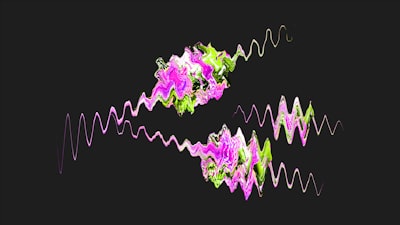
In the field of signal processing and information retrieval, multi-instantaneous peak deconvolution represents a highly relevant technical challenge. It involves reconstructing the exact locations of scattered pulses from multiple convoluted noisy measurements with a known point scattering function. This problem appears in fields such as biomedical imaging, geophysics or telecommunications, where precision in the location of events is critical. What makes the task especially complex is the non-convex nature of the resulting optimization problem, which demands fine mathematical tools to ensure that iterative methods converge to the correct solution.
One of the most promising lines of research is to characterize the convexity basin associated with the problem. When the target is formulated using a variable projection that removes the amplitudes in a closed form, the resulting cost function depends only on the peak positions. In this formulation, the optimization landscape presents regions where the function is strictly convex: the convexity basins. Knowing the properties of these basins—based on sampling bandwidth, peak spacing, and the smoothness of the dispersion function—allows for the design of efficient initializations and certification of the convergence of algorithms such as gradient descent.
The characterization of these basins is not only of theoretical interest, but also provides practical guarantees. For example, if the estimator is shown to be consistent within the basin in terms of the number of snapshots under stochastic noise, companies can be confident that the system will provide reliable results as more data accumulates. Also, under adversarial noise, it is possible to limit the error by means of Lipschitz properties of the inverse. These warranties are essential for industrial applications where margins of error must be minimal.
In practice, implementing these models requires a deep understanding of numerical linear algebra and non-convex optimization. This is where custom app development becomes a differentiating factor. Every industry—from infrastructure monitoring to seismic signal analysis—needs to tailor algorithms to its specific real-time noise conditions, resolution, and constraints. Customized software allows these deconvolution techniques to be integrated with existing data pipelines, optimizing performance in production environments.
The volume of data generated in multi-snapshot applications can be enormous. To process them efficiently, cloud infrastructure is indispensable. Enterprises can deploy deconvolution algorithms on AWS and Azure cloud services, scaling compute resources on demand and reducing costs. In addition, the integration with business intelligence services such as Power BI allows real-time visualization of recovered locations and quality metrics, facilitating decision-making. Q2BSTUDIO offers consulting and development to connect these analytics solutions with interactive dashboards.
Artificial intelligence also plays an emerging role in this field. AI agents can automate the selection of deconvolution model hyperparameters, as well as the detection of anomalies in the residuals. For example, an agent trained with previous simulations can suggest optimal initialization within the convexity basin, accelerating convergence. AI for companies thus becomes an ally to strengthen systems that require real-time signal processing, such as radars or industrial sensors.
Cybersecurity should not be forgotten. When handling sensitive data—such as medical images or critical infrastructure signals—information protection is a priority. Tailor-made software solutions should include encryption and access control mechanisms, as well as regular penetration testing. Q2BSTUDIO integrates security audits into its development processes, ensuring that deconvolution algorithms run in secure environments, whether on-premise or in the cloud.
Convexity basin characterization opens the door to hybrid methods that combine modified ESPRIT-based initializations with gradient refinement. These approaches have proven to be effective even when peaks are very close or noise is high. The key is to understand how the spectral properties of the scattering function determine the shape of the basin. This knowledge allows algorithms to be designed with guarantees of local convergence, which in turn facilitates their adoption in industrial environments where repeatability is critical.
For companies looking to implement these technologies, having a technology partner who is proficient in both theory and practice is critical. Q2BSTUDIO combines expertise in mathematical optimization, custom software development, and cloud integration. From prototyping to production deployment, they offer services ranging from artificial intelligence to cybersecurity, including process automation. In this way, they transform advanced deconvolution concepts into operational tools that bring real value to the business.
In summary, multi-instantaneous peak deconvolution and the characterization of its convexity basin represent a technical frontier with enormous application possibilities. Thanks to advances in mathematical modeling and the support of cloud and AI platforms, it is possible to obtain accurate and reliable estimates. Organizations that bet on customized solutions, developed by experts like Q2BSTUDIO, will be better prepared to extract valuable information from complex and noisy signals, while keeping security and scalability as fundamental pillars.