
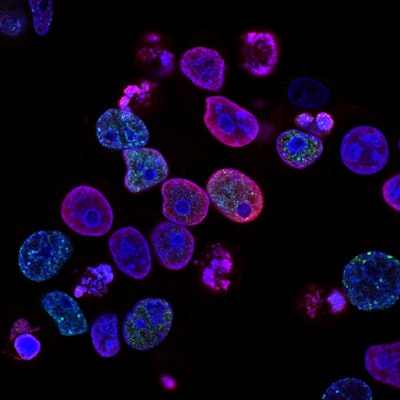
The single-cell sequencing revolution is transforming our understanding of biology, allowing us to explore in unprecedented detail the transitions between cell states. However, the data generated presents a fundamental challenge: it is inherently noisy, high-dimensional, and contains information about continuous processes that are often lost when applying traditional visualization methods. Algorithms such as t-SNE and UMAP, while popular, introduce distortions that can lead to misinterpretations, especially when seeking to capture cell developmental trajectories rather than simply separating discrete types of cells. In this context, NESS (Neighbor Embedding Stability and Smoothness) emerges, a machine learning approach that promises to unlock new perspectives by prioritizing algorithmic stability and smoothness of representations.
NESS's proposal is based on the Predictability-Computability-Stability (PCS) framework, which seeks to ensure robust and reproducible discoveries in data science. Against the limitations of conventional methods, NESS introduces quantitative stability metrics and efficient computational workflows to identify cell state transitions and developmental trajectories. Through validation across multiple datasets—from pluripotent stem cell differentiation to organoid development and tissue-specific lineages—NESS demonstrates its ability to reveal smooth biological structures and transcriptional dynamics that previously remained hidden. But beyond its biological application, NESS's approach offers valuable lessons for any field that handles complex data and needs to extract meaningful patterns without falling into artifacts.
In business and technology, the ability to analyze large volumes of heterogeneous data in a robust way is critical. The methodologies employed in NESS—such as systematic stability assessment, controlled dimensionality reduction, and the integration of consistency metrics—can be translated into domains such as enterprise AI, where the reliability of the models is as important as their accuracy. For example, when implementing AI systems for enterprises, it is essential to ensure that internal representations of data are not biased by noise or inappropriate algorithmic configurations. NESS's lessons on how to quantify stability can help design more robust machine learning pipelines, especially when working with time-series data or customer journeys, where continuity and smoothness are key.
The implementation of these solutions would not be possible without a solid technological infrastructure. Processing single-cell datasets, which can reach millions of cells and tens of thousands of genes, requires computational power and scalability. This is where AWS and Azure cloud services come into play, allowing parallelized workflows to be deployed and large volumes of information to be stored securely. Companies such as Q2BSTUDIO offer consulting to migrate and optimize these cloud pipelines, ensuring that data analysis processes, whether biological or commercial, are executed with maximum efficiency and availability.
In addition, personalization is a differentiating factor. In the development of custom software, such as the one provided by Q2BSTUDIO, specific solutions can be built that integrate state-of-the-art algorithms – similar to NESS – adapted to the needs of each organization. For example, a research lab might require a platform that applies algorithmic stability to monitor cell culture experiments in real time, while a pharmaceutical company might need smooth visualizations of drug response trajectories. These bespoke applications allow you to capture the complexity of your data without sacrificing interpretability.
Cybersecurity also plays a critical role when handling sensitive data, such as genetic information or patient records. Cybersecurity Q2BSTUDIO solutions ensure that data used in AI models is protected from unauthorized access, complying with regulations such as GDPR or HIPAA. Likewise, the integration of business intelligence services through tools such as Power BI allows research teams to visualize the results of NESS analyses interactively, facilitating data-driven decision-making. Dashboards in Power BI can display stability metrics, cell trajectories, and correlations, all connected to cloud data sources.
AI agents are another emerging frontier. Imagine virtual assistants that, trained with smooth and stable representations of biological data, can suggest hypotheses about cellular transitions or even automate part of the exploratory analysis. Q2BSTUDIO is at the forefront of developing custom AI agents that operate on complex workflows, integrating machine learning pipelines and reporting anomalies in real-time. This type of process automation, combined with the robustness offered by the PCS framework, could greatly accelerate biomedical research.
From a more general perspective, working with NESS reminds us that the quality of the data and the methodology of analysis are just as important as the power of the algorithms. In the business world, speed is often prioritized over reliability, leading to fragile models and flawed decisions. Taking an approach like NESS's — based on stability and smoothness — can help build more explainable and robust AI systems. Companies that develop custom software for industries such as healthcare, finance, or logistics can benefit greatly from incorporating these stability metrics into their products.
In conclusion, NESS not only represents a breakthrough for single-cell biology, but sets a precedent for how to approach complex data representation problems in any discipline. The combination of rigorous analysis, cloud infrastructure, custom application development, cybersecurity and business intelligence opens up a range of possibilities to transform noisy data into actionable knowledge. Q2BSTUDIO, with its expertise in these areas, can accompany organizations on this path, offering customized solutions ranging from the implementation of advanced models to the final visualization with Power BI. The era of single-cell data is just beginning, and the ability to discover soft structures within chaos will be a key differentiator for the science and industry of the future.

