
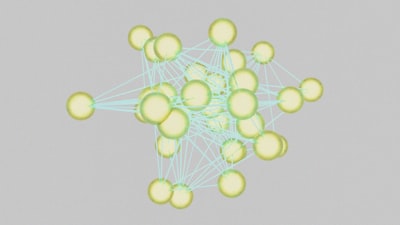
At the intersection between artificial intelligence and the modelling of complex systems, one of the most promising techniques of recent years has emerged: deep Gaussian processes on directed acyclic graphs (DAGs). Although the term may sound cryptic, its essence is fascinating: allowing a machine to learn hierarchical representations of real-world processes where each variable depends on others through a well-defined causal structure. From genetic regulation networks to high-fidelity simulations in particle physics, this methodology is redefining how we understand uncertainty and information propagation in interconnected systems.
To appreciate its value, imagine a typical engineering scenario: a multilayer manufacturing process where each stage transforms the input of the previous one, but with noisy measurements and irregular sampling. Traditional models, such as standard neural networks, tend to ignore causal structure and offer point predictions without quantifying uncertainty. Instead, a deep Gaussian process on a DAG incorporates a latent function at each node, with a full probabilistic interpretation. This not only captures deep nonlinearities, but also allows us to understand how information degrades or is preserved along the layers of the graph. Recent theoretical work in this field, published in arXiv, demonstrates that under certain conditions the distinction between inputs is almost certainly maintained at asymptotic frequencies, identifying families of nuclei that guarantee this behavior and revealing the crucial role of input connections.
The practical application of these models is immense. For example, in the heavy ion collision emulator, where simulations of different fidelities are combined, a DGP over DAG allows for the recovery of low-fidelity contributions and improves the interpretability of the simulator hierarchy. In protein signaling, it helps to uncover latent mechanisms that explain contradictory observations, a phenomenon known as 'explaining-away' in colliders. For companies, these advances translate into more robust predictive tools, capable of handling heterogeneous data and adapting to changing environments. This is where companies like Q2BSTUDIO, which specialise in artificial intelligence for companies, play a decisive role. Integrating advanced probabilistic models into bespoke software solutions allows organizations to not only predict, but also explain their processes in unprecedented detail.
The path to implementing these systems is not trivial. It requires scalable infrastructure, as training multiple layers of Gaussian processes on graphs can be computationally intensive. That's why AWS and Azure cloud services are ideal for deploying these architectures, offering elasticity and compute power on demand. In addition, the security of sensitive data – such as genomic information or industrial processes – requires robust cybersecurity measures, another area where specialized solutions Q2BSTUDIO offered. On the other hand, the ability to interpret the results of these models is greatly enhanced with visualization tools such as Power BI, integrated within business intelligence services that allow managers to make informed decisions based on complete probability distributions, not just point values.
One of the most exciting developments is the incorporation of AI agents that, based on PGD over DAG, can simulate what-if scenarios and recommend actions in real-time. For example, in a quality control system with multiple stages, an agent trained with this model could identify bottlenecks or predict failures before they occur, triggering mitigation protocols. All this is possible thanks to tailor-made applications that are specifically designed for the structure of each business, a service that Q2BSTUDIO customized according to the needs of each client.
In short, deep Gaussian processes on directed acyclic graphs represent a qualitative leap in the modeling of complex systems. They combine the theoretical soundness of Gaussian processes with the flexibility of deep architectures and the causal clarity of DAGs. For companies looking to be at the forefront of digital transformation, understanding and adopting these techniques is a strategic step. And with the support of technology partners such as Q2BSTUDIO, which integrates artificial intelligence, cloud services and business intelligence into a coherent ecosystem, the gap between academic research and business application is narrowing every day.
