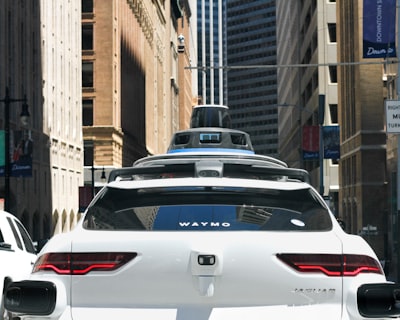
Autonomous driving is no longer a futuristic promise but an ever-evolving reality. However, one of the most complex challenges faced by data developers and engineers is the efficient management and recovery of large-scale driving scenarios. Autonomous vehicles generate terabytes of information every day: from video sequences captured by high-definition cameras to precise trajectories of moving objects. Faced with this flood of data, a critical need arises: to quickly find situations similar to a given query, whether to validate system behaviors, train new models, or debug bugs. Traditionally, search methods have relied on visual representations or motion-based descriptions, but each approach has its own strengths and weaknesses. A multimodal approach that combines both perspectives promises to offer a more robust and accurate solution. In this article, we explore how the fusion of visual and trajectory information is revolutionizing the recovery of scenarios in autonomous driving, and how companies can leverage this technology to advance the development of safer and more reliable systems.
Imagine a fleet of test vehicles that travel thousands of miles a day. Every maneuver, every lane change, every interaction with pedestrians, is recorded in huge databases. When an engineer wants to study all cases of 'cut-ins', he needs a search system that not only recognises visual patterns – such as the orientation of a neighbouring car – but also the dynamics of movement: accelerations, relative speeds and trajectories of agents. This is where multimodal scenario similarity search comes into play. By combining visual representations extracted from convolutional neural networks with representations of trajectories learned through contrastive learning, it is possible to capture both the appearance and the intention of the movement. For example, a transformer trained on sequences of object positions – what we could call a scenario encoder – can generate embeddings that reflect the temporal structure of the maneuver, while a visual model learns to recognize the context of the environment: road markings, signs, type of vehicle. Joining both embeddings in a common search space produces much more relevant results than either of them alone.
From a technical perspective, trajectory-based approaches deliver superior performance in motion-focused events such as turns, traffic queues, or lane changes because they capture the cinematic essence of the situation. On the other hand, visual representations stand out when the similarity keys are appearance: color, type of vehicle, lighting, road infrastructure. The complementarity is evident. A multimodal system not only improves the accuracy of retrieval, but allows for indexing that is more flexible and resistant to changes in perspective or environmental conditions. In the business context, this capability translates into faster validation cycles, reduced storage costs by avoiding duplicates, and better characterization of critical scenarios for autonomous driving.
However, implementing a multimodal scenario recovery pipeline is not trivial. It requires integrating different deep learning models, managing large volumes of data in real or near real time, and having a scalable cloud infrastructure. This is where companies like Q2BSTUDIO provide differential value. Our experience in developing artificial intelligence for companies allows us to design custom systems that combine computer vision, trajectory analysis and semantic search engines. In addition, by having capabilities in AWS and Azure cloud services, we can deploy these systems in a secure, elastic and cost-optimized way. Creating custom applications for autonomous driving dataset management allows our customers to not only search for similar scenarios, but also to automatically tag, annotate, and generate validation reports.
Cybersecurity is another fundamental pillar in this ecosystem. Driving data contains sensitive information about routes, driver and pedestrian behaviors, and even critical infrastructure locations. A multimodal search system must ensure that accesses and queries are carried out with the highest standards of protection. At Q2BSTUDIO we offer integrated business intelligence and cybersecurity services, ensuring that data is encrypted both at rest and in transit, and that AI models do not inadvertently leak information. In addition, orchestrating these processes using AI agents allows you to automate entire flows: from ingesting sensory data to generating dashboards in Power BI that visualize the distribution of similar scenarios over time.
From a strategic point of view, the adoption of a multimodal system of scenario recovery goes beyond mere technical efficiency. It becomes a competitive advantage for companies that develop autonomous driving software, because it accelerates the cycle of training and validating models. Instead of manually reviewing hours of video or running expensive simulations, engineers can formulate complex queries such as 'look for all situations where a vehicle has come to a sudden stop in front of a pedestrian at an amber traffic light intersection' and get results in seconds. This capability is only possible if visual and trajectory representations are properly integrated. In addition, continuous feedback from the system allows embeddings to be refined iteratively, improving the quality of searches with each new annotation.
The future of this technology points towards the incorporation of multimodal foundational models – similar to those that are emerging in natural language and vision processing – capable of understanding complete scenes without the need for separate representations. However, while these models mature, hybrid approaches such as the one described are the most practical and effective. At Q2BSTUDIO we work every day on the implementation of these solutions, combining tailor-made software with the latest machine learning techniques. Our approach is not to sell a packaged product, but to accompany each customer in designing an architecture that adapts to their data volumes, latency requirements, and privacy regulations. Whether they need a search system for their test fleet or a data mining tool to identify corner cases, we are prepared to build the solution they really need.
In summary, the multimodal search for similarity of scenarios represents a significant advance in data engineering for autonomous driving. Combining visual richness with the dynamics of movement delivers results that surpass any unimodal approach. Companies that invest in this technology will not only optimize their internal processes, but will gain agility and precision in the development of safer autonomous systems. And to carry out this transformation, having a technology partner that understands both artificial intelligence and cloud infrastructure, cybersecurity and business intelligence is the key to success. At Q2BSTUDIO we are ready to be that partner.