
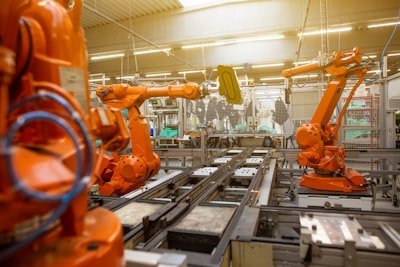
At the heart of modern industrial automation, picking up disordered parts in containers – the well-known bin picking – represents one of the most complex and costly challenges to solve. The need for accurate 3D sensors, robust vision algorithms, and high-performance control systems has historically limited the adoption of these technologies to large corporations with large budgets. However, a new approach based on 6D pose estimation and low-cost hardware is changing the game: Pickalo proves that it is possible to achieve hit rates in excess of 96% using only a consumer RGB-D camera and a collaborative robotic arm. This article takes an in-depth look at its principles, implications, and how the combination of artificial intelligence and custom software can democratize automation in industry.
Pickalo's proposal is based on a modular architecture that integrates active perception, synthetic segmentation and fusion of multiple views. Unlike traditional systems that rely on expensive static 3D scanners, Pickalo mounts an Intel RealSense D435i camera on the robot's wrist, allowing it to dynamically explore the scene from different angles. This mobility not only reduces the cost of hardware, but also mitigates occlusion issues, as the robot can be moved for better insights. The workflow begins with capturing raw stereo pairs, which are processed using BridgeDepth to generate refined depth maps. This improvement is crucial for collision calculation and safe grip planning.
One of the pillars that make Pickalo viable is the intensive use of synthetic data. The Mask-RCNN segmentation model is trained exclusively on computer-generated photorealistic images, eliminating the tedious task of manually labeling thousands of real images from industrial environments. This strategy, which is becoming increasingly popular in the development of custom machine vision applications, allows the system to be adapted to new parts or geometries with little human intervention. The 6D localization of each object is supported by SAM-6D, a zero-shot pose estimator that does not require retraining for each new component, facilitating rapid implementation on changing production lines.
Long-term stability and accuracy are achieved by a buffer pose module that merges multi-view observations over time. This component handles inherent symmetries of objects and drastically reduces noise in pose estimates, a common problem when relying on a single image. In trials with densely packed Euro containers, Pickalo achieved an average of 600 catches per hour with a grab success rate of 96-99% during continuous 30-minute sessions. These figures show that the combination of affordable hardware and intelligent algorithms can compete with—and even outperform—much more expensive industrial systems.
Behind this performance is a careful orchestration of various technologies. Offline generation of antipodal grip candidates, utility-based ranking, and rapid collision checking allow the robot to select the best grip point in real time. The entire pipeline is designed to run on standard hardware, without the need for high-end GPUs or dedicated servers. This opens the door for small and medium-sized companies to incorporate intelligent automation into their processes without making exorbitant investments.
From a broader perspective, Pickalo illustrates how artificial intelligence applied to robotics is evolving towards more accessible and flexible solutions. The ability to train models with synthetic data, merge information from multiple views, and run real-time inference on inexpensive hardware is the result of years of advances in deep learning, computer vision, and software optimization. For companies looking to make the leap to Industry 4.0, having a technology partner that offers AI for companies integrated into production systems is increasingly relevant. Q2BSTUDIO, for example, develops tailor-made software that adapts these principles to the specific needs of each customer, from the selection of sensors to the implementation of automation logics.
In addition, industrial process automation is not limited to the movement of the robotic arm: the management of the data generated, production monitoring and integration with MES or ERP systems are equally critical. This is where disciplines such as business intelligence and tools such as Power BI come into play, which allow real-time visualization of efficiency metrics, success rates and cycle times. A complete automation solution must not only be able to pick parts, but also provide visibility into the process for decision-making. Tailored applications that combine robotics, machine vision and data analytics are what make the difference in competitive environments.
We cannot forget the importance of cybersecurity in these systems. As robots connect to corporate networks and the cloud, protecting production data and control commands from external attacks becomes a priority. AWS and Azure cloud services provide secure environments for storing AI models, processing images, and deploying updates, provided appropriate security measures are in place. A well-designed architecture should include encryption, authentication, and network segmentation to prevent vulnerabilities.
Looking to the future, the trend is for AI agents to take a more autonomous role in managing these processes. Let's imagine a system where several Pickalo robots coordinate with each other, sharing pose information and optimizing the grip sequence using reinforcement learning algorithms. Or where a centralized agent decides when to change tools or recalibrate the camera based on the error rate. These capabilities are already being explored in labs and will soon be available to the industry thanks to the democratization of artificial intelligence and the development of bespoke applications that integrate these modules.
In conclusion, Pickalo represents a milestone in low-cost industrial automation, demonstrating that with the right combination of vision, robotics and machine learning techniques, it is possible to achieve high-performance results without the need for millionaire investments. For companies that wish to venture down this path, relying on experts in business intelligence services, AWS and Azure cloud services and custom software development is the guarantee of a successful implementation. Q2BSTUDIO, with its expertise in AI and automation solutions, offers precisely this accompaniment, transforming innovative concepts into productive realities.
