
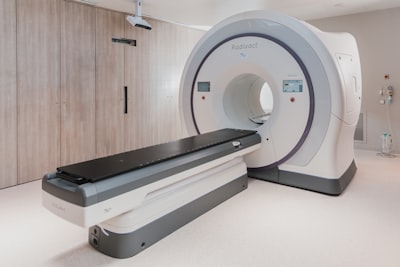
Magnetic resonance elastography (MRE) has proven to be a highly valuable non-invasive technique for assessing tissue stiffness, especially in the diagnosis of liver disease, fibrosis, and tumors. However, the long acquisition time and the need for multiple iterations to obtain adequate resolution have limited its clinical adoption. In recent years, neural networks have emerged as a promising solution to speed up the process, enabling high-quality reconstructions from heavily undersampled data. This breakthrough, backed by recent research such as the article in arXiv:2601.11878v2, opens the door to a new generation of fast and accurate MR elastography, without requiring massive or expensive training sets.
From a technical perspective, the proposed approach conceives the neural network as a nonlinear extension of traditional linear subspace models. Instead of forcing a linear representation of MRE repeats, the network learns a transformation that captures the complex relationships between the data in the undersampled k-space and the final images. Training is done by a multi-level loss of consistency in k-space, ensuring that the reconstructions faithfully respect the actual measurements. In addition, previous knowledge specific to the modality is incorporated, such as the similarity of anatomical structures between phases and the smoothness of the harmonic displacement induced by the waves. This eliminates the need for a high-quality dataset to train, a common bottleneck in deep learning applied to medical imaging.
The experimental results, both with 3D spiral gradient echo sequences and with multislice spin echo, demonstrate that it is possible to obtain an isotropic resolution of 2 mm in a single minute with a total subsampling factor of 10. The resulting stiffness estimate is comparable to that of fully sampled data, while noise and artifacts are significantly reduced. This performance represents a radical change in the clinical feasibility of MRE, allowing rapid studies that previously required long exploration times and patient collaboration.
Beyond technical innovation, this advancement has profound implications for the healthcare sector and companies looking to integrate artificial intelligence into their diagnostic processes. The ability to accelerate procurement without compromising quality not only improves the patient experience, but also reduces operational costs and frees up MRI time for more studies. For organizations developing tailored software solutions in the medical imaging space, this trend reinforces the need for flexible and scalable platforms that can integrate deep learning models optimized for specific hardware.
In this context, Q2BSTUDIO offers artificial intelligence services for companies that allow you to build, train and deploy neural network models adapted to the particular needs of each diagnostic center. Combining knowledge in computer vision and signal processing, we develop custom applications that facilitate the implementation of techniques such as accelerated MRE. Our team is also proficient in the AWS and Azure cloud services ecosystem, essential for handling the massive volumes of data generated by MRIs and for running real-time inferences. In addition, integration with Power BI dashboards allows you to visualize model performance and reconstruction quality metrics, providing clinicians with a powerful business intelligence tool.
The growing adoption of AI agents in the hospital environment, such as assistants for scan planning or automatic anomaly detection, directly benefits from these advances. Accelerated MRE with neural networks not only provides faster images, but also lays the groundwork for autonomous diagnostic systems that can suggest regions of interest to the radiologist. At Q2BSTUDIO, we help institutions deploy these agents securely, incorporating cybersecurity practices that protect patient data and comply with regulations such as GDPR. Our comprehensive approach ranges from custom software development to cloud infrastructure consulting, ensuring that solutions are robust, scalable and ethical.
For companies operating in the medical technology space, investing in these capabilities is not just a matter of innovation, but of competitive survival. The ability to deliver MR elastography in minutes, with the same accuracy as traditional protocols, can make all the difference in the early detection of liver disease or the monitoring of cancer treatments. From the business side, it's crucial to have technology partners who understand both the underlying science and business needs. Q2BSTUDIO is positioned as that ally, bringing decades of experience in artificial intelligence, cloud computing and multiplatform application development. Our services range from prototyping to maintenance of systems in production, always with a focus on quality and scalability.
In summary, accelerated MR elastography with neural networks represents a milestone in functional medical imaging. The combination of nonlinear representations, consistent losses in k-space and physical priors allows to overcome the limitations of conventional linear methods. For professionals and institutions that wish to adopt this technology, it is essential to rely on a robust software ecosystem and experts who can customize each solution. At Q2BSTUDIO, we offer the support needed to integrate these models into clinical workflows, using AWS and Azure cloud services to ensure availability and performance. Whether through custom applications, AI agents or business intelligence solutions such as Power BI, our team is ready to accompany organizations in the digital transformation of diagnostic imaging.

