
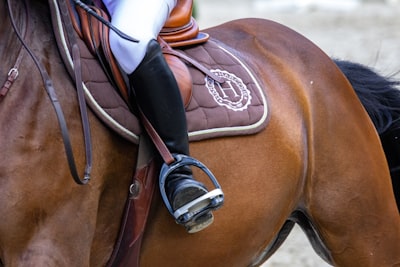
Equine breathing monitoring during high-intensity exercise is an emerging field where artificial intelligence is making a significant difference. Competition horses, especially Standardbred treadmills, require precise control of their respiratory rate to optimize their performance and prevent health problems. Until now, traditional methods involved invasive sensors or manual analysis of recordings, slow and error-prone processes. However, the combination of deep learning and microphone recordings is revolutionizing this practice, allowing for automatic, non-intrusive detection of exhalation sounds during canter.
Deep learning models, such as temporal convolutional networks (TCNs) and short- and long-term memory networks (LSTMs), have demonstrated a superior ability to filter out the intense noise generated by trotting and galloping, accurately identifying respiratory events. While classic signal processing approaches suffer in noisy environments, TCNs achieve a median F1 of 0.94 in exhalation detection and an average absolute error of only 1.44 breaths per minute. This level of accuracy opens the door to veterinary and training applications that were previously unthinkable, such as the real-time assessment of the horse's respiratory effort.
From a technical perspective, the key is in the design of architectures that can handle long audio sequences with high variability. TCN networks, for example, use dilated convolutions to capture temporal dependencies at different scales, while LSTMs manage long-term memory but are more sensitive to noise. Current research validates these models under conditions of intense exercise, where exhalation sounds are louder, and the results are promising for lower intensities, where the signal is more subtle. This suggests that an integrated system could dynamically adapt to different phases of training.
Beyond detection, the real value is in the ability to extract dynamic respiratory rates in real time. This allows trainers and veterinarians to identify abnormal patterns, such as tachypnea or breathing pauses, which can be early indicators of heat stress, fatigue, or heart problems. Combined with heart rate and speed data, a complete picture of the animal's physiological state is obtained. This is where artificial intelligence for companies, integrated into sports management platforms, can make a difference. For example, an AI solution for companies such as the one developed by Q2BSTUDIO allows these data streams to be processed and automated alerts to be generated based on custom thresholds.
To bring this technology to the field, a bespoke application ecosystem is required that integrates rugged microphones, edge processing, and cloud connectivity. Cloud infrastructure, taking advantage of services such as those offered by AWS and Azure, allows you to scale the storage of recordings, train models with large volumes of data and deploy inferences in real time through serverless functions. A company like Q2BSTUDIO, which specializes in AWS and Azure cloud services, can design a hybrid architecture that combines local processing for low latency with the cloud for historical analysis and continuous improvement model.
Cybersecurity also plays a fundamental role. Animal health data is sensitive and, in competitive environments, the integrity of monitoring systems must be guaranteed against tampering. A robust cybersecurity system, with regular penetration testing, ensures that data is not intercepted or altered. Q2BSTUDIO integrates these practices into its developments, offering safe solutions by design.
Another relevant aspect is the visualization of the results. Coaches and owners need clear, actionable dashboards. This is where business intelligence tools such as Power BI come into play, which Q2BSTUDIO implemented to create dynamic reports on the respiratory evolution of each horse throughout the sessions. These dashboards allow you to compare indicators between different workouts, identify trends, and make data-driven decisions. Business intelligence services are key to transforming raw data into actionable insights. In addition, the incorporation of AI agents can automate the generation of personalized recommendations for each specimen, such as adjusting the duration of the exercise or alerting about the need for a veterinary check-up.
The practical application of this technology is not limited to the sports field. It can also be extended to the rehabilitation of injured horses, where continuous respiratory monitoring helps assess exercise tolerance during recovery. Even on farms and equestrian centers, an early detection system for respiratory diseases could reduce veterinary costs and improve animal welfare. The versatility of tailor-made software-based solutions allows algorithms to be adapted to different breeds, intensities and environments, something that generic commercial systems do not achieve.
From a business point of view, developing such a product requires an interdisciplinary team that combines veterinary knowledge, machine learning, and software engineering. Companies such as Q2BSTUDIO offer precisely this integration, accompanying startups and research centers from conceptualization to deployment. Their expertise in enterprise AI ensures that models are not only accurate, but also computationally efficient to run on embedded devices.
In conclusion, equine breathing detection using deep learning is a perfect example of how cutting-edge technology can solve real problems in the equestrian sports industry. By combining deep learning models, cloud infrastructure and business analytics, a range of possibilities opens up to improve the welfare and performance of horses. And to achieve a successful implementation, having a technology partner that understands both the technical part and the specific domain is essential. Q2BSTUDIO, with its portfolio of services ranging from the development of custom applications to artificial intelligence and cybersecurity, is positioned as the ideal ally to lead this revolution in equine monitoring.

