
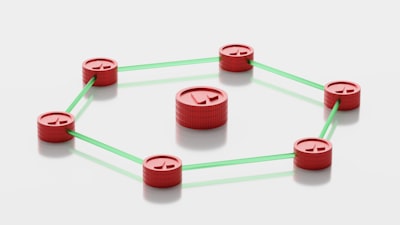
In today's digital ecosystem, few questions are as strategic as whether it is possible to connect legacy systems with modern platforms without having to replace the entire infrastructure. The answer is not a simple yes or no, but depends on the integration approach adopted. Many organizations coexist with old applications, monolithic databases, and ERPs that have been in operation for decades, along with new cloud tools, SaaS CRMs, and artificial intelligence solutions. Getting everything running smoothly requires much more than a standard connector – it requires a bespoke integration platform.
Commercial integration solutions, while useful in homogeneous environments, often fall short when proprietary protocols, non-standardized data formats, or specific governance needs appear. This is where custom apps and custom software make all the difference. An integration platform designed from the ground up for a company's context can understand business logic, respect security rules, and adapt to existing workflows without forcing traumatic changes.
The main technical challenge is heterogeneity. A legacy system can communicate using flat files, while a modern application exposes REST or GraphQL APIs. To bridge the gap between the two worlds, the platform must include data transformation layers that cleanse, enrich, and convert information without losing fidelity. In addition, process orchestration allows you to coordinate transactions involving multiple systems, from an ERP to a business intelligence tool, ensuring that data arrives at the right time and with the right structure.
At this point, artificial intelligence and AI agents are revolutionizing the way these integrations are managed. It's no longer just about mapping fields statically, but about using predictive models to anticipate failures, recommend optimal data paths, or even automate the resolution of synchronization conflicts. For example, an AI agent can monitor traffic between systems and, if it detects an anomaly, reconfigure connectors in real-time without human intervention. This capability is especially valuable when integrating AI platforms for businesses that require a constant flow of clean, up-to-date information.
Scalability is also a critical factor. A bespoke integration platform must be able to grow with the business, and AWS and Azure cloud services provide a solid foundation for this. Deploying connectors, message queues, and event processing in the cloud allows you to handle load spikes without oversizing your on-premises infrastructure. In addition, AWS and Azure cloud services make it easy to implement event-driven architectures, where systems communicate asynchronously using webhooks and message queues, reducing coupling and improving resiliency.
However, the integration would not be complete without a robust cybersecurity layer. Every endpoint is a potential gateway for threats, so any bespoke platform should include authentication, encryption, and access auditing. Periodic penetration testing, or pentesting, helps identify vulnerabilities before they are exploited. At the same time, data governance requires the platform to record every transformation and every transfer, ensuring regulatory compliance.
Another aspect that transforms the business experience is the integration with business intelligence tools, such as Power BI. A bespoke platform can feed real-time dashboards with data from multiple sources, eliminating information silos. Business intelligence services enable managers and analysts to make decisions based on facts, not assumptions. For example, by connecting the CRM with the ERP through a custom platform, a profitability report can be generated per customer that is updated every few seconds.
The initial question, about whether a custom integration platform can connect with existing systems, has an affirmative answer as long as the design respects the technical and organizational reality of the company. It is not a question of imposing a standard architecture, but of building bridges that adapt to the foundations already laid. Companies that have chosen this path tend to see maintenance costs reduced, accelerate the onboarding processes of new tools and gain agility to innovate.
Q2BSTUDIO, as a software and technology development company, understands that each organization has its own application ecosystem, its own governance requirements, and its own business goals. That's why, instead of offering generic connectors, it designs integration platforms that fit like a glove into the customer's infrastructure. From blueprints to deployment in hybrid cloud environments, the Q2BSTUDIO team coordinates with IT departments to ensure stability, thorough documentation, and a professionally managed lifecycle.
The results speak for themselves: companies that manage to synchronize their ERP with their CRM, that send production data to their artificial intelligence system in real time, or that unify the information of multiple subsidiaries through a single platform. All without losing control or exposing yourself to security risks. If your organization is considering how to connect your current systems with those of the future, a bespoke platform is probably the most robust and sustainable answer.
For those who wish to explore this avenue, custom application development offered by Q2BSTUDIO is an ideal starting point. From a detailed analysis of the existing systems, a solution is built that not only connects, but also enhances the company's entire technological ecosystem.

