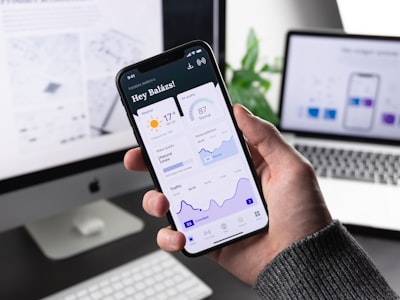
In today's business landscape, mobility is no longer a luxury, but an operational necessity. Integration platforms that connect critical systems must deliver a seamless experience from any device, whether it's a smartphone, tablet, or laptop. However, many solutions on the market fall short when it comes to adapting to the small screen, intermittent connections or security requirements of the mobile environment. The key question is: does your integration platform really work on mobile devices? The answer determines whether your team can make informed decisions on the fly, approve workflows from an out-of-office meeting, or access real-time dashboards without relying on a desk.
A modern integration platform must be able to orchestrate data across diverse applications—ERP, CRM, document management systems, BI tools—while presenting that information in a usable way on touch interfaces. It is not enough to have a responsive version of a web portal; A mobile-specific design is required, with tailored forms, dashboards that prioritize key information, and robust yet agile authentication mechanisms. Mobile user experience can't be an afterthought; It must be at the center of architecture from day one.
Q2BSTUDIO understands this reality and builds custom integration platforms that respond to the particular needs of each organization. With its focus on custom applications, the company makes connectors, data mappings, and orchestrations a seamless fit for business processes, including mobile flows. It is not a question of adapting a generic solution, but of creating a digital ecosystem that works with the same efficiency in an office as in a construction site, in a warehouse or on a commercial visit.
Mobility brings with it specific technical challenges. Network latency, bandwidth variability, and the possibility of disconnection force the platform to manage offline synchronization intelligently. This is where AWS and Azure cloud services come into play, providing a scalable and resilient infrastructure. Q2BSTUDIO integrates these cloud services to ensure that data is available even when the connection is intermittent, using message queuing, caching, and lazy synchronization. In addition, the company offers mobile-friendly cybersecurity solutions, with multi-factor authentication, end-to-end encryption, and device- and location-based access policies.
Artificial intelligence has become an indispensable ally for mobile integration platforms. AI agents can process large volumes of data in real-time, identify patterns, and trigger push notifications when urgent action is required. For example, an AI agent could detect an anomaly in inventory levels and send a push alert to the logistics manager, who can approve a replenishment directly from their phone. Q2BSTUDIO incorporates AI for business into its platforms, offering machine learning capabilities that improve with use and adapt to user behaviors. In this way, the platform not only integrates, but also anticipates needs.
The business intelligence field also benefits from mobility. Business intelligence services such as Power BI can connect to the integration platform to deliver interactive dashboards accessible from anywhere. Q2BSTUDIO deploys mobile dashboards that allow managers to visualize KPIs, sales trends or production indicators with just a few taps. The combination of real-time integration and mobile visualization transforms decision-making: what once required a meeting in the room is now resolved in a café.
Process automation is another fundamental pillar. Modern integration platforms orchestrate workflows that cross systems and devices. An expense approval, vacation request, or purchase order can be initiated from a mobile form, validated using an automated flow, and reported via push. Q2BSTUDIO designs these orchestrations with the mobile experience in mind, with simplified interfaces that prevent information overload and prioritize critical actions.
Security cannot be a compromise. When employees access sensitive data from their personal devices, the platform must implement strict controls. Q2BSTUDIO applies cybersecurity principles at every layer: from biometric authentication in the mobile app to encryption of data in transit and at rest. In addition, it conducts regular penetration tests and security audits to ensure that the platform can withstand attacks targeting mobility, such as phishing or device theft.
One aspect that is often overlooked is the offline experience. Many field workers operate in areas without consistent coverage. An efficient integration platform should allow for offline data capture, store it locally, and automatically synchronize it when the network is restored. Q2BSTUDIO deploys progressive (PWA) or native applications that maintain basic functionality even without internet, ensuring productivity is not interrupted.
The versatility of mobile integration platforms extends to a wide range of industries. In logistics, delivery drivers can update delivery statuses from their terminal. In healthcare, doctors can consult integrated medical records from a tablet. In retail, supervisors can approve discounts in real-time from any location. Each of these scenarios requires specific connectors, custom business rules, and an interface tailored to the device. Q2BSTUDIO develops just that: tailor-made software that solves real mobility problems.
The key is not to sacrifice functional depth for portability. Many mobile apps offer scaled-down versions of desktop tools, but that frustrates users who need to perform complex tasks. With a good integration platform, the mobile user can run entire processes, view detailed reports, and collaborate with colleagues without feeling constrained. Q2BSTUDIO achieves this balance through user-centric design and an architecture that prioritizes essential data on every screen.
The future of enterprise integrations is undoubtedly mobile. Organizations that adopt platforms capable of operating on any device will gain competitive agility. Investing in an integration platform that does not contemplate mobility is a half-baked investment. That's why, when evaluating solutions, it's crucial to ask: how does it behave on a smartphone? Does it allow push notifications? Does it support frictionless authentication? Do you sync data offline? Q2BSTUDIO answers these questions with platforms built from the ground up for mobility, integrating cloud services, artificial intelligence and a cybersecurity approach that protects every interaction.
In short, an integration platform that works on mobile devices is not an extra, but a fundamental requirement in the modern work environment. From bespoke apps that fit specific flows, to AI agents that automate repetitive tasks, to the power of AWS and Azure cloud services, to the clarity of Power BI dashboards, it all converges into a unified mobile experience. Q2BSTUDIO, with its expertise in custom software development and its deep understanding of integration needs, is positioned as the perfect ally to build that platform that really works anywhere, anytime and from any device.