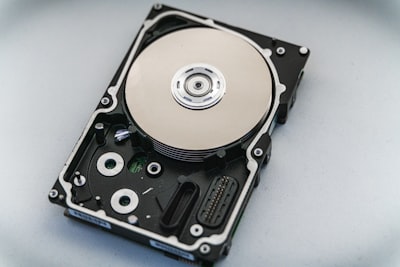
In today's digital age, where planned obsolescence seems to be the norm, there is a growing movement of enthusiasts looking to give a second life to old components. One of the most rewarding and technically interesting projects is the construction of a CD-ROM player using discarded IDE drives. This article explores the 'CD-ROM Player 01' project, a DIY solution that not only rescues obsolete hardware, but also opens the door to modern and professional applications. Throughout this analysis, we will discover how the combination of electronics, custom firmware, and software development services can transform a simple disk reader into a functional tool, even in a business context.
IDE units, those that populated personal computers during the 90s and early 2000s, are characterized by their 40 or 80-pin connector and parallel interface. Although they have now been replaced by SATA and faster standards, millions of these units are still in drawers, scrapyards or warehouses. The CD-ROM Player 01 project arises precisely from the need to reuse these devices, avoiding electronic waste and offering a functional alternative to commercial players. But it's not just about connecting cables: the real challenge lies in the control software, the interpretation of ATAPI commands and the integration with modern systems, whether through a microcontroller such as Arduino, a Raspberry Pi or even an FPGA.
The build process involves several stages: first, understanding the IDE protocol and how CD-ROM drives communicate with the controller. Then, design a circuit that handles power (5V and 12V) and signaling. Then, write the firmware that allows you to read the table of contents, control audio playback and, in advanced versions, extract data as if it were a digital reader. This is where the concepts of custom applications and custom software come into play, because generic firmware is rarely tailored to the specific needs of a DIY project. For example, you may want to integrate an LCD screen, touch buttons, or even a Wi-Fi connection for remote control. Each of these functionalities requires custom code that can be developed by professionals such as Q2BSTUDIO, a company specializing in software and technology development.
Q2BSTUDIO, with its expertise in creating custom applications, offers solutions that go far beyond simple firmware. For advanced hobbyists or small businesses that want to turn a hobby project into a viable product, having a team of developers can make the difference between an unstable prototype and a robust system. For example, the implementation of a content recognition system using artificial intelligence would allow the player to identify discs, extract metadata and automatically classify music. This is especially useful when combined with AWS and Azure cloud services to store and synchronize music libraries in the cloud. In fact, there are already projects that integrate AI agents to recommend songs based on playback history, all executed from hardware that was once only used to read CDs.
The business perspective also deserves attention. Many companies still hold large volumes of data on optical discs or legacy computers. The ability to reliably read those drives and digitize their contents can be critical for migration, historical archiving, or regulatory compliance processes. Imagine a workflow where a cluster of rescued IDE drives is connected to a centralized system, and business intelligence software like Power BI visualizes the extracted information. Not only does this save costs, but it also adds value by transforming unused data into strategic assets. Q2BSTUDIO, an expert in business intelligence services, can help design and implement these solutions, from automating reading to generating real-time reports.
Another crucial aspect is cybersecurity. When you connect older hardware to modern networks, potential vulnerabilities arise. A DIY player that communicates over Ethernet or Wi-Fi should have secure protocols, especially if it handles sensitive data. Companies that offer AI for businesses and pentesting services can evaluate these systems and ensure that they don't become a pain point. For example, an AI agent could monitor the unit's traffic and detect anomalous patterns, while Q2BSTUDIO's cybersecurity services would protect the global infrastructure.
We cannot forget the educational component. The CD-ROM Player 01 project is perfect for teaching principles of digital electronics, communication protocols, and low-level programming. Students and technologists can learn about DMA, interruptions, and timing control. But in addition, the skills acquired are directly transferable to the development of modern embedded systems, IoT and industrial automation. Q2BSTUDIO, with its focus on custom software and process automation, offers training and consulting that help companies internalize this knowledge and apply it to real problems, such as the integration of obsolete machinery into 4.0 production lines.
As for cloud alternatives, if the goal is to have a music library accessible from anywhere, integrating the player with AWS and Azure cloud services is a natural choice. For example, you can program a script that, when you insert a CD, reads it, extracts the tracks, converts them to digital format, and automatically uploads them to an S3 bucket. A web or mobile app could then list and play those files. This architecture combines low-cost hardware with the power of the cloud, and for this Q2BSTUDIO offers turnkey solutions that include everything from firmware design to integration with cloud APIs.
The maker community has developed several variants of the project: some use an Arduino Mega board with an IDE shield, others prefer an FPGA to handle bus speed, and the more daring ones implement USB controllers so that the computer recognizes the drive as a mass storage device. However, the key to success lies in the software. That's why more and more creators are turning to development professionals to polish their creations. Q2BSTUDIO has collaborated with enthusiasts and startups to transform prototypes into marketable products, offering debugging, performance optimization, and scalability services.
It is also relevant to mention the application of AI agents in these systems. An agent could monitor the condition of the unit, predict mechanical failures (such as laser degradation), and recommend preventative maintenance. This idea, which seems futuristic, is already viable by combining inexpensive sensors with lightweight machine learning models. Companies such as Q2BSTUDIO, which specialise in AI for companies, develop these bespoke systems, integrating intelligence directly into legacy hardware.
Finally, let's think about sustainability. Reusing IDE units reduces the carbon footprint associated with manufacturing new devices. In addition, it fosters a repair and reuse mindset that aligns with the ESG (environmental, social, and governance) goals of many organizations. If your company is considering green initiatives, incorporating projects like the CD-ROM Player 01, supported by professional software development services, can be a great starting point. Q2BSTUDIO can advise on the creation of sustainable technological solutions, from digitizing files to automating processes with recycled equipment.
In conclusion, the CD-ROM Player 01 is much more than a hobby: it is a window into technical innovation, an exercise in reverse engineering and a business opportunity. Whether for personal, educational, or corporate use, the combination of recovered hardware with custom applications, artificial intelligence, and AWS and Azure cloud services offers immense potential. If you want to take the next step and turn a DIY idea into a professional solution, don't hesitate to contact Q2BSTUDIO, where custom software development and cutting-edge technology come together to make your projects a reality.