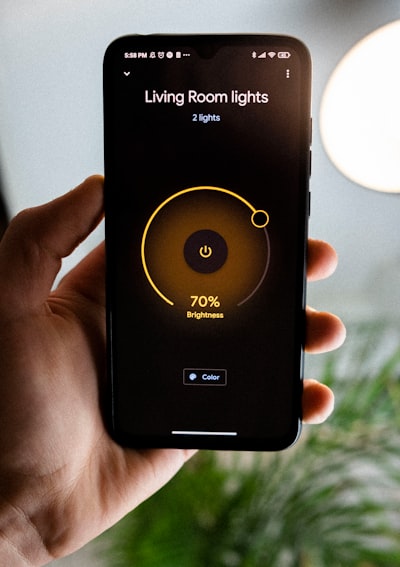
The rise of home automation has popularized the use of centralized control panels. A Home Assistant dashboard allows you to visualize sensors, manage devices, and automate routines from a single interface. However, high-end commercial solutions can be expensive. The good news is that it's possible to build a functional and attractive panel for less than $20, using low-cost hardware like a Raspberry Pi Zero W and a recycled display. This cost-effective approach not only democratizes access to smart home technology, but also serves as inspiration for business projects looking to prototype monitoring solutions without large upfront investments.
The foundation of the system is Home Assistant, an open-source platform that integrates hundreds of devices and services. For the physical panel, you can use a Raspberry Pi Zero W (around 10 USD) connected to a small touch screen (such as 3.5-inch ones) or even an old tablet configured as a kiosk. The software is easy to install, and using the Lovelace editor, cards with temperature sensors, lights, cameras, and alarms are customized. The interesting thing is that, with few resources, total control of the home is achieved, from turning on light bulbs to receiving security notifications. This scalability is also valuable in professional environments: a low-cost prototype can validate an industrial control panel concept before developing a definitive solution.
By building your own dashboard, you learn about networking, hardware configurations, and security. Precisely, cybersecurity is a critical aspect: avoiding exposing unnecessary ports, using encrypted connections and segmenting the home network are practices that every amateur should know. In the business environment, these same principles are applied more rigorously. A company that wants to implement monitoring panels for IoT or machinery can benefit from AWS and Azure cloud services to host their data in a secure and scalable way. Combined with AI agents that analyze usage patterns, anomalies can be detected or failures can be predicted before they occur, optimizing maintenance.
The flexibility of Home Assistant allows you to integrate almost any device, from Zigbee sensors to IP cameras. But when it is necessary to bring this logic to a corporate environment, the limitations of the platform force us to look for more robust alternatives. That's where the experience of Q2BSTUDIO comes in, a company specialized in the development of custom applications and custom software for sectors such as logistics, manufacturing and energy. If your goal is to create a professional dashboard that connects with ERPs, CRMs, or cloud databases, a handcrafted approach with Home Assistant may be the starting point, but the final solution requires solid software engineering. Q2BSTUDIO offers cross-platform application development services that allow you to transform a homemade prototype into a scalable and secure system.
Another relevant aspect is the integration with analysis tools. A dashboard should not only display real-time data, but also offer historical insights. Business intelligence services such as Power BI can consume the information collected by Home Assistant and generate detailed reports on energy consumption, usage patterns or device efficiency. In this way, the small panel of less than $20 becomes a gateway to advanced analytics. Companies that want to exploit the full potential of their data can turn to AI for companies and predictive models that, fed by sensor data, optimize production processes. Q2BSTUDIO also integrates artificial intelligence into its solutions, creating AI agents that automate decisions based on learned rules.
Implementing a low-cost Home Assistant dashboard teaches valuable lessons about system architecture and user experience. For an individual, it's a fun and educational way to get into the IoT. For a professional, it's a reminder that innovation doesn't always require big budgets, but creativity and technical knowledge. If you decide to make the leap to a productive environment, having technology partners like Q2BSTUDIO can make all the difference. They offer cloud services on AWS and Azure to deploy dashboards with high availability, and their cybersecurity expertise ensures that sensitive information is protected. In addition, its Power BI solutions and business intelligence services transform raw data into actionable insights.
In conclusion, assembling a Home Assistant panel for less than $20 is an accessible project that teaches the fundamentals of home automation, networking, and data visualization. But beyond the domestic sphere, it represents a philosophy of rapid prototyping that can be applied in companies to validate concepts before investing in complex developments. The key is knowing when to move from a DIY solution to a professional platform. Q2BSTUDIO is prepared to accompany this growth, offering customized software, artificial intelligence integration and cloud services that multiply the capabilities of any dashboard. Whether it's for a smart home or a connected factory, the power of real-time visualized information is the same: to make better, faster decisions.