
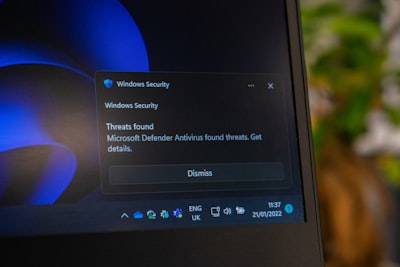
In the fast-paced world of cybersecurity, few things are as paradoxical as an update that fixes a serious flaw and, at the same time, introduces a new vulnerability. This is precisely what has happened with RoguePlanet, a dangerous security hole in Microsoft Defender that allowed attackers to take complete control of a computer. The fix came quickly, but, as revealed by anonymous researcher Nightmare-Eclipse, the patch brought with it an annoying side effect: a bug that can drain all the system's disk space. This incident not only highlights the complexity of keeping security products secure, but serves as a valuable case study for any company developing critical software.
To understand the magnitude of the problem, it is worth remembering how RoguePlanet worked. It was a zero-day vulnerability in Microsoft's malware protection engine, an essential component that scans and scans files for threats. Attackers could exploit it to execute arbitrary code and gain elevated privileges, completely compromising the victim machine. Fortunately, Microsoft released an emergency patch that closed that door. However, the solution was not as clean as expected.
Nightmare-Eclipse, a well-known bug hunter who had already warned about RoguePlanet, discovered that the update introduced an exception in the handling of file sizes. Typically, Defender imposes strict limits on scanning and quarantining very large documents, to avoid consuming excessive resources. But the patch created a small gap: under certain circumstances, the system caches the entire file regardless of its size. The result? An attacker can place a malicious file on an SMB server, and any computer that accesses that resource will begin downloading the file to the Defender cache, filling the hard drive until it runs out of space. The proof of concept already works on Windows 11 25H2 and Windows Server 2025, and Microsoft has not yet officially made a statement on the matter.
This incident reflects an uncomfortable reality: even the most experienced development teams can generate regressions when fixing complex vulnerabilities. The pressure to release quick patches, coupled with the sheer number of attack vectors that a product like Defender must cover, makes it almost impossible to foresee all the consequences. That's why, at Q2BSTUDIO we understand that cybersecurity doesn't end with patching, but requires a holistic approach that includes thorough testing, continuous audits, and secure design from the ground up. Our team of cybersecurity and pentesting experts work side-by-side with companies of all sizes to identify these gaps before they become real problems.
From a technical standpoint, the new bug is a classic example of attacker-controlled resource overflow. No sophisticated malware or zero-day exploits are needed; A large file hosted on an accessible server is enough. This turns the attack into a low-cost denial-of-service (DoS) tool, capable of disabling computers or servers on a corporate network in minutes. The consequences can be severe: loss of productivity, data corruption if the disk fills up while writing critical files, and even the inability to apply new security updates due to lack of space.
For organizations, these types of incidents underscore the importance of having custom applications and custom software that are tailored to their specific needs, rather than relying exclusively on generic solutions. Well-designed corporate software should include such failure containment mechanisms, such as configurable cache limits, early warnings of disk consumption, and contingency plans. At Q2BSTUDIO we develop custom solutions that integrate security controls from the design phase, minimizing the risk of an external upgrade wreaking havoc on the customer's environment.
In addition, this case highlights the need to incorporate artificial intelligence and AI for companies into detection and response processes. AI systems can analyze anomalous behavior patterns, such as the sudden growth of an antivirus cache, and trigger alarms before the disk becomes saturated. At Q2BSTUDIO we develop AI agents that monitor the health of systems in real time, learning from past threats to anticipate future incidents. Combined with AWS and Azure cloud services, these agents can automatically scale resources or isolate compromised computers, reducing the impact of failures such as Defender.
Information management also plays a key role. Companies that handle large volumes of data need services, business intelligence, and tools such as power BI to visualize security and performance metrics. For example, a Power BI dashboard could show disk usage per process, alerting if Defender is abnormally consuming space. At Q2BSTUDIO we integrate these capabilities into our projects, helping IT managers make informed and quick decisions in the face of any anomalies.
This incident also reminds us that security is an ongoing process, not a product. Fixing a vulnerability can open another door, which is why we recommend our customers adopt a secure development lifecycle (SDL) that includes code reviews, regular penetration testing, and dependency analysis. Our cybersecurity team performs comprehensive audits of applications, both in-house and third-party, to detect regressions and ensure patches don't introduce new risks. In addition, we help companies define hardering policies for Windows systems, limiting access to SMB shares and configuring disk quotas for processes such as Defender.
In the end, what happened with RoguePlanet and its flawed patch is a mirror where the challenges of the software industry are reflected. The complexity of modern systems makes it impossible to achieve perfection, but we can reduce the likelihood of failures through agile methodologies, automated testing, and a culture of transparency. At Q2BSTUDIO we are committed to collaborative development, where our engineers work alongside customers' security teams to build robust solutions, from bespoke applications to scalable cloud platforms. If you want to learn more about how we protect companies from these threats, we invite you to learn about our cybersecurity and pentesting service, where we apply advanced techniques to identify vulnerabilities before attackers do.
To close, it is important to note that Microsoft is already working on a new update that corrects this side effect. Meanwhile, system administrators can mitigate risk by limiting access to untrusted SMB servers, setting disk quotas, and monitoring Defender resource usage. But the most valuable lesson is that no update should be taken for granted. Artificial intelligence and automation, combined with a deep understanding of the infrastructure, are the best allies to maintain security without sacrificing availability. At Q2BSTUDIO we are committed to offering technological solutions that not only respond to current needs, but also anticipate the risks of the future. Because cybersecurity is not a destination, but a constant journey of learning and improvement.

