
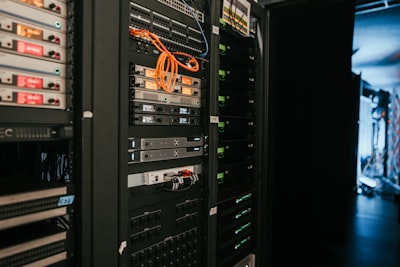
In the era of artificial intelligence, energy consumption has become the main bottleneck for infrastructure scalability. Data centers dedicated to inference and training AI models consume gigawatts, and the ability to get maximum performance for every watt consumed defines not only the economic viability, but also the sustainability of the ecosystem. In this context, performance per watt emerges as the ultimate metric: an indicator that cannot be falsified and that can only be demonstrated with real results in production.
AI model architecture has evolved towards Mixture-of-Experts (MoE), where each token activates only a fraction of the total parameters, allowing for greater computational efficiency. However, serving these rack-scale models requires a co-engineered integration between hardware and software. It's not enough to have powerful GPUs; every component—from NVLink switches to inference software—needs to work in harmony to maximize the tokens generated per watt. This end-to-end design philosophy is what enables modern platforms to deliver up to 25x improvements in performance per watt over previous generations, according to industry data.
But the absolute numbers only tell part of the story. Different workloads require different points of operation: some optimize latency, others cost or throughput, and most need to move between the two extremes. Pareto curves then become essential tools to find the optimal balance before investing in GPU hours. Software layers, such as inference planners and quantization techniques, multiply the performance of each chip, and that performance continues to improve over time: in just one month, the performance per watt of certain models has increased by up to five times thanks to continuous optimizations.
In the real world of AI factories, thermal and rack inefficiencies can result in only 60% of the electricity on the grid being converted into useful AI work. Real-time power management solutions, capable of redistributing power between GPUs and racks, make it possible to bridge that gap and run up to 40% more GPUs within the same power budget. Rack-scale reliability isn't achieved overnight; It requires years of production experience with frontier models and billions of queries served. Large AI labs rely on these platforms precisely because they deliver sustained performance and economics that are maintained under real traffic, day in and day out.
For companies looking to build or scale their own AI infrastructure, it's crucial to understand that energy efficiency is not just a technical issue, but a strategic business decision. The cost per token—determined by the performance per watt—directly defines the profit margins of an AI service. In a world where the demand for tokens grows exponentially, those organizations that make efficient infrastructure decisions today will be the ones that scale tomorrow. This is where Q2BSTUDIO becomes a key ally, helping companies design and implement solutions that maximize the return on their AI investment.
From custom application development to custom software integration to optimize AI workloads, Q2BSTUDIO offers services that go beyond hardware. Our team has experience in AWS and Azure cloud services to deploy scalable and efficient infrastructures, as well as in cybersecurity to protect the environments where AI agents operate. In addition, we integrate business intelligence services such as Power BI to monitor the performance of systems and make data-driven decisions. If your company needs to implement AI for companies with maximum energy efficiency, we invite you to learn about our artificial intelligence solutions for companies.
In conclusion, performance per watt is consolidated as the metric that defines success in AI infrastructure. Beyond the lab numbers, what matters is actual production efficiency, the ability to scale within a fixed energy budget, and the integration of software and hardware to extract every useful watt. Companies that embrace this perspective, relying on technology partners like Q2BSTUDIO, will be poised to lead the next wave of innovation driven by intelligent agents and foundational models.

