
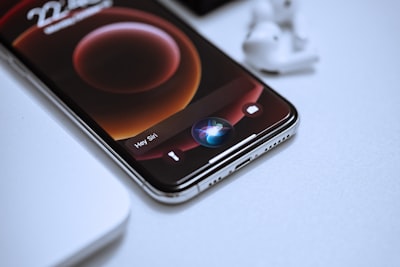
The recent public beta of iOS 27 has brought with it a quiet but profound transformation in the way voice assistants operate on mobile devices. Far from being a simple incremental improvement, the new version of Siri represents a paradigm shift: large-scale local processing. This technical advancement not only accelerates responses, but redefines what's possible in the Apple ecosystem, offering developers and businesses an entirely new canvas to innovate.
Until now, most complex interactions with voice assistants required sending data to remote servers, which introduced latency, connectivity dependency, and privacy concerns. With iOS 27, Apple has managed to run language models directly on the device, handling requests that cross multiple native apps — such as Mail, Calendar, Notes, and Messages — without interruptions or delays. This is not magic, but the result of years of optimization in neural hardware and efficient algorithms that balance computing power and power consumption.
For the business sector, this advance opens doors that previously seemed closed. Tailored applications that integrate voice commands can now deliver much smoother and more secure experiences. A project management app could allow the user to ask, 'What urgent tasks do I have for tomorrow related to customer X?' and get an instant answer without any data leaving the device. This is especially relevant in areas such as health, finance or consulting, where confidentiality is critical. At Q2BSTUDIO we understand this need and offer artificial intelligence services for companies looking to implement conversational solutions with high standards of privacy and performance.
From a software development perspective, this shift forces a rethink of application architecture. Zero latency and the ability to process multimodal requests locally allow you to design functionalities that were previously unfeasible due to technical limitations. For example, a virtual customer service assistant could analyze locally stored user interaction history in real time, combine it with calendar data, and suggest the best time for a meeting, all without the need to send sensitive information to the cloud. This not only improves the user experience, but also reduces operational costs by minimizing traffic to AWS and Azure cloud services.
Cybersecurity also benefits from this approach. With less data traveling through the network, attack vectors and the risk of interception are reduced. Companies that handle sensitive information can leverage this ability to build applications that comply with regulations such as GDPR or HIPAA more easily. At Q2BSTUDIO we integrate cybersecurity strategies into each project, ensuring that new voice functionalities do not compromise data protection.
Another fascinating aspect is the possibility of creating AI agents that act as personal assistants within the organization itself. These agents could coordinate with calendar, email, and internal databases to automate repetitive tasks, such as generating reports or scheduling smart reminders. Local artificial intelligence allows these agents to respond in milliseconds, without relying on connectivity. This aligns with the trend toward software applications as they prioritize device autonomy and seamless experience.
In addition, integration with business intelligence platforms takes on a new dimension. Imagine an executive who, using a voice command, requests a sales summary for the last quarter and, instantly, the system generates an interactive visualization in Power BI that is displayed on the screen. This type of interaction, previously relegated to complex touch interfaces, is now viable thanks to local processing and Siri's ability to understand contexts between applications. At Q2BSTUDIO we develop business intelligence services that connect these assistants with dashboards in real time, facilitating agile decision-making.
However, the path is not without challenges. The beta reveals that integrations with third-party apps are still spotty, and accuracy in very specific domains can be improved. For companies that want to get ahead of the curve, it's time to experiment with concrete prototypes and use cases. Companies that are already investing in AI for companies and in the development of AI agents will find in iOS 27 a strategic ally to offer differentiating solutions.
In short, the update of Siri in iOS 27 is not only a technical milestone, but an invitation to rethink how we interact with technology. The barrier between user intent and digital action is drastically reduced, and those who know how to capitalize on this evolution will be able to create more intuitive, secure and efficient products. At Q2BSTUDIO, as a software development company, we are ready to accompany organizations on this journey, exploring together the possibilities opened up by this new paradigm of local artificial intelligence.

