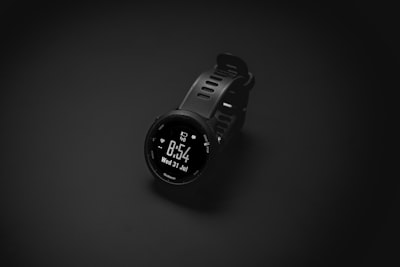
The Garmin Forerunner 165 is much more than an entry-level sports watch to the running range. With its AMOLED display, accurate GPS, and advanced health metrics, it represents a high-performance tool for those looking for reliable data without the complexity of top-of-the-line models. However, many users are unaware that this device hides features that can transform the training experience and, by extension, offer valuable lessons on how to optimize technological processes in the business environment. In this article, we'll explore five essential tricks to get the most out of Forerunner 165, connecting each one to principles of efficiency, personalization, and data intelligence that also apply in the world of software and digital transformation.
The first trick is to activate the watch's hidden flashlight. Although the 165 does not have a physical LED, its AMOLED display can become a powerful source of white or red light. By accessing the controls menu – holding down the top button – and adding the 'Flashlight' tile, the user gets a tool that imitates the superior models. The red light mode, selectable with the bottom button, reduces nighttime visual impact and preserves peripheral vision. This functionality reminds Q2BSTUDIO the importance of adjusting available resources to specific needs, an approach that applied when developing custom applications that maximize the potential of each technology infrastructure. Just as we customize the flashlight, businesses can configure custom apps to solve specific problems without relying on overloaded generic solutions.
The second key hack is the strategic organization of the controls menu. Unlike superior models, the 165 does not allow you to reassign physical buttons, but it does allow you to order the tiles of the shortcut menu. Placing critical functions such as flashlight, do not disturb mode or music controls in the first positions reduces friction during exercise. This principle of interface optimization parallels the design of business dashboards: a good information system must first display the most relevant indicators. AWS and Azure cloud services allow you to deploy dashboards with real-time metrics, and a correct data hierarchy avoids cognitive overload. Just as a runner needs a quick look at their heart rate, a manager requires immediate access to key KPIs without navigating cumbersome menus.
The third trick is a nifty solution for those who miss the map navigation of the top Forerunners. Although the 165 doesn't display vector maps, it can load routes from Garmin Connect and follow a breadcrumb trail. When planning a ride in the app, the watch draws the path on a blank background, allowing the user to stay on course without getting lost. This functionality is an example of how hardware limitations can be overcome with intelligent software. In the corporate sphere, artificial intelligence and AI agents make it possible to extract value from incomplete data, offering predictive guidance without the need for complete maps. Q2BSTUDIO implements Business Intelligence services with Power BI that transform raw data into actionable paths, similar to how the breadcrumb trail converts a GPX file into a reliable browsing experience.
The fourth tip addresses the personalization of activity profiles. The 165 allows you to double your running profile and create variants for specific workouts: one for smooth rides, one for track series, one more for competition. Each profile can display different data fields—pace, heart rate, cadence—and adjust automatic alerts. This modularity is directly transferable to the enterprise software architecture. Companies that adopt custom software can build specialized modules for different departments, preventing a single system from trying to cover everything inefficiently. In addition, just as a runner reduces screens to the essentials—pace, pulse, cadence—an organization must define its critical metrics and eliminate noise. Q2BSTUDIO helps its customers design business intelligence solutions with Power BI that prioritize the indicators that really impact decision-making.
The fifth trick is a warning about syncing data with external platforms like Strava. Many runners make the mistake of uploading the file immediately after finishing the workout, without giving the watch time to process the GPS smoothing and segments. The recommendation is to wait two to three minutes before syncing, so that Garmin Connect finishes the calculations and sends more accurate data to Strava. This small delay prevents erratic rhythm peaks and missed segments. In the corporate environment, speed should not compromise on accuracy. Data integration processes require processing and validation times. Strong cybersecurity also calls for controlled pauses to verify the integrity of each transfer. Q2BSTUDIO implements security protocols in its cloud solutions that ensure that each piece of data is processed correctly before being consumed by analytical or reporting systems.
Beyond these tricks, the Forerunner 165 teaches that even mid-range devices can deliver exceptional performance if you know their hidden capabilities. The same philosophy applies to business technology: you don't need the most expensive or complex system, but the one that is correctly configured for real needs. Enterprise AIs developed by Q2BSTUDIO, including AI agents and intelligent assistants, demonstrate that artificial intelligence can be integrated in a lightweight and effective way without cluttering unnecessary options. Just as the 165 prioritizes the essentials for the corridor, process automation solutions designed by Q2BSTUDIO eliminate redundant steps, improving operational efficiency with a minimum of friction.
In short, the Garmin Forerunner 165 is not only a sports watch, but a metaphor for digital optimization. Its tricks—programmable flashlight, strategic menu, mapless navigation, modular profiles, and leisurely synchronization—reflect universal software design principles: personalization, information hierarchy, adaptation to constraints, segmentation, and data quality. For companies looking to transform their technology infrastructure, Q2BSTUDIO offers cloud services on AWS and Azure, advanced cybersecurity , and business intelligence with Power BI, ensuring that every layer of the digital ecosystem works with the same precision as a well-tuned sports watch. The key is to know the tools thoroughly and apply them with intention, both in a 10K race and in a digital transformation project.