
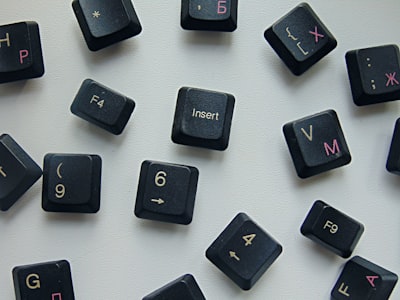
For years, the tech community has elevated mechanical keyboards to cult status. They are associated with a superior tactile experience, legendary durability and an aesthetic that invites customization. However, this fervor has left behind an option that, for most professionals, is more practical, quiet, and efficient: the membrane keyboard. In this article I want to make the case for why stopping buying mechanical keyboards is not heresy, but an informed decision, and how my trusty membrane keyboard outperforms its noisy competitors in day-to-day work.
To begin with, let's analyze the myth of mechanical superiority. Mechanical keyboards use individual switches for each key, providing tactile feedback and a distinctive sound. Enthusiasts argue that such feedback improves typing accuracy and speed. However, ergonomic studies show no significant differences in productivity between a quality mechanical keyboard and a good modern membrane keyboard. What is undeniable is the noise: in an open office environment, the constant clicking of Cherry MX switches can become a source of distraction for colleagues and for oneself. Listening fatigue is real, and membrane keyboards offer a much more discreet acoustic profile.
From a technical perspective, membrane keyboards have evolved tremendously. Current models use high-quality rubber domes that provide a smooth and consistent feel. Plus, their sealed construction makes them more resistant to dust and accidental spills, which is common on any desk. Durability has also improved: many mid-range membrane keyboards can withstand tens of millions of keystrokes, figures that more than cover the lifespan of a professional-use device. And all this for a fraction of the price of a mechanical keyboard, allowing you to allocate your budget to other equally important digital tools.
In the business world, choosing the right peripheral goes beyond personal taste. Companies are looking for solutions that balance cost, performance and maintenance. An IT department that equips dozens of employees with mechanical keyboards not only assumes a higher expense, but also faces noise complaints and more complex replenishment logistics. A standardized membrane keypad, on the other hand, makes inventory management easier and reduces the adaptation time of new employees. In addition, in environments where sensitive data is handled, the simplicity of the hardware reduces potential attack vectors, an aspect that aligns with good cybersecurity practices. At Q2BSTUDIO, we understand that efficiency depends not only on the code we write, but also on the environment around it. That's why, when recommending technology infrastructures, we prioritize robust and practical solutions, such as those we offer in our AWS and Azure cloud services, where simplicity and scalability go hand in hand.
Going back to the keyboard, many software development and data analytics professionals spend hours writing code, reports, or queries. For them, a quiet, responsive keyboard can reduce fatigue on the fingers and wrists in the long run. Mechanical keyboards, with their increased actuation and travel force, can be tiring in extended sessions. In addition, modern AI applications assist the user with autofill and corrections, minimizing the need for intense touch feedback. At Q2BSTUDIO, we develop custom applications that integrate AI agents for enterprises, optimizing workflows without relying on specific peripherals. A membrane keyboard is perfectly compatible with these tools, and its low profile makes it ideal for working on the go or in tight spaces.
We can't ignore the rise of remote work and shared spaces. At home, the noise of a mechanical keyboard can disturb the family or partner during video calls or evening sessions. Membrane keyboards, on the other hand, allow for a more environmentally friendly experience. Even for activities like creating dashboards in Power BI or analyzing data with business intelligence services, a silent keyboard helps you stay focused. At Q2BSTUDIO, we help companies implement power bi and business intelligence services to transform data into decisions, and we know that the input tool should not be a hindrance. The choice of keyboard is, after all, a matter of ergonomics and context, not fashion.
It is also worth questioning the supposed longevity of mechanical keyboards. Although its switches are designed for millions of keystrokes, the electronic components (such as the USB controller or the board) can fail sooner. In a membrane keypad, being a more integrated design, breakdowns are less frequent and, when they do occur, replacement is economical. For a company that manages hundreds of pieces of equipment, cost predictability is a strategic factor. In fact, in process automation projects, where every second counts, the reliability of peripheral hardware is key. That's why at Q2BSTUDIO we offer tailor-made software solutions that adapt to any configuration, without requiring specialized peripherals.
Finally, let's talk about user experience. Proponents of mechanical keyboards often mention the feeling of 'typing on a typewriter'. But that nostalgia doesn't translate into modern efficiency. Today's membrane keyboards incorporate technologies such as low profile, LED backlighting, and wireless connectivity with low latency. Some models even offer water resistance and integrated wrist rests. Their versatility makes them the recommended choice for most users, including those working with AI for enterprise or developing AI agents. You don't need a 50-gram force switch to be productive; You need a keyboard that won't tire you out, doesn't bother others, and fits into your budget.
In conclusion, the next time you're considering upgrading your equipment, ask yourself if you really need a mechanical keyboard or if you're following a trend. My membrane keyboard has accompanied me in thousands of hours of work, from developing applications to setting up cloud infrastructures, and I wouldn't change it for anything. At Q2BSTUDIO, we apply the same philosophy to our services: to choose the most appropriate technology for each need, without getting carried away by hype. Whether you're looking to optimize your processes with custom applications, artificial intelligence , or AWS and Azure cloud services, we're here to help you make practical and effective decisions. Stop buying mechanical keyboards and discover what a good membrane keyboard can do for your productivity.

