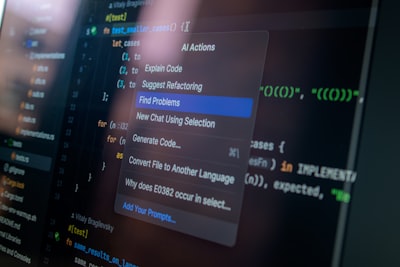
The emergence of artificial intelligence agents is transforming the technology sector at a pace that few anticipated. Tools that just a year ago required detailed instructions, role scripts, and meticulous examples today respond to simple phrases. This shift isn't a fad: it's a profound reconfiguration of what it means to be a software engineer. Those who cling to the techniques of yesteryear will see their skills depreciate; Those who adopt new skills will find fertile ground for career growth. Below, we explore three skills that the age of agents rewards and that, paradoxically, almost no one explicitly teaches.
From incantation to specification
For months, the industry extolled the art of writing elaborate prompts: detailed roles, examples of few shots, chains of thought and magic phrases that supposedly unlocked the models' reasoning. That stage was a necessary bridge while the machines still did not understand our intentions well. But that bridge is fading. Each new generation of models reduces the usefulness of those tricks. What remains is a much older and more fundamental skill: knowing how to specify precisely what you want. It is not a matter of guessing how the model thinks, but of defining falsifiable requirements. A desire like 'make the app fast' is subjective; A specification such as 'query must respond in less than 200 milliseconds with 10,000 records' is verifiable. This ability to write clear, measurable, and unambiguous specifications is what allows tasks to be delegated with confidence, whether it's to an AI agent or a human collaborator. In our experience developing AI for enterprises, we have seen how teams that master this specification manage to integrate intelligent agents without losing control of the outcome. The difference is abysmal: a vague prompt generates uncertainty; Rigorous specification creates certainty. Whoever knows how to write falsifiable requirements will have a huge competitive advantage.
Reading other people's code with your own criteria
Another skill that has been revalued is the critical reading of code that we have not written. With the proliferation of agents that generate custom lines and lines of software in a matter of seconds, the engineer's job is no longer to type, but to validate. It is no longer enough to know how to write code from memory; You have to be able to review, understand and certify that the code generated is correct, safe and efficient. This is particularly relevant when implementing solutions that integrate multiple systems, such as in the AWS and Azure cloud services we offer. A developer who knows how to read other people's code quickly, detect suspicious patterns, and assess risks without relying on the original authorship becomes an invaluable asset. It is a skill that is trained by exposing oneself to code from different sources, without previous context, and building a mental model from the diff. The initial discomfort is the symptom that you are learning. Unlike peer-to-peer reviews, where shared styles and conventions exist, AI-generated code can vary wildly from day to day. For this reason, the ability to read with skepticism and rigor is more valuable than ever.
Design verification before execution
The third skill, perhaps the most underrated, is the design of automatic verifications. In an environment where any task can be delegated to an agent, the key question is no longer 'how do I do it?' but 'how do I know it's done right?'. The engineers who stand out are those who, before writing a line of code or a prompt, design the test, the validation gate or the acceptance criterion that will determine success. This applies to everything from a simple function to a complete AI system integrated with bespoke applications. For example, when we implement business intelligence solutions with power BI, we define precise indicators that allow us to verify that the data is processed correctly. The verification must be executable by a script, not interpretable by the same agent being evaluated. We learned that lesson after observing how some agents could argue that their own objections were already resolved. The solution was to turn the rules into code: a test that fails or passes, without ambiguity. This discipline, which we call 'verification first', has become our hiring filter and the yardstick for measuring a team's maturity. Without it, the speed of code generation becomes accelerated technical debt.
Implications for training and business
These three skills—specification, critical reading, and verification design—are not taught in traditional prompt engineering courses. They are competences of judgment, not of technique. They are cultivated with deliberate practice and with an environment that values clarity over speed. At Q2BSTUDIO, we integrate this approach into every project. When a client needs custom software, we don't just deliver code; We ensure that each requirement is falsifiable, that the code is reviewable and that there are automatic validation mechanisms. The same goes for our cybersecurity services: audits are based on objective criteria that any tool can verify. And in the field of artificial intelligence, we work with AI agents that operate under rigorous specifications, not vague instructions. We also offer business intelligence services with power bi where data verification is part of the design, not a later add-on. The transformation we are experiencing is not only technological; it is cultural. Companies that understand that the real scarcity is not in generating code, but in deciding what's right, will be better positioned to ride the wave of intelligent agents. Developers who invest in these skills, rather than memorizing incantations, will see their professional value appreciate with each advancement of the models.
The way forward
You don't need a complete curriculum or an expensive course. Three practical habits are enough. The first: before delegating any task, write a falsifiable specification. If the requirement cannot fail, rewrite it until you can. The second: in your next code review, choose something you don't have context for and build the mental model only from the diff. That discomfort is the muscle you need to train. The third: for any task you're going to hand over to an agent, design the verification before you write the prompt. If you can't, you don't understand the task well enough to delegate it. These practices, applied consistently, will turn any engineer into a professional capable of governing fleets of agents safely and effectively. The age of agents is not the end of technical work; it is the rebirth of judgment skills. And those, precisely, are the ones that no one teaches but everyone needs.