
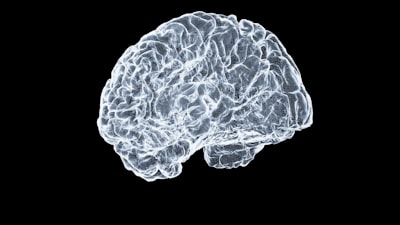
Artificial intelligence is transforming the interpretation of medical images, especially in the field of brain MRI. However, an ethical and technical concern arises: AI models can predict demographic attributes such as age, gender, or even race from these images. This phenomenon not only raises questions about privacy, but also introduces biases that can affect the fairness of AI-assisted diagnoses. A recent study published in arXiv proposes an innovative approach to unravel the origin of this demographic signal in brain MRI, separating the influence of anatomy from that of acquisition contrast. In this article, we explore the implications of this research, offer practical insight for healthcare and technology companies, and show how artificial intelligence for companies can be developed responsibly and effectively.
The central problem lies in the fact that, unlike chest X-rays, where acquisition conditions (patient position, exposure, etc.) explain a substantial part of demographic predictability, in brain MRI the anatomy and acquisition-dependent contrast are deeply intertwined. This makes it difficult to determine whether a model is learning genuine anatomical features (such as the size of certain structures that vary with age) or simply taking advantage of technical artifacts (such as differences in signal strength depending on the scanning protocol). The authors of the study propose a disentangled representation learning framework that breaks down each image into two components: an anatomy-centric representation, which suppresses the influence of acquisition, and a contrast embedding that captures protocol-dependent features. By training predictive models on the whole picture, anatomical representation, and contrast embedding separately, they are able to quantify the relative contribution of each source to the demographic signal.
The results are revealing: across three datasets and multiple MRI sequences, demographic predictability is predominantly driven by anatomical variation. Anatomical representations largely preserve the performance of models trained on the original images, while contrast embeddings retain a much weaker, dataset-specific signal that does not generalize between sites. This suggests that, at least in brain MRI, most of the information about age, sex, and race that a model can extract comes from actual structural differences, not acquisition artifacts. However, the residual contrast signal, although small, can be sufficient to introduce biases when data comes from a single source or when trained models in one environment are applied to a very different one.
From a business and software development perspective, these findings have direct implications. For organizations implementing AI-assisted diagnostics solutions, it is crucial to understand that bias mitigation strategies cannot be limited to standardizing procurement protocols. Since anatomy is the primary carrier of demographic signal, any attempt to eliminate bias must address anatomical variation itself, either through data augmentation techniques, regularization, or adversarial learning that penalizes the encoding of demographic attributes from anatomical representations. This is where the enterprise AI expertise we offer at Q2BSTUDIO comes in. Our team designs models that integrate these principles, using neural network architectures capable of separating factors of variation and systematically auditing bias.
In addition, handling large volumes of medical images requires a robust and secure infrastructure. For this reason, many of our projects are supported by AWS and Azure cloud services, which allow data to be processed in a scalable way and comply with regulations such as HIPAA or GDPR. We implement machine learning pipelines in the cloud that make it easy to experiment with unraveled representations, and we use business intelligence services like Power BI to visualize bias and performance metrics in real time. This combination of technical capabilities ensures that solutions are not only accurate, but also transparent and auditable.
In parallel, we develop custom applications to integrate these models into clinical workflows. For example, an augmented radiology platform that shows the specialist not only the likelihood of a pathology, but also an indicator of potential demographic bias. We also created autonomous AI agents that continuously monitor the performance of models in production, detecting deviations that could indicate the appearance of biases when applied to populations other than those in training. Cybersecurity is another fundamental pillar: we protect patient data through encryption, access controls and regular audits, ensuring that innovation does not compromise privacy.
For healthcare companies looking to adopt AI ethically, our recommendation is to start by understanding the source of bias in their own data. The aforementioned study offers a clear methodology: break down the images into anatomical and acquisition components, and evaluate how each contributes to the predictions. At Q2BSTUDIO, we help our clients implement this type of analysis using bespoke software that is tailored to their specific needs. In addition, we integrate Power BI tools so that clinical and compliance teams can monitor equity indicators in a simple and visual way.
In conclusion, research on demographic predictability in brain MRI reminds us that it is not enough to train accurate models; It is essential to understand what they are learning and why. Separating anatomy from contrast is a step in the right direction, but the complete solution requires a technology ecosystem that combines artificial intelligence, cloud, cybersecurity, and business analytics. At Q2BSTUDIO, we are prepared to accompany organizations on this path, offering everything from strategic consulting to robust technical implementations. If your company is looking to develop fair and generalizable AI models, contact us to explore how we can collaborate.
.jpg)
.jpg)

.jpg)