
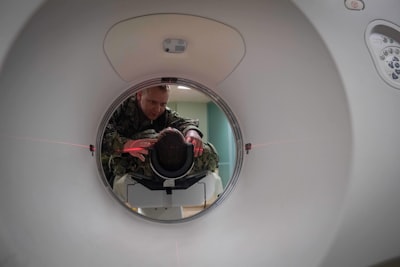
Computed tomography (CT) is one of the most widely used diagnostic imaging techniques in clinical practice, but exposure to ionizing radiation poses a health risk, especially in patients who require repeated studies. To mitigate this problem, low-dose protocols have been developed that reduce the amount of radiation; however, this reduction introduces noise and structural artifacts that compromise image quality and can lead to misdiagnosis. In this context, artificial intelligence has emerged as a key tool for reconstructing low-dose CT (LDCT) images with high fidelity, and one of the most promising advances is GenDiff, a diffusion model that integrates dose and anatomy information to achieve robust and generalizable reconstructions.
GenDiff represents a quantum leap from previous approaches, which used to be trained for fixed dose levels or specific anatomical regions, limiting its applicability in real clinical settings. This new model proposes a unified framework that learns to reconstruct CT images from low-dose data, taking into account both the radiation dose and the patient's anatomy. To this end, it incorporates a Dose and Anatomy Coder that generates acquisition-conscious latent representations, a dose- and anatomy-conditioned cold diffusion process for iterative refinement, a physical consistency update that ensures fidelity to the direct CT model, and a Structural Prior Refinement Module (SPRM) that preserves anatomical structures while suppressing dose-dependent artifacts.
GenDiff's architecture is inspired by generative diffusion models, which have demonstrated outstanding performance in image restoration tasks. However, instead of using standard diffusion with Gaussian noise, it employs cold diffusion, which degrades the image deterministically and is more suitable for reconstruction problems. The iterative process begins with a noisy input image (the low-dose CT) and refines it step-by-step to a high-quality image, guided by dose and anatomy conditions. This condition allows the model to adapt to different dose levels continuously, without the need to retrain for each case.
The experimental results published in the arXiv paper show that GenDiff consistently outperforms convolutional network (CNN)-based methods and other diffusion models in clinical datasets from multiple anatomies, including ultra-low-dose conditions not seen during training, as well as in animal and phantom data outside the training distribution. This demonstrates superior robustness and generalizability, making it a practical solution for the clinical implementation of low-dose CT.
Behind this type of innovation there is a crucial technological component: the development of custom software that allows artificial intelligence models to be integrated into hospital workflows. Artificial intelligence solutions for enterprises, such as those offered by Q2BSTUDIO, are critical to moving these advances from the research lab to the bedside. The ability to create bespoke applications that adapt to radiology information systems (RIS, PACS) and meet cybersecurity and healthcare regulatory requirements is a challenge that only specialized teams can meet.
In addition, the deployment of these models can benefit from AWS and Azure cloud services, which provide the scalable infrastructure needed for processing large volumes of image data and training complex models. For example, a hospital could deploy GenDiff in the cloud to offer real-time reconstructions, combining it with business intelligence services tools such as Power BI to monitor quality and dose indicators. AI agents could even be developed that automate the selection of reconstruction protocols based on the type of study and the patient's history.
The integration of artificial intelligence in diagnostic imaging not only improves image quality, but also reduces the workload of radiologists and allows for more accurate and earlier diagnoses. At Q2BSTUDIO we understand that every organization has unique needs, which is why we offer AI for companies ranging from algorithm design to production, always with a focus on safety and efficiency. We also develop custom applications that integrate with legacy systems and modernize healthcare processes.
The future of low-dose CT lies in models such as GenDiff, which demonstrate that it is possible to obtain high-quality images with minimal radiation doses, but also in the ability of technology companies to scale these solutions. Investing in bespoke software, cloud infrastructure and business intelligence will enable healthcare facilities to harness the full potential of AI. In this sense, Q2BSTUDIO is positioned as a strategic partner for digital transformation projects in the field of health, offering services ranging from cybersecurity to the development of personalized AI agents.
In conclusion, GenDiff is not just a technical breakthrough, but an example of how collaboration between academic research and technological development can solve real problems. The key is to build bridges between AI labs and companies that know how to implement these innovations in production environments. If your organization is exploring the use of artificial intelligence in radiology or needs to develop a custom image reconstruction system, having experts in cloud services and software development is the first step to success.
.jpg)

.jpg)