
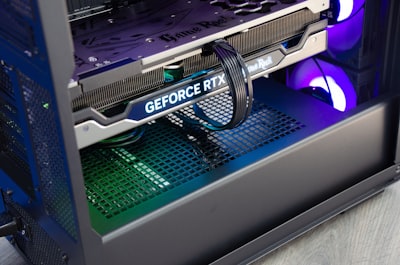
Amid the growing demand for hardware for artificial intelligence, Palit has surprised the market by announcing the relaunch of its well-known RTX 3060 with the Infinity 2 OC variant. This decision is no accident: the shortage of high-end GPUs and the need for affordable solutions for AI workloads have led manufacturers to revise previous catalogs. The RTX 3060, with its 12 GB of VRAM memory, is positioned as an attractive option for inference and fine-tuning tasks of small models, just at a time when the 'AI crisis' pushes companies and developers to look for viable alternatives. In addition, the Infinity 2 OC cooling system promises better thermal stability, a critical factor when running intensive processes for hours. For those looking to integrate artificial intelligence into their operations without investing in state-of-the-art hardware, this card offers a reasonable entry point.
The global context of the relaunch responds to a prolonged shortage of NVIDIA chips of the RTX 40 and 50 series, added to the explosion of generative applications and autonomous agents. Many startups and SMEs need GPUs to process language models or computer vision, but the prices of professional cards such as the A6000 or the RTX 4090 are prohibitive. This is where the RTX 3060 regains prominence: with a much lower cost and the same 12 GB of VRAM as some higher models, it allows you to run models of up to 6-7 billion parameters with quantization. Companies such as Q2BSTUDIO have detected this need and offer artificial intelligence solutions for companies that include both on-premise and cloud infrastructure, helping to select the right hardware according to each project.
From a technical perspective, Palit's RTX 3060 Infinity 2 OC incorporates a custom PCB design and cooling system with two fans and copper heatpipes. The clock frequency is slightly elevated compared to the reference model, which translates into an additional 3-5% performance in parallel computing tasks. While it doesn't support NVLink or ECC memory, its Ampere architecture is still proficient for inference workloads, especially when combined with optimized frameworks like TensorRT or ONNX Runtime. This makes it an ideal candidate for development environments, rapid prototyping and small deployments of AI agents, a booming field where applications Q2BSTUDIO developed as they integrate these accelerators.
The trend towards the democratization of artificial intelligence has driven the creation of AWS and Azure cloud services that allow you to rent instances with similar GPUs, but the on-premise option is still relevant for companies that handle sensitive data or require ultra-low latencies. In this sense, having its own hardware such as the RTX 3060 gives total control over the life cycle of the models, from training to inference. However, cybersecurity becomes a critical factor: any equipment connected to the network must be protected against unauthorized access, especially if models with proprietary data are used. Q2BSTUDIO integrates cybersecurity practices into all of its implementations, auditing both software and hardware infrastructure.
For businesses that want to take full advantage of the power of the RTX 3060, custom software development is a must. It's not enough to just have the GPU; you need to orchestrate data pipelines, train models, deploy inference APIs, and monitor performance. For example, a real-time sentiment analysis system for customer service can benefit from this card, as long as the backend is optimized. This is where AI agents come into play, small autonomous programs that interact with databases and ERP systems. Q2BSTUDIO designs these agents using frameworks such as LangChain and deploys them on efficient hardware, ensuring that every compute cycle is fully utilized.
Business intelligence is also enhanced by this type of hardware. When combined with tools like Power BI, dashboards can be generated that visualize sales predictions or anomaly detection in real-time. The RTX 3060 accelerates the processing of large volumes of data directly on the local machine, avoiding bottlenecks in the transfer to the cloud. Companies that have already implemented business intelligence services with Q2BSTUDIO report significant improvements in the speed of report updates, thanks to the use of GPUs for parallel calculations. This makes the RTX 3060 a key piece for those who want to start their journey to advanced analytics without relying exclusively on cloud infrastructure.
It's important to note that Palit's relaunch is not an isolated move, but part of a larger strategy to capture the entry-level AI market. Other brands such as MSI or Gigabyte have also reintroduced similar models, but Palit is differentiated by its focus on cooling and stability. The Infinity 2 OC features a metal backplate that dissipates heat more evenly, reducing thermal throttling during sustained loads. In enthusiast tests, the card maintains temperatures below 75°C even after hours of continuous inference, making it reliable for production environments. In this scenario, collaboration with a technology partner such as Q2BSTUDIO allows companies to not only acquire the hardware, but integrate it into a complete ecosystem of custom applications.
From a business point of view, the decision to go with a previous generation GPU may seem counterintuitive, but it responds to a very rational cost-benefit analysis. ROI is accelerated when AI solutions are implemented in processes such as document classification, response automation, or predictive maintenance. For example, a logistics company could use the RTX 3060 to process package images in real-time, detecting damage or incorrect labels with YOLO models. Q2BSTUDIO has already developed such applications for customers in sectors such as retail and manufacturing, demonstrating that affordable hardware combined with custom software can generate substantial savings.
The AI crisis has also highlighted the need for technological sovereignty. Many organizations are looking to reduce their dependence on foreign cloud providers, especially when handling regulated data (health, finance, defense). In these cases, having local servers with GPUs such as the RTX 3060 allows you to comply with data protection regulations without giving up the advantages of artificial intelligence. Q2BSTUDIO helps design hybrid architectures that combine on-premise infrastructure with AWS and Azure cloud services for less critical tasks, offering a balance between security, cost, and scalability. Cybersecurity is reinforced through VPNs, network segmentation and periodic audits, services that the company includes in its digital transformation packages.
In conclusion, the relaunch of the Palit RTX 3060 Infinity 2 OC is a clear symptom of how the hardware ecosystem is adapting to the explosion of artificial intelligence. It is no longer enough to have the most powerful card; A global vision is needed that encompasses custom software, secure cloud infrastructure and integration with business intelligence tools. Companies like Q2BSTUDIO are on the front lines of this transformation, offering services ranging from the development of AI agents to the implementation of Power BI to visualize results. The RTX 3060 can be the perfect workhorse for SMEs and startups that want to make the leap to AI without compromising their budget, as long as they have the right technical support. The AI crisis is, in the end, an opportunity to rethink technology from the perspective of efficiency and accessibility.

.jpg)