
Event-driven automation has become one of the most transformative architectures for organizations seeking agility and real-time responsiveness. Unlike traditional models based on batch or manually chained processes, this approach allows systems to react automatically to any changes, notifications, or signals coming from applications, sensors, users, or even other services. The result is an infrastructure that is decoupled, scalable, and capable of orchestrating complex workflows without constant human intervention. In a business environment where immediacy makes the difference, understanding which sectors are adopting this technology is key to identifying opportunities for improvement and competitiveness.
The concept is not new, but its practical implementation has accelerated thanks to the maturity of cloud platforms, the proliferation of IoT devices and the need to integrate heterogeneous systems. Today, any event – from a click on a web page to a cybersecurity alert – can trigger automated actions that optimize processes, reduce costs and improve the customer experience. Companies that have already made the leap report not only operational efficiency, but also a greater capacity for innovation by freeing their teams from repetitive tasks.
To understand the scope of this technology, it is useful to analyze how different industries are applying it, each with its own particularities and challenges. In the technology and software sector, for example, event-based automation is the backbone of CI/CD (continuous integration and continuous deployment) pipelines. Every code commit, merge, or test passed generates events that trigger builds, quality analysis, deployments to test environments, or even notifications to developers. This allows for faster development cycles with fewer errors. In addition, tech companies use these patterns to deliver tailored apps that respond in real-time to their users' actions, from personalized recommendations to security alerts.
The financial and banking industry has been a pioneer in adopting event-driven automation, especially in areas such as fraud detection and risk management. When a transaction exceeds certain thresholds or occurs from an unusual location, the system can automatically initiate a verification flow, block the operation, or notify the customer. This ability to react immediately is essential to maintain cybersecurity and user trust. In addition, financial institutions use events to update balances in real time, process instant payments, or adjust dynamic pricing models. All of this is supported by modern infrastructures such as AWS and Azure cloud services, which provide message queues, serverless functions, and event brokers ready to scale.
In healthcare, event-driven automation is revolutionizing patient care. Monitoring systems in hospitals generate alerts when a patient's vital signs deviate from normal, activating immediate response protocols. It is also used to manage the inventory of medicines, schedule surgeries or coordinate communication between different departments. The integration with business intelligence services also allows you to analyze population health patterns and predict outbreaks or resource needs. The ability to react in real time saves lives and optimizes operational costs.
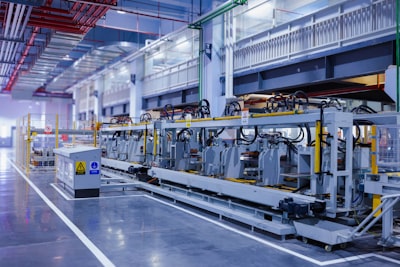
The manufacturing sector, for its part, has found in event-driven automation an ally for Industry 4.0. Sensors on the production line emit events when a machine overheats, when a batch exceeds quality tolerances, or when a material runs out. These events trigger predictive maintenance, automatic parameter adjustments, or replenishment of supplies. The reduction in downtime and the improvement in product quality are tangible. In addition, integration with MES and ERP systems becomes seamless, allowing complete visibility of the plant.
Retail and ecommerce also benefit greatly. Every user action — add to cart, abandon purchase, make a payment — generates events that can trigger personalized offers, reminders, inventory updates, or even coordination with last-mile logistics. Event-based inventory management prevents stockouts and optimizes storage. Large platforms use AI agents to analyze shoppers' behavior in real-time and adjust promotions or prices dynamically, all orchestrated by events.
In education, institutions are adopting hybrid models where event-based automation facilitates the delivery of content, automatic correction of exams or the early detection of learning difficulties. When a student completes a module, the system can automatically send them the next one or recommend additional resources based on their performance. Events also manage communication with parents, classroom assignments, or enrollment. Personalization of learning becomes viable on a large scale thanks to these patterns.
Real estate uses event-based automation to efficiently manage properties: from alarms that notify when a door is opened to systems that adjust the climate according to occupancy. Rental and sales platforms automatically update listings when new visitors are received or contracts are signed. The customer experience is enhanced with real-time notifications about price changes or new properties that fit their criteria.
Professional services firms—consultancies, law firms, marketing agencies—use events to automate workflows such as recurring billing, project tracking, or reporting. For example, when a stage of a project is completed, the system can automatically launch a revision, send a summary to the client, and update the budget. The resulting efficiency allows these companies to spend more time on high-value activities.
The public and government sector also joins the trend. Sensor events in smart cities manage traffic, garbage collection or street lighting. One-stop-shop systems notify citizens about the status of their procedures. Automation reduces bureaucracy and improves transparency, with consequent savings in administrative costs.
Finally, startups and SMEs find in event automation a way to compete with large corporations without investing in huge teams. By integrating AI for business and power BI to analyze data in real-time, they can make informed decisions quickly. The flexibility of cloud solutions allows them to scale as they grow, and automation eliminates bottlenecks in key processes such as customer service or order management.
In all of these industries, the key to success lies in careful implementation that takes into account architecture, security, and integration with existing systems. Event automation is not a simple technical setup; It requires a deep analysis of workflows, the identification of relevant events, and the definition of appropriate responses. That's why having an experienced technology partner makes all the difference.
At Q2BSTUDIO, as a software and technology development company, we have been helping organizations across various industries design and implement event-driven automation solutions for years. Our team combines expertise in custom software, integration of AWS and Azure cloud services, and the implementation of AI agents that provide intelligence to automated flows. In addition, we offer business intelligence services with power bi for companies to visualize the impact of their events in real time. We know that each sector has its particularities, which is why we work side by side with clients to understand their processes and offer solutions that really add value. If you want to learn more about how automation can transform your organization, we invite you to learn about our specific proposal on process automation with custom software. And if you're interested in the more analytical side, be sure to explore how we integrate Power BI and business intelligence to turn events into insights. Event automation isn't the future, it's the present, and at Q2BSTUDIO we help you make the most of it.

.jpg)