
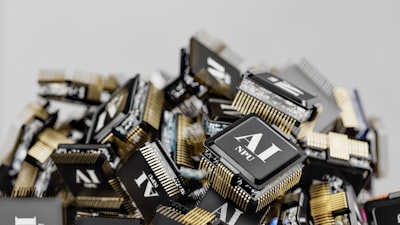
The rise of generative artificial intelligence has transformed the way companies conceive their workflows, but it has also triggered one of the most difficult costs to control: the consumption of tokens in the cloud. Over the past two years, organizations of all sizes have shifted their operations to cloud services such as AWS and Azure, taking on bills that grow exponentially as models become more complex and more frequently used. However, an emerging trend is changing the rules of the game: personal computers equipped with neural processing units (NPUs) capable of running local models are no longer a futuristic promise but a practical savings tool. It's no longer just about having a faster PC, it's about transforming on-premises hardware into a strategic asset that reduces reliance on token charges while offering greater privacy and low latency.
The key lies in small language models (SLMs) and compact reasoning models (SRMs), which have matured enough to run on machines with NPUs of at least 50 TOPS. These models are not intended to replace large cloud systems, but to complement them. Many routine tasks—such as summarizing emails, generating drafts, analyzing internal documents, or handling simple customer inquiries—can be performed locally without the need to send data to the cloud, dramatically reducing token consumption and therefore your monthly bill. Analysts predict that by 2029 one-third of enterprises will be using AI-powered PCs to cut these costs, and that by 2030 most corporate teams will have the capacity to run basic generative workloads. This change is not automatic: it requires careful planning, an evaluation of which processes to delegate to the local device and, above all, a well-defined hybrid strategy.
For companies that have already invested in centralized artificial intelligence, the concept of tokenomics has become a nightmare. Cloud service providers define tokens differently, prices vary depending on time of day or demand, and costs can skyrocket without warning. By moving some computing to the endpoint, organizations gain greater control over their operational spend. It's not about eliminating the cloud, it's about optimizing it: cloud capacity is reserved for massive models, complex training, or resource-intensive inferences, while frequent, lightweight queries are handled locally. This hybrid approach is already being adopted by big tech companies like Microsoft and Google, which use smaller models for certain tasks without compromising quality.
However, the real leap in value will come when AI PCs become hosts to personal, always-on AI agents. These on-premises assistants will be able to orchestrate multiple applications, models, and services, both on-device and in the cloud, delivering a seamless and contextual experience. For example, an agent could write a report using an on-premises SLM, query historical data on a corporate basis through a cloud service, and then generate charts with Power BI without the user having to switch tools. Integrating these capabilities with business intelligence services will enable companies to make real-time decisions based on processed data securely and cost-effectively.
For companies looking to implement this vision, having an experienced technology partner makes all the difference. Q2BSTUDIO offers AI solutions for businesses ranging from selecting the right model to integrating with existing cloud infrastructures. Our team helps design hybrid architectures where AI-powered PCs become active nodes of the compute network, reducing reliance on tokens without sacrificing performance. In addition, we work on building bespoke applications and bespoke software that take full advantage of on-premises NPUs, whether for virtual assistants, document analysis or in-house recommendation systems.
Of course, security cannot be left behind. By running models locally, sensitive data never leaves the device, mitigating the risks associated with third-party transmission and storage. However, this also introduces new attack surfaces. That's why including cybersecurity as an integral part of the deployment is essential. At Q2BSTUDIO, we integrate protection practices by design, ensuring that on-premises agents and connections to AWS and Azure cloud services meet the highest standards of regulatory compliance.
For companies that have already adopted Power BI as an analytics tool, combining it with on-premises AI agents offers a quantum leap. Let's imagine a scenario where an analyst uploads data to a PC with NPUs, an on-premises model processes it and generates an executive summary, and then the agent sends the visualizations to a shared dashboard in the cloud. This reduces the token costs associated with repetitive queries and speeds up response time. In fact, modern business intelligence services can benefit greatly from this hybrid architecture, as frequent requests are resolved at the edge and only complex queries travel to the cloud.
To ease the transition, experts recommend starting to experiment with small models in development teams starting with the next generation of AI PCs, scheduled for 2027. At Q2BSTUDIO, we develop custom applications that allow companies to test these flows without compromising their production systems. From prototyping with SLM to orchestrating agents that manage administrative tasks, our team accompanies every step with a practical, results-oriented approach.
The future of enterprise computing will be neither completely local nor fully cloud, but an intelligent symbiosis where each device brings its computing power to the global ecosystem. PCs with AI are called to be much more than simple terminals: they will become active nodes of a distributed infrastructure that optimizes costs, protects data and accelerates decision-making. The reduction in token costs is just the first tangible benefit. Behind it comes a deeper transformation: the ability to run personal AI agents, integrate AWS and Azure cloud services efficiently, and build a data-driven business model without operating expenses spiraling out of control.
For organizations that want to get ahead of this wave, the recommendation is clear: start evaluating which workloads they can migrate to the endpoint today, invest in hardware with powerful NPUs, and seek partners with expertise in enterprise AI. Q2BSTUDIO is prepared to help on that path, combining knowledge of artificial intelligence, cybersecurity and business intelligence services to design robust and scalable solutions. Token savings are just the tip of the iceberg; Below is a new way of understanding corporate computing, more autonomous, more secure and more profitable.
.jpg)
.jpg)
