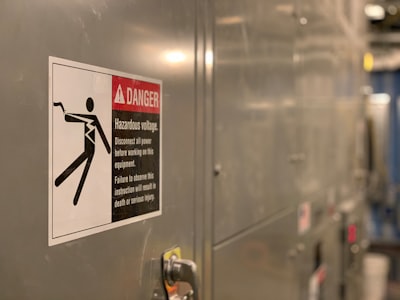
Security in industrial environments has never been as critical as it is today. Every month, manufacturers of industrial control systems (ICS) release patches that fix vulnerabilities that could compromise critical infrastructure. In this edition of 'ICS Patch Tuesday', three giants of the sector – Siemens, Schneider Electric and Rockwell Automation – have announced the correction of dozens of security flaws that affect their most widely used products in plants, refineries, power grids and manufacturing lines. This article not only summarizes vulnerabilities, but offers a strategic view on how companies can protect themselves, integrating modern technologies such as artificial intelligence, cloud services, and custom application development to strengthen their cybersecurity posture.
The threat landscape in the OT (operational technology) realm has evolved. We are no longer talking only about isolated attacks, but about campaigns orchestrated by state actors and cybercriminal groups that seek to paralyze production processes or extort large corporations. In this context, the patches from Siemens, Schneider and Rockwell are a wake-up call for IT and OT teams to collaborate more closely. Each fixed vulnerability represents one less door for attackers, but it also highlights the complexity of keeping systems that have often been in operation for years.
Correcting faults in products such as programmable logic controllers (PLCs), SCADA systems or protection units not only requires patching, but also redesigning processes and sometimes integrating new monitoring tools. This is where companies like Q2BSTUDIO offer solutions that go beyond simple maintenance. For example, developing custom applications that automate patch validation or generate compliance reports can significantly reduce the risk of human error. Likewise, the implementation of cybersecurity and pentesting services helps to identify gaps before they are exploited, an indispensable complement to periodic security bulletins.
One of the most relevant aspects of this new batch of patches is the number of vulnerabilities classified as critical or of high severity, which allow from remote code execution to denial of service. In the case of Siemens, flaws were fixed in the TIA Portal software and in the S7-1500 controllers, widely used in the automotive and food industries. Schneider Electric, meanwhile, upgraded its electrical protection units and power management systems, while Rockwell addressed gaps in its FactoryTalk automation platforms. These fixes are a reminder that industrial cybersecurity is not optional, but a requirement for business continuity.
Beyond immediate patching, organizations must consider a comprehensive strategy that combines cybersecurity, artificial intelligence, and AWS and Azure cloud services. For example, deploying AI agents on the OT network makes it possible to detect anomalies in real time and predict failures before they materialize. These AI agents can learn the normal behavior of assets and alert to suspicious patterns, such as an attempt to modify the logic of a PLC. In addition, AI for business is revolutionizing the way patches are managed, prioritizing those that affect critical systems based on automatically calculated risk.
The cloud also plays a critical role. Many companies are migrating their monitoring and asset management systems to cloud environments, leveraging business intelligence services to obtain real-time dashboards with security metrics. With tools such as Power BI, you can visualize the status of patches throughout the industrial fleet, correlate incidents and generate early warnings. However, this migration must be done carefully, as exposure to the internet increases the attack surface. This is where AWS and Azure cloud services offer additional layers of security, such as web application firewalls and network segmentation, that need to be properly configured for OT environments.
Another key point is the need for tailored software that integrates these capabilities. Generic security solutions don't always fit with proprietary industrial protocols or legacy architectures. Developing custom platforms that connect patching systems with operations teams, using APIs and orchestration, allows closing gaps that official patches do not cover. For example, a custom application could automate verification that all devices in a plant have received the Rockwell update, and notify the maintenance team if any equipment has gone unpatched.
Artificial intelligence is also transforming the way vulnerability scanning is performed. Machine learning models can examine Siemens security bulletins and compare them to the actual configuration of the systems, identifying which vulnerabilities are actually exploitable in the context of each plant. This reduces alert fatigue and allows cybersecurity teams to focus on what is truly critical. In addition, AI for business can predict the optimal maintenance windows to patch without disrupting production, a constant challenge in 24/7 environments.
We cannot forget the human factor. No matter how advanced systems are, human error is still the leading cause of incidents. Continuous training and awareness are essential, but so is relying on technology. For example, integrating AI agents that guide technicians step by step through the patching process, or using augmented reality to visualize the status of components, are initiatives that are already underway in pioneering companies. Q2BSTUDIO collaborates with industrial companies to design these workflows, combining custom software development with cybersecurity best practices.
In conclusion, this month's ICS Patch Tuesday is a reminder that industrial safety is an ongoing process, not a one-time event. Siemens, Schneider, and Rockwell have done their job by releasing patches, but the ultimate responsibility lies with organizations to implement them correctly and, above all, to build a resilient architecture. Investing in cybersecurity, adopting artificial intelligence, leveraging AWS and Azure cloud services, and developing custom applications are all necessary steps to protect yourself in an environment where threats evolve faster than patches. For companies looking to stay one step ahead, having a technology partner like Q2BSTUDIO, who specializes in custom software, business intelligence services, and Power BI, can make the difference between suffering an incident or preventing it. The final reflection is clear: security is not a cost, it is an investment in business continuity.