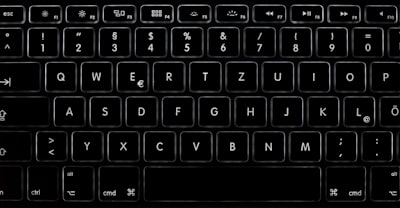
Although the QWERTY keyboard is the most widespread in the English-speaking world, its reign is not absolute. From the streets of Paris to the offices of Berlin, each culture has adapted the layout of the keys to its linguistic needs. This article explores thirteen international configurations—from the French AZERTY to the German QWERTZ and beyond—analyzing their origin, their logic, and the challenge they pose to training and productivity. In addition, we will see how current technology allows us to overcome physical barriers through custom applications that virtualize any keyboard, democratizing learning and efficiency.
The QWERTY design was born in 1873 to prevent typewriter levers from jamming. However, each language imposes its own rules: French requires accents and cedilla, German umlauts, Italian combinations such as 'à' and 'è'. From there arose variants such as AZERTY (France and Belgium), which swaps A with Q and Z with W, and places accented characters in the top row. The Germanic QWERTZ, on the other hand, moves the Z next to the Y and adds Ä, Ö, Ü. Italy, although it officially uses QWERTY, has the QZERTY in some regions. And then there are ergonomic designs like Dvorak and Colemak, which redistribute the keys to reduce finger movement.
Outside the Latin alphabet, diversity is multiplied. The Russian keyboard ЙЦУКЕН follows a phonetic logic similar to QWERTY but with Cyrillic characters. Arabic shows two alphabets on each key. The Thai Kedmanee requires double coats. Hindi (Devanagari) uses the InScript layout. And in Chinese and Japanese, input systems convert phonetic writing (pinyin or romaji) into ideograms using software. This complexity represents a huge challenge for schools, companies and developers of training tools.
The main difficulty is the physical availability of keyboards. A German student learns best with a QWERTZ, but keeping an inventory of devices for each language is unfeasible. The digital solution has come from the hand of interactive keyboard simulators, which show the exact layout of any variant on screen. These tools, built with AI for business and language processing logic, allow practice without additional hardware. In addition, they integrate business intelligence services and AWS and Azure cloud services to analyze user progress in real time.
At Q2BSTUDIO we understand that every organization has unique needs. That's why we offer tailor-made software that adapts the typing experience to any language, combining AI agents to predict keystrokes and recommend optimal layouts. Our cybersecurity solutions ensure that training data and typing patterns are protected, while artificial intelligence analyzes common errors and suggests personalized exercises. All this on scalable infrastructures on AWS or Azure.
Training in international typing is not a luxury: it is a necessity in a globalized world. From developers writing code with rare symbols to translators jumping between alphabets, mastering multiple layouts increases productivity and reduces fatigue. With the support of platforms like the ones we designed at Q2BSTUDIO, anyone can access a virtual classroom with keyboards from all over the world, without moving a single peripheral.
In short, the keyboard is much more than a set of keys: it is the gateway to digital communication. And thanks to technology, that door can be opened in any language. Q2BSTUDIO, with its expertise in custom applications and AWS and Azure cloud services, is ready to help you take that step. What layout do you need to master today?