In recent years, event-based automation has evolved from a concept reserved for technical teams to a strategic tool for the entire organization. The question that many companies are asking today is whether this technology can be really friendly for users without a technical profile. The answer, as we'll see, depends less on the technology itself and more on how interfaces and workflows are designed.
Event-driven automation works by reacting to changes or signals in systems—a new order, a database error, a user request—to execute predefined actions without manual intervention. This decoupled model allows processes to be triggered in real-time, speeding up response and reducing operational burden. However, if the tool is not designed for non-technical profiles, the benefit is diluted.
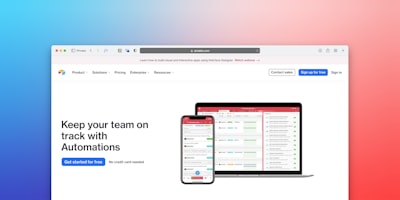
That's where user-centered design comes in. In order for a sales manager, operations analyst, or production supervisor to create and manage automations, the platform must offer visual guides, personalized dashboards, step-by-step wizards, and plain language. It is not a matter of hiding complexity, but of translating it into terms that anyone can understand and apply.
In this context, Q2BSTUDIO has developed process automation solutions that integrate these principles. Their work environments include role-based dashboards, which show only the tasks and metrics relevant to each user. This eliminates noise and allows the user to focus on what really matters: activating, monitoring, and adjusting their automations.
The user experience is reinforced with embedded wizards, contextual tooltips and visual cues such as color codes and icons that indicate priorities. In addition, online training modules and demo modes are incorporated so that any employee can learn on their own. All this under accessibility standards that guarantee that no one is excluded.
A critical aspect is trust. When a non-technical user sets up an automation, they need to be sure that it won't cause a critical error. That's why modern platforms offer test environments, validation notifications, and rollback mechanisms. Q2BSTUDIO, for example, puts its interfaces through iterative user experience testing until frontline teams can use the tool with confidence and minimal assistance.
Now, friendliness cannot be separated from potency. Event-driven automation is increasingly being combined with other technology capabilities. Artificial intelligence allows, for example, a system to identify patterns and trigger predictive actions, while AI agents can execute complex cognitive tasks within a flow. All this can be orchestrated from the same platform accessible to non-technicians.
This is where the ecosystem of services surrounding automation comes into play. Enterprises need bespoke applications that connect their legacy systems to new events. Artificial intelligence for companies is naturally integrated into these processes, allowing everything from automatic classification of incidents to generation of reports. And all of this must rest on a solid infrastructure: AWS and Azure cloud services provide the elasticity and availability that real-time events demand.
Cybersecurity is another pillar. Every event that is triggered can expose sensitive data, so automations must be protected with access controls, encryption, and continuous monitoring. Companies that adopt these solutions often complement them with custom software that adjusts security mechanisms to their specific needs.
On the other hand, the information generated by events is an invaluable asset. Business intelligence services allow you to transform that data into Power BI dashboards that non-technical users themselves can refer to to make informed decisions. Thus, automation not only acts, but also informs.
Going back to the initial question: is event-based automation friendly to non-technicians? The answer is yes, as long as it is designed with that objective in mind from the beginning. It is not a question of the user's capabilities, but of how the tool is presented. When a company chooses a technology partner that understands this need – such as Q2BSTUDIO, which combines application development, cloud integration, artificial intelligence and cybersecurity – automation is no longer a mystery and becomes an everyday ally.
In short, the key is in the user experience. If automation is delivered with intuitive interfaces, integrated training, and the ability to scale with cloud services, anyone in the organization can become a process manager. The future of work is not about replacing non-technicians, but about empowering them with the right tools. And well-designed event-driven automation is just that.